
Reviewed · KILIMANJARO TREKS
7 Days Kilimanjaro Climb Machame Route
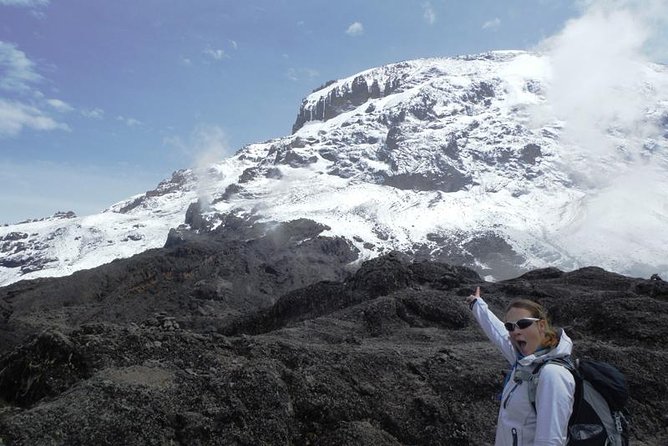
The Machame Route takes you through five climate zones, from thick rainforest to an arctic summit. You sleep in tents, climb slowly across the southern circuit, and make your summit attempt after midnight. The reward is a sunrise near Stella Point and, if conditions and your strength allow, Uhuru Peak.
I like the extra acclimatization day, the broad views from the Shira Plateau and southern circuit, and the fact that park fees, rescue fees, food, tents, porters, and transfers are built into the price. The main catch is simple: this is a hard trek, not a gentle mountain walk. Six to seven hours of hiking on the first day and a long summit night demand solid fitness.
Key points before you book
- Seven days gives your body more time to adjust: The extra night compared with the six-day version is one of the smartest features of this plan.
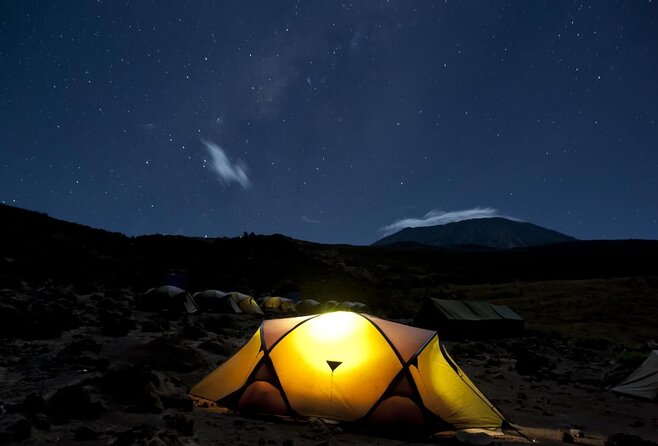
- Machame uses tents every night on the mountain: You trade hut beds for a more basic camp routine and a closer feel for the mountain.
- The route reaches 19,341 feet: The summit day brings cold, darkness, steep ground, and roughly seven to eight hours of climbing before Uhuru Peak.
- You see several distinct habitats: Rainforest, heath, moorland, alpine desert, and arctic terrain arrive in quick succession.
- The private format suits a small group: Your party hikes with its own guide team rather than joining a large shared group.
- The price covers the costly essentials: At $2,564.11 per person, the package includes permits, camping, meals, guides, porters, transfers, water, and hotel nights.
Why Machame is the popular hard route
Machame is often called the Whiskey Route, a nickname that signals its steeper, tent-based character. The comparison is with the Marangu Route, known as the Coca-Cola Route, where huts and a more gradual profile make the experience less rugged.
You should not read the nickname as a joke about drinking. Read it as a warning that Machame asks more from your legs and lungs. The trail climbs and drops instead of simply rising in a straight line, and the route includes a steep climb over the Barranco Wall.
The payoff is variety. You begin in dense forest, reach the open Shira Plateau, cross high volcanic ground, and circle the mountain along the southern circuit. This gives you views from several sides instead of following one narrow corridor up and down.
The seven-day version is the better choice for most people who can afford the extra time. The shorter six-day itinerary reaches the same mountain, but this plan adds a night for acclimatization. At high altitude, an extra day can matter more than shaving a day from the schedule.
Other routes up the mountain from Arusha:
- 8-Day Small-group Lemosho Kilimanjaro Summit Trekking
★ 5.0 · 186 reviews - 5 Days Best of Tanzania Luxury Safari Northern Circuit
★ 5.0 · 174 reviews - 7-Day Machame Kilimanjaro Summit Tour from Arusha
★ 5.0 · 125 reviews
Day 1: Machame Gate to the first forest camp
After breakfast, you receive a briefing before the roughly one-hour drive from Moshi to Machame village. The starting point is listed as Arusha, while the detailed plan places the pre- and post-trek hotel stay in Moshi, so confirm your exact hotel and pickup point before arrival.
At Machame village, guides and porters organize the food and equipment. You receive a packed lunch and mineral water, then complete registration at Machame Gate. The trail begins in lush rainforest, where the air is cooler and the trees create a strong contrast with the dry volcanic ground higher up.
The stated hiking time is about seven hours. That makes this a serious first day, especially if you are carrying more than a light daypack. Your main luggage is handled by the mountain crew, but you still need to carry the things you use during the day.
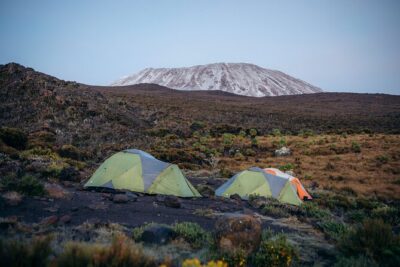
The camp is referred to as Machame Hut in the daily notes, but accommodation on this route is in tents. Do not expect a building, private room, or hot shower on the mountain. Your reward is the first real night under the mountain, with the forest giving way to thinner vegetation as you prepare for the next stage.
Day 2: Machame Camp to Shira 2 Camp
The second day leaves the forest and follows a steep, rocky ridge toward the Shira Plateau. The surroundings open into heather and moorland, and the change in vegetation makes the route feel bigger and more exposed.
You hike from about 9,350 feet to 12,500 feet, covering approximately five kilometers in four to six hours. The distance is not huge, but the altitude changes the effort. Walk slowly, keep your breathing steady, and resist the temptation to race ahead during the easier stretches.
The route crosses a large river gorge before reaching Shira 2 Camp. This is one of the days when Machame earns its reputation for views. The broad high plateau gives you a chance to look across open country rather than through trees.
The short distance can seem reassuring, but altitude is the real issue. Even strong hikers may notice headaches, poor sleep, or reduced appetite. Tell your guide early if you feel unwell. Private guiding is useful here because the pace and breaks can be adjusted for your group.
Day 3: Shira Plateau, Lava Tower, and Barranco
This is the key acclimatization day. You climb from Shira 2 toward Lava Tower at roughly 15,190 feet, then descend to Barranco Camp at about 13,044 feet. The useful principle is climb high, sleep lower, and this route gives you time at a higher elevation without making you camp there.
The trail follows a ridge east and then turns southeast toward Lava Tower, a volcanic rock formation about 300 feet high. The upper section is described as alpine desert, with a more spare feel than the forest and moorland below.
The route covers about seven kilometers to Lava Tower in four to five hours, followed by another three kilometers and two to three hours down to Barranco. You begin and finish the day at nearly the same height, but the time spent high helps your body adjust.
Barranco Camp has a dramatic setting beneath the Great Barranco Wall. The scenery is excellent, though you may arrive tired after the high point of the day. This is not a day to judge your summit chances too quickly. You still have several stages ahead, and your guide will watch how you are handling the altitude.
Same base, a different kind of day out:
- Serengeti Balloon Safari and authentic bush breakfast
★ 5.0 · 2,480 reviews - Balloon Safari & Bush Breakfast in Serengeti – Miracle Experience
★ 5.0 · 1,646 reviews - Tanzania Classic – 7 Days
★ 5.0 · 1,151 reviews - 4 Days Group Camping Safari
★ 5.0 · 1,101 reviews
Day 4: The Barranco Wall to Karanga
The fourth morning begins with a descent into a ravine at the base of the Barranco Wall. Then comes the steep climb up the wall, which rises about 900 feet. It is described as non-technical, so you do not need climbing ropes or mountaineering skills, but it is still steep and can feel demanding.
The route uses a series of hills and valleys before dropping into the Karanga Valley. Another steep climb leads to Karanga Camp. The repeated up-and-down pattern is tiring, but it also breaks the ascent into manageable sections.
This is a shorter day and another useful acclimatization stage. You get time to rest at camp rather than spending every daylight hour on the trail. That matters because summit day begins just after midnight, leaving little room for a last-minute recovery.
Trekking poles are worth bringing. They help with balance on steep ground and become especially useful during the descent after the summit, when tired knees meet loose and rocky trail.
Day 5: Karanga to Barafu Camp
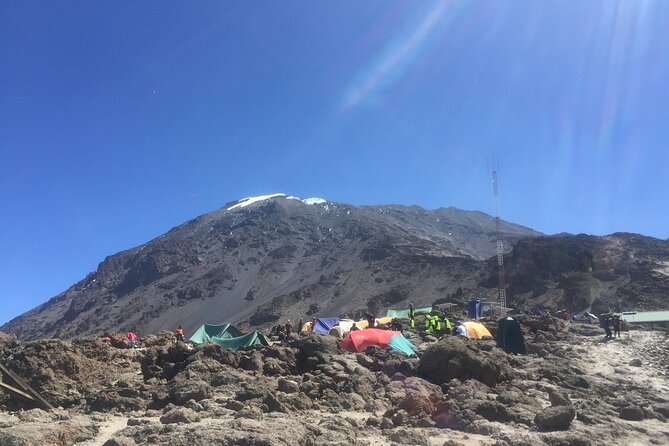
From Karanga, the trail reaches the junction with the Mweka Trail and continues across rocky ground to Barafu Camp. At approximately 15,331 feet, Barafu is the launch point for the summit attempt.
This stage covers about four kilometers, but the altitude makes it feel longer. The southern circuit is now complete, and you have seen the mountain from several angles. Mawenzi and Kibo, two of Kilimanjaro’s major peaks, are visible from the camp.
The practical point of Day 5 is not sightseeing alone. You need to eat, drink, organize your summit clothing, and rest. Dinner comes in the evening, but sleep may be short because the group starts climbing shortly after midnight.
Keep your essentials close. The night climb requires warm clothing, a headlamp if provided or packed, water, snacks, and anything you need for changing weather. The tour includes meals, snacks, bottled water, coffee, and tea, but personal comfort items remain your responsibility.
Day 6: Barafu Camp to Uhuru Peak
Summit day is the toughest part of the trip. You leave just after midnight, often in darkness and cold. The pace is deliberately slow, with short and frequent breaks as you climb toward Stella Point at about 18,900 feet.
The route from Barafu to Uhuru Peak takes roughly seven to eight hours. Wind and cold can be severe at any time, and the combination of darkness, steep ground, and thin air can test even fit hikers.
Stella Point offers a major psychological lift. At sunrise, you may see light spreading over Mawenzi Peak. From there, the trail continues to Uhuru Peak, the summit of Kilimanjaro, at 19,341 feet. Reaching the top depends on your health, weather, and how your body responds to altitude. A summit attempt is serious, and no responsible operator can guarantee success.
After the summit, you descend to Barafu for lunch and continue to Mweka Camp at about 10,065 feet. The total descent from Uhuru to Mweka is about 12 kilometers. This is where trekking poles earn their keep. Rocky ground can punish your knees, and the long drop in elevation comes after a physically demanding night.
Mweka Camp sits in the upper forest, where mist and afternoon rain are common. The final dinner on the mountain should feel welcome, but do not expect the day to be easy simply because you are going downhill.
Day 7: Mweka Camp to Mweka Gate
The final hiking day descends from about 10,065 feet to 5,380 feet. The walk to Mweka Gate takes roughly three to four hours over approximately ten kilometers.
The lower section can be muddy and wet after rain. Your footwear and rain protection matter here, even though the summit has already come and gone. At the gate, you collect your summit certificate if you reached the required point.
The detailed plan then continues for about another hour to Mweka village, where the Youth Adventures and Safaris vehicle meets you. You return to the Moshi hotel for a proper bed and the included post-trek accommodation.
That hotel night is more valuable than it may sound. After a midnight start, a long summit day, and a wet descent, you will want a shower, dry clothes, and uninterrupted sleep. The package includes accommodation before and after the mountain portion, along with breakfast, lunch, and dinner as specified.
What the $2,564.11 price really covers
The price is not just payment for a guide and a trail walk. It includes Kilimanjaro park, camping, and rescue fees, 18 percent VAT, three-season tents, double-layer sleeping mats, transportation to and from the mountain gate, professional guides, cooks, and porters.
You also receive three meals each day on the mountain, filtered water throughout the trek, snacks, coffee or tea, bottled water, two private airport transfers, and hotel accommodation before and after the climb. These inclusions cover many of the large costs that can surprise independent planners.
Tips for the mountain crew are not included. Nor are flights, laundry, personal items, or services not listed. A portable flush toilet with toilet tent costs an extra $65 per toilet and tent. That may matter to you if privacy and comfort are high priorities.
The private format is another part of the value. You are not simply placed into a large group with a fixed pace. The operator has worked with solo climbers, parent and child pairs, couples, and private parties, and its pre-trip communication has included airport pickup, hotel arrangements, and detailed planning.
Past clients have specifically praised Daniel’s communication and his willingness to stay in touch by WhatsApp. John has also led a successful mountain team, while Godfrey has handled management and planning. Your actual guide may be someone else, so ask for the assigned team before booking.
Who should choose this climb
I would choose this route if you are physically fit, comfortable with several long hiking days, and willing to sleep in tents. Previous trekking experience helps, but the provided information calls for a moderate fitness level rather than technical climbing ability.
This is a good fit for someone who values scenery and route variety more than hut comfort. It also suits a private group that wants a guide team focused on its own pace.
I would think twice if you dislike cold nights, basic camp conditions, steep descents, or starting a major climb after midnight. The route is popular because it is scenic, but popularity does not make it easy.
The strongest practical choice is the seven-day version rather than rushing through in six. The added acclimatization time, shorter stages around Karanga, and planned southern circuit give you a better rhythm for a high-altitude trek.
Should you book it?
Book this climb if reaching Africa’s highest summit is a serious goal and you want a private, fully supported route with hotel nights on both ends. The price covers the expensive essentials, and the extra day gives your body a better chance to adjust.
Before paying, confirm the exact hotel in Moshi, the airport transfer details, your guide’s name, the expected group size, and the tipping plan. Also ask what equipment you should bring, since personal clothing and gear are not included.
The cancellation terms are friendly if your plans change early: you can receive a full refund by canceling at least 24 hours before the local start time. Within 24 hours, the payment is not refunded. If you accept the hard camping, the cold, and the long summit night, this Machame plan offers a strong balance of scenery, support, and acclimatization.
FAQ
How long is the Kilimanjaro climb?
The experience lasts approximately six to seven days, with this itinerary using seven days and six nights for better acclimatization.
What route does the climb use?
The climb follows the Machame Route, beginning at Machame Gate and descending by the Mweka Trail.
Where do you sleep during the mountain trek?
You sleep in tents on the mountain. Three-season tents and double-layer sleeping mats are included.
Is food and water included?
Yes. Three meals daily are provided on the mountain, along with filtered water, snacks, bottled water, coffee, and tea.
Is the tour private?
Yes. This is a private activity, so only your group participates.
What is not included in the price?
Flights, tips for the mountain crew, personal items, laundry, unlisted services, and a portable flush toilet are not included. The toilet option costs $65 per toilet and tent.
Just added in Arusha
- 4 Days Private Midrange Lodge Safari to Serengeti & Ngorongoro★ 5.0 · 4 reviews
- Extraordinary Hot air Bolloon ride in Serengeti | BURIGI CHATO SAFARIS CO L.T.D★ 5.0 · 6 reviews
- 3 days leopard safaris★ 5.0 · 4 reviews
- 8 Days Serengeti Migration safari★ 5.0 · 11 reviews
- tarangire, ngorongoro & lake manyara park 3 days private tour★ 5.0 · 11 reviews
- Mt. Kilimanjaro: Shira plateau to Cathedral point 3872m Day hike★ 5.0 · 7 reviews
- serengeti, ngorongoro & tarangire 4 days private tour★ 5.0 · 18 reviews
- tarangire & ngorongoro 2 days tour★ 5.0 · 14 reviews
Kilimanjaro Treks, compared.
8-Day Small-group Lemosho Kilimanjaro Summit Trekking
Read our review →
5 Days Best of Tanzania Luxury Safari Northern Circuit
Read our review →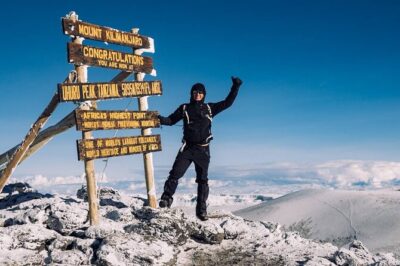
Climbing Kilimanjaro through 7 days Machame Route
Read our review →
7-Day Machame Kilimanjaro Summit Tour from Arusha
Read our review →Browse the lists this tour appears in