
Reviewed · KILIMANJARO TREKS
7 days Lemosho route
Kilimanjaro’s Lemosho route gives you the mountain’s best opening act: a long approach through rainforest, open moorland on Shira Plateau, and a gradual meeting with the southern circuit. I like the lower trail traffic and the clever acclimatization pattern, climbing to Lava Tower before sleeping lower at Barranco. I also like the small private format, with the price covering up to two people rather than charging each hiker separately.
The main drawback is the hard summit schedule. You wake around 11:30 p.m., climb to Stella Point, continue to Uhuru Peak, then descend all the way to Mweka. You also need to understand the timing: this is described as a seven-day Kilimanjaro trek, but the full plan takes about eight days because the first day is airport pickup, hotel check-in, briefing, and gear inspection.
Key points before you book
- Start in quiet western forest: The trek begins at Londorossi Gate after a long drive from Arusha, with a good chance to spot colobus monkeys.
- Sleep high, then descend: The Lava Tower to Barranco route gives you useful altitude exposure before a lower night at Barranco Camp.
- Cross the Barranco Wall: This Class 2 scramble looks imposing but is not described as technical mountaineering.
- Summit day is a full test: Plan on about eight hours to Uhuru Peak and another seven to eight hours down to Mweka.
- Private price for two: The $6,300 group price includes major trek costs, but flights, visas, and personal trekking gear are extra.
- Strong operational support: Meals, tents, porters, transport, and mountain staff are included, with Lucia named as a lead guide and Hamish associated with safari driving and guiding.
Why Lemosho is a smart Kilimanjaro route
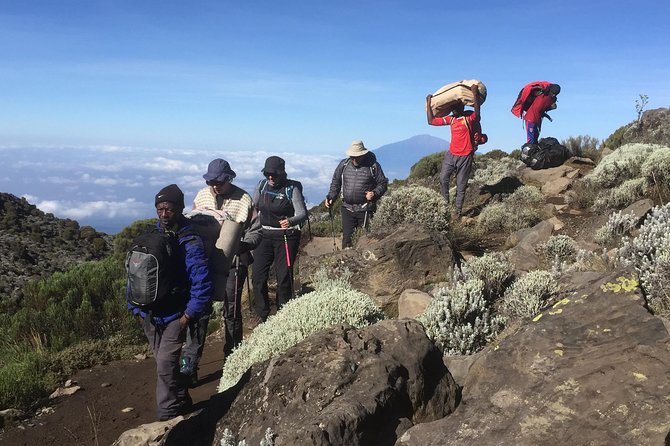
Lemosho starts on the western side of Mount Kilimanjaro. That means a longer approach than some other routes, but the extra distance pays off with a quieter beginning and a more gradual rise through several plant zones.
You begin in montane forest, move into heather and moorland, cross the semi-desert around Lava Tower, and finish in alpine desert and stone scree near the summit. That change is one of the best reasons to choose Lemosho. You are not simply walking uphill on the same sort of trail for a week.
The route joins the Machame route at Shira 2 Camp. From there, it follows the southern circuit through Barranco, Karanga, and Barafu before descending by Mweka. This gives you a useful climbing route and a different descent route, so the journey does not feel like one long out-and-back walk.
The advertised summit success rate is high, but altitude is never a promise. The itinerary helps by allowing a minimum of seven trekking days, with eight days described as preferable for acclimatization. In this program, you get the seven trekking days after arrival in Arusha, but the first day is not a mountain day.
Other routes up the mountain from Arusha:
- 8-Day Small-group Lemosho Kilimanjaro Summit Trekking
★ 5.0 · 186 reviews - 5 Days Best of Tanzania Luxury Safari Northern Circuit
★ 5.0 · 174 reviews - 7-Day Machame Kilimanjaro Summit Tour from Arusha
★ 5.0 · 125 reviews
Arusha arrival day: briefing, gear, and a useful reset
You are picked up at Kilimanjaro International Airport and taken to Arusha Planet Lodge. The day includes a guide briefing and equipment check, which is more important than it may sound.
This is when you discover whether your boots, warm layers, rain gear, headlamp, and sleeping equipment are ready for the mountain. Missing gear can be rented on this day. Use that opportunity rather than waiting until the trail, where options may be limited or unavailable.
The start time is listed as 8:00 a.m., and the meeting point is in Arusha. Since the airport transfer is part of the plan, confirm your arrival details carefully before booking. You want a calm first day, not a rushed race from the airport to a gear shop.
This overnight also gives you a buffer before the climb. The hotel stay is included in the itinerary, while the listed package inclusions specifically cover seven breakfasts, seven lunches, and six dinners. Ask for a final written breakdown of accommodation and meals before paying, especially if your flight arrives late or you plan to add extra nights.
Londorossi Gate and the first rainforest walk
After breakfast, you drive roughly two hours from Arusha, at about 1,400 meters, to Londorossi Park Gate at around 2,100 meters. A packed lunch is collected in the village near the gate, and you can buy mineral water there.
The final 45 minutes to the gate use a rough forest track. A four-wheel-drive vehicle is needed for this section, so the drive is not a smooth transfer all the way. At the gate, the guides and porters distribute supplies and complete registration with Tanzania National Parks Authority.
Then the walking begins. The first trek takes about three hours through montane forest. The trail is green, shaded, and much less stark than the high mountain zones later in the week. Keep your eyes open for colobus monkeys, one of the distinctive wildlife possibilities on this approach.
Your tents are set up before you reach camp, and porters prepare drinking and washing water. That support matters because you can arrive, settle in, and eat without handling the full camp operation yourself.
The first day is not long by Kilimanjaro standards, but the transport makes it a full day. Do not judge the trek by the short hiking time alone. The gate paperwork, supplies, rough road, and gradual start all take time.
Shira 2 Camp and the first cold night
The second mountain day takes you out of the forest and into heather moorland. You cross streams and walk across the Shira Plateau toward Shira 2 Camp, at about 3,840 meters.
This is where the route begins to feel like a high-altitude trek. The plateau opens the views, and the campsite gives you a striking look toward the Western Breach and glaciers to the east. The scenery changes quickly from thick forest to broad, exposed ground.
The walking time is listed as roughly six to six and a half hours. That is a reasonable amount of time for acclimatization, but the altitude will make the day feel longer than the distance suggests.
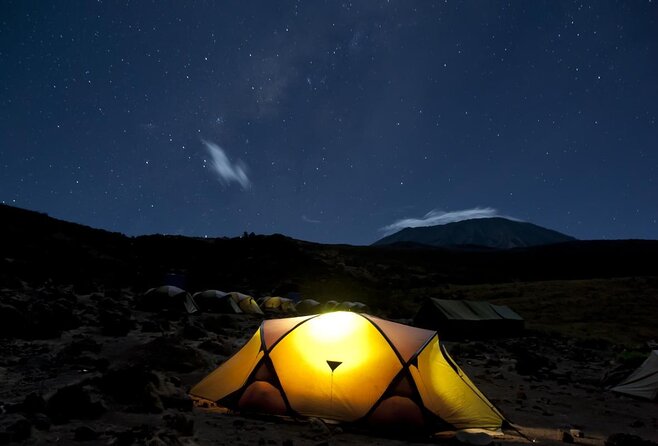
Shira 2 is exposed and cold. Temperatures can drop below freezing at night, so keep your warm layers accessible rather than buried in a duffel. Evening snacks, dinner, drinking water, and washing water are prepared by the mountain staff, but personal comfort still depends on how well you pack.
A good pace matters here. The guide team is expected to keep the walk steady rather than rush you uphill. The supplied feedback particularly praises the pacing and the care taken with acclimatization. That is exactly what you need on this route: slow progress, regular drinking, and attention to headaches or unusual breathlessness.
Same base, a different kind of day out:
- Serengeti Balloon Safari and authentic bush breakfast
★ 5.0 · 2,480 reviews - Balloon Safari & Bush Breakfast in Serengeti – Miracle Experience
★ 5.0 · 1,646 reviews - Tanzania Classic – 7 Days
★ 5.0 · 1,151 reviews - 4 Days Group Camping Safari
★ 5.0 · 1,101 reviews
Lava Tower to Barranco: the route’s best acclimatization day
Day four is one of the most valuable parts of the climb. You leave the moorland and enter rocky semi-desert, walking east for about five hours toward Lava Tower at 4,630 meters.
The point is not simply to reach Lava Tower. You climb high, eat lunch there, and then descend to Barranco Camp at about 3,950 meters. This is the classic high-up, sleep-lower pattern that makes the day useful for acclimatization.
You might feel a headache or shortness of breath around Lava Tower. The itinerary treats those effects as common, but you should still report them to your guide. Feeling some altitude symptoms can happen; ignoring severe or worsening symptoms is a different matter.
You may have the option to climb Lava Tower if weather permits. Do not treat that extra climb as essential. The important altitude work has already happened, and conserving energy for the rest of the route is often the wiser choice.
The descent to Barranco is a relief for many people. The campsite sits below Lava Tower, and the shift in altitude gives your body a better chance to adjust before the harder days ahead. This is also a scenic section, with the mountain becoming more dramatic as the trail moves through the high, dry zone.
Barranco Wall and the short walk to Karanga
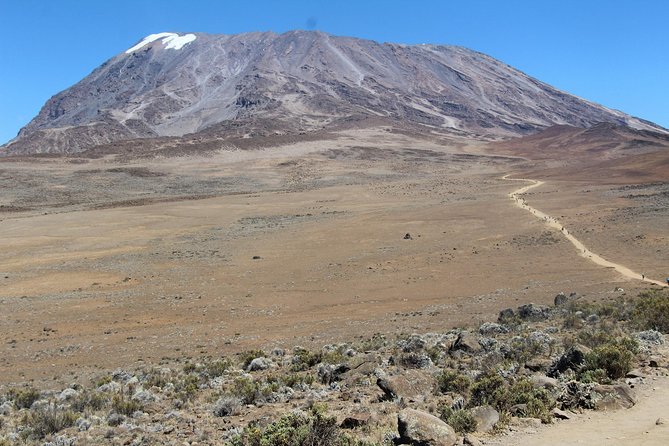
The Barranco Wall is the day’s headline feature. It looks steep and intimidating from camp, but the route is described as a Class 2 hike rather than a technical climb.
You will use your hands at points and move carefully around rock. The guide sets the pace, and you should keep your daypack compact so it does not catch on the rock or throw off your balance. This is not the place to rush for a photo or prove a point.
At the top, you get views toward Heim Glacier and a striking sight of cloud below you. The trail then rises and falls through Karanga Valley before reaching Karanga Camp, still around 3,950 meters.
The walking time is only four to five hours, over about five kilometers. That short day is deliberate. It lets you handle the wall, keep gaining altitude, and still have time to eat, wash, and rest.
Karanga is a useful pause before Barafu. You are not yet at the summit camp, but the environment is already alpine desert. Expect little shade, rocky ground, and colder conditions than in the forest. Keep sun protection and water close at hand.
Barafu Camp and the quiet before summit night
From Karanga, the trail climbs for about two to three hours toward Barafu Hut, at roughly 4,550 meters. The route intersects with the Mweka descent path, giving you a preview of the trail you will use after the summit.
Barafu means ice in Swahili. The camp sits on a rocky, exposed ridge, and there is no accessible water at the campsite. It is the last water stop for the porters, so fill your bottles and organize your supplies before the final approach.
The tents are exposed to wind and rocks. Familiarize yourself with the campsite before dark, especially if you need to find your way out for an early start. An early dinner is served, and then you rest before the summit attempt.
This is not a sightseeing afternoon. The best use of the time is sleep, drinking, eating what you can, and preparing your clothing. Put your summit layers, gloves, headlamp, snacks, and water where you can reach them without unpacking everything.
The staff support is a major part of the package here. Camping gear, guides, porters, transport, and meals are included. That does not remove the physical challenge, but it reduces the amount of camp work you must do when your energy is low.
Uhuru Peak: the long night and longer descent
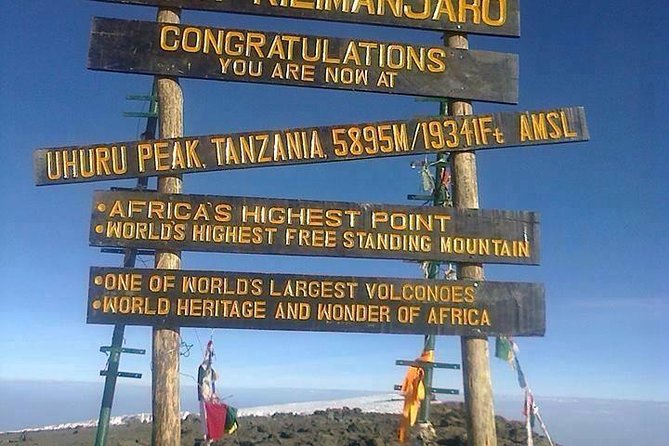
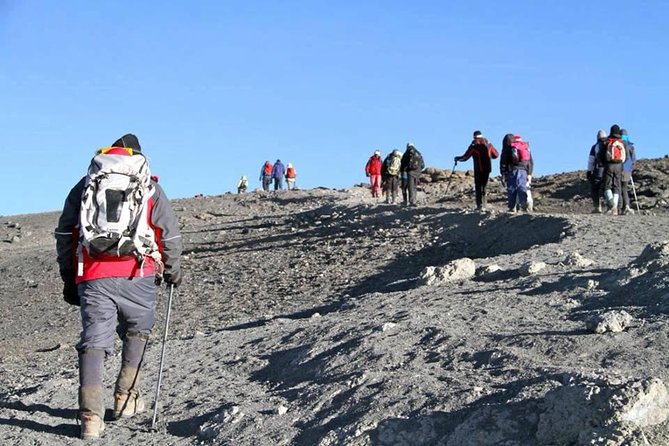
The summit attempt begins around 11:30 p.m. with tea and biscuits. You climb northwest over stone scree, usually in darkness, for about six hours toward Stella Point at 5,685 meters.
This is often the hardest mental section. The slope is slow, the air is thin, and progress can feel frustratingly small. Your guide will set the pace, but you also need to manage your own energy. Small steps, steady breathing, and frequent sips are more useful than trying to walk at your normal pace.
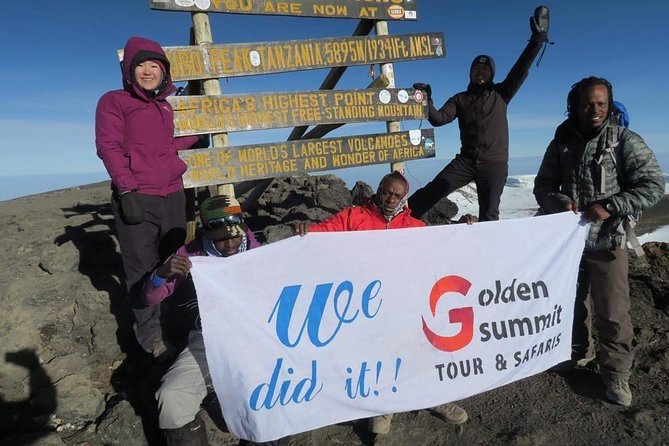
At Stella Point, you reach the crater rim and can see the sunrise. From there, the route continues for about two hours over a snow-covered trail to Uhuru Peak, at 5,895 meters.
The itinerary allows about eight hours to reach the summit. It then allows another seven to eight hours to descend to Mweka, making this the most demanding day by far. The stated distances are about seven kilometers upward and 23 kilometers downward.
That long descent deserves respect. Reaching Uhuru Peak is not the end of the day. Your knees, feet, and concentration still need to carry you down through the scree and toward a lower camp. Keep your downhill footwear and walking poles, if you use them, ready.
If you reach Stella Point but cannot continue to Uhuru Peak, you still receive a green completion certificate. Uhuru climbers receive a gold certificate. This gives the day a clear target without pretending that every hiker must push beyond safe limits.
Mweka Gate and the mountain celebration
After breakfast, the staff hold a celebration with singing and dancing. You also present tips to the guides, assistant guides, chef or chefs, and porters.
Tipping is not included in the stated price, so bring a plan for it. The celebration is a fitting mountain tradition, but it is also your practical handoff point for thanking the people who carried supplies, prepared meals, set up camp, and guided you through the route.
The walk to Mweka Gate takes about three hours through forest. You then descend into Mweka village for about an hour and three kilometers. The park requires you to sign your name at the gate before receiving your certificate.
This final walk is shorter than summit day, but tired legs can make it feel substantial. Save a clean shirt and dry socks for the end if your luggage is accessible. The listed end point is back at the Arusha meeting point, so confirm how and when the final transfer is handled.
Food, guides, porters, and daily comfort
The package includes breakfast on seven days, lunch on seven days, and dinner on six days, along with camping gear. A chef prepares meals, and water is provided for drinking and washing at camp. These details matter more than a fancy camp menu at altitude.
The strongest operational praise centers on coordination between guides and porters, balanced meals, and a measured pace. Those are the practical foundations of a good climb. You need staff who keep camp running without making you feel hurried or burdened by logistics.
Lucia is named as a lead guide in the supplied information. Hamish is identified as a local safari guide and driver, connected with a combined Kilimanjaro and safari trip. If you want a particular guide, ask before booking rather than assuming a name is guaranteed for your departure.
The trip is private, with only your group participating. The price covers up to two people, which makes the format especially appealing to a couple or two friends who want control over the pace and a quieter group dynamic.
What $6,300 means in practical value
The price is $6,300 per group of up to two people. That is a serious amount, but it includes the major operating costs: admission fees, camping gear, guides, porters, transportation, and meals.
For two people, the effective price is $3,150 each before flights, visas, and personal trekking gear. You still need to budget for boots, warm clothing, a daypack, headlamp, gloves, and other equipment not supplied by the operator. Some missing gear can be rented in Arusha.
The price makes more sense if you value a private trip and full mountain support. It is less attractive if you already have camping equipment and are comparing only the walking itself. Ask for an exact list of included gear, accommodation, transfers, and any extra park or village charges before making your final comparison.
Free cancellation is available if you cancel at least 24 hours before the local start time. Changes made inside that window are not accepted, and poor weather can lead to a new date or full refund. Since mountain conditions can change, read those terms carefully.
Who should choose this climb
I would point fit hikers toward this route if you want quieter early trails, changing scenery, and a private climb with a gradual altitude plan. A moderate fitness level is required, but the summit day demands more than an ordinary day hike.
This is not a casual holiday walk. You need to be comfortable with cold nights, basic tent camping, long days, limited water at Barafu, and a midnight start. The route is suitable for people who prefer a slower acclimatization pattern and can accept that reaching the summit is never guaranteed.
I would be cautious if you dislike exposed camps, rocky trails, or long descents. You should also think twice if your schedule leaves no room for the full Arusha arrival day and seven mountain days.
Should you book the Lemosho route?
Book it if you want Kilimanjaro’s forest-to-summit progression, a private group of up to two, and a route that uses Lava Tower and Barranco for altitude practice. The low-traffic start, strong porters and guide support, and carefully paced itinerary give this climb real value.
Before paying, confirm the exact guide team, gear available for rent, accommodation beyond Arusha Planet Lodge, transfer details, and tipping expectations. If you are ready for the long summit night and understand that the seven-day climb actually needs about eight calendar days with arrival, this is a solid choice for a serious first Kilimanjaro attempt.
FAQ
Is this a seven-day or eight-day experience?
The mountain trek takes seven days, from the Londorossi Gate approach through the descent to Mweka Gate. Including airport pickup, the Arusha hotel night, briefing, and gear check, the full program takes about eight days.
What is the price for two people?
The price is $6,300 per group of up to two people. Flights, visas, and personal trekking gear are not included.
Does the price include guides and porters?
Yes. Admission fees, camping gear, guides, porters, transportation, breakfast, lunch, and dinner are included as specified in the tour details.
Where does the trek start and finish?
The meeting point is in Arusha, Tanzania. The trek begins at Londorossi Gate and descends through Mweka Gate before the activity ends back at the Arusha meeting point.
How difficult is the summit day?
You start around 11:30 p.m., walk about eight hours to Uhuru Peak, then descend for another seven to eight hours to Mweka. It is the most physically and mentally demanding day of the route.
Is personal trekking gear included?
No. Trekking gear is excluded, although missing equipment can be rented in Arusha on the arrival and briefing day.
What happens if poor weather cancels the trip?
If the experience is canceled because of poor weather, you are offered a different date or a full refund. You can also cancel for a full refund if you do so at least 24 hours before the local start time.
Just added in Arusha
- 4 Days Private Midrange Lodge Safari to Serengeti & Ngorongoro★ 5.0 · 4 reviews
- Extraordinary Hot air Bolloon ride in Serengeti | BURIGI CHATO SAFARIS CO L.T.D★ 5.0 · 6 reviews
- 3 days leopard safaris★ 5.0 · 4 reviews
- 8 Days Serengeti Migration safari★ 5.0 · 11 reviews
- tarangire, ngorongoro & lake manyara park 3 days private tour★ 5.0 · 11 reviews
- Mt. Kilimanjaro: Shira plateau to Cathedral point 3872m Day hike★ 5.0 · 7 reviews
- serengeti, ngorongoro & tarangire 4 days private tour★ 5.0 · 18 reviews
- tarangire & ngorongoro 2 days tour★ 5.0 · 14 reviews
Kilimanjaro Treks, compared.



8-Day Small-group Lemosho Kilimanjaro Summit Trekking
Read our review →

5 Days Best of Tanzania Luxury Safari Northern Circuit
Read our review →

Climbing Kilimanjaro through 7 days Machame Route
Read our review →
7-Day Machame Kilimanjaro Summit Tour from Arusha
Read our review →Browse the lists this tour appears in