
Reviewed · WILDEBEEST MIGRATION SAFARIS
8 Days Great Migration – Grumeti River
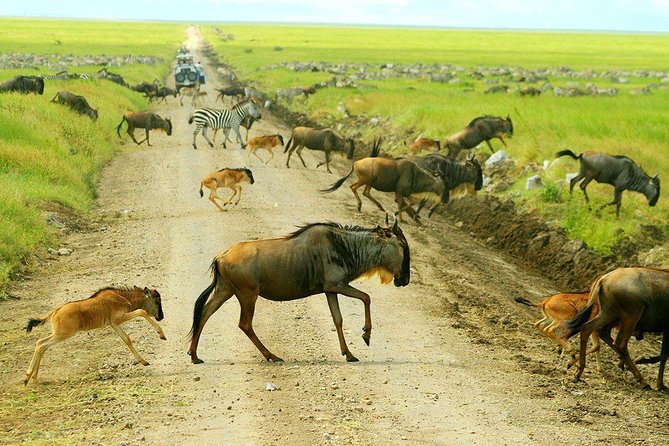
The main draw here is the chance to follow the Great Migration near the Grumeti River, where wildebeest may cross between May and July. The trip also packs Tanzania’s best-known wildlife areas into one route: elephant country in Tarangire, flamingos and baboons at Lake Manyara, the open Serengeti, and the animal-filled Ngorongoro Crater.
I like two things right away. Unlimited mileage means your driver is not required to turn back after a fixed number of kilometers, and the small group limit of six should give you more room around the pop-up roof. The itinerary also adds real local contact through Mto wa Mbu and a Maasai village, rather than treating the safari as a string of vehicle sightings.
The main caution is trust. One serious complaint describes a guest being left stranded in Ngorongoro after a payment dispute, while other accounts praise guides Mike and the company’s care. I would confirm the booking, payment terms, accommodations, airport arrangements, and emergency contact in writing before sending a large advance payment.
Six useful things to know before booking
- The Grumeti crossing is seasonal: The strongest chance comes between May and July, but animal movements are not scheduled like a train.
- Unlimited driving matters: You can spend more time searching for cats, herds, and river activity without a stated mileage cap.
- The route covers four major wildlife areas: Tarangire, Lake Manyara, Serengeti, and Ngorongoro Crater each offer a different kind of safari.
- The vehicle has a pop-up roof: That gives you a clear standing view for wildlife and photographs.
- The group is limited to six: This is a useful size for sharing sightings without filling every seat.
- Company checks are important: Positive accounts praise Mike and the safari team, but one serious complaint raises concerns about advance payment and trip handling.
What this safari actually covers
The advertised price is $4,984.62 per person. The supplied details describe the experience as about six days, while the title calls it an eight-day safari. The itinerary itself lists six substantial stops, from Tarangire to Ngorongoro. That mismatch is not a small detail. Ask for the exact number of nights, the hotel or camp at every stop, and the full day-by-day schedule before you pay.
The price includes a 4×4 vehicle with a pop-up open roof, park entrance fees, full-board accommodation, mineral water, government taxes, and an English or other-language guide with wildlife experience. Tips, travel insurance, and international flights are extra.
At nearly $5,000 per person, this is not a bargain safari. It may offer reasonable value if the accommodation is good, the vehicle is private or nearly private, and the guide spends long hours locating animals rather than rushing between parks. Park fees and full-board lodging add real cost in northern Tanzania. Still, the value depends heavily on the accommodation standard and the actual trip length. Get those details clearly stated.
The phrase unlimited mileage is especially useful here. Wildlife does not appear on demand, and a leopard may require patient searching. A driver who can keep looking has more freedom than one working under a strict daily distance limit. That promise is worth confirming in writing, including whether it applies on every game-drive day.
Other trips timed to the herds from Arusha:
- 8 Days Great Wildebeest Calving Migration Safari from Arusha
★ 5.0 · 254 reviews - 10-Day Serengeti Wildebeest Migration Safari from Arusha
★ 5.0 · 218 reviews - 8 Day Spectacular Migration Serengeti mid -Range Tanzania Safari
★ 5.0 · 161 reviews
Tarangire: elephants and dry-season wildlife
Your safari begins with an early breakfast, a drive to Tarangire National Park, and a packed lunch. The listed game-drive time is about eight hours, so this is a full first day rather than a quick park visit.
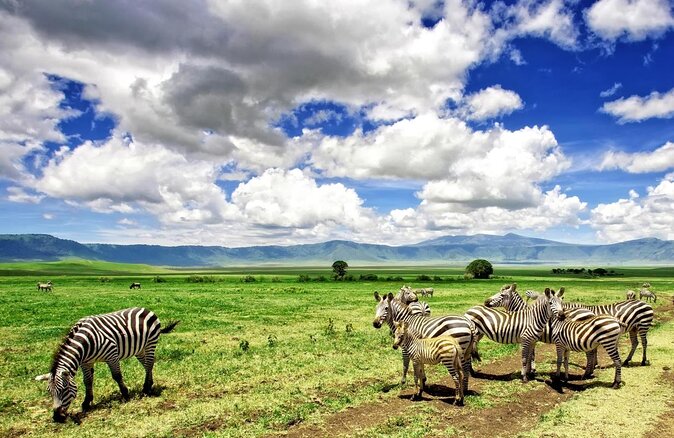
Tarangire is best known here for its large elephant population and strong birdlife. The Tarangire River draws wildebeest, zebra, and gazelles, which in turn attract lions, cheetahs, and leopards. You might also search for less common animals such as kudu, oryx, and gerenuk.
The park becomes especially productive in the dry season, when animals gather around remaining water. That makes timing important. If your priority is elephants and concentrated wildlife, Tarangire can be a strong opening act. If your main goal is the Grumeti crossing, remember that this first park is not the migration centerpiece.
An eight-hour game drive can be rewarding, but it can also be tiring after an early start. Bring sun protection and accept that a packed lunch in the vehicle is part of the safari rhythm. The pop-up roof lets you stand for a better view, but you will spend much of the day exposed to sun and dust.
Mto wa Mbu: a useful break from the vehicle
The second day begins with a walking tour in Mto wa Mbu, a farming town near Lake Manyara. The village is described as home to more than 120 different African tribes, giving the stop a human and cultural focus that wildlife-only itineraries often lack.
The walk includes rice and banana plantations, a local beer factory, a school, and a carving factory. These stops let you see how people work and live in the area instead of viewing northern Tanzania only through a vehicle window.
I like this part because it breaks up several long game-drive days. It also gives you a chance to learn about local production and daily routines before returning to the parks. Keep your expectations practical: this is a guided village walk, not a large cultural performance or a formal museum visit.
After the walk, you continue to Lake Manyara National Park. The travel time from Mto wa Mbu is short, and the park offers a different setting from Tarangire. Its soda lake can attract pink-hued flamingos, while baboons, giraffes, elephants, hippos, buffaloes, and many bird species may appear along the route.
The listed time is about seven hours. That includes both the village activity and park time, so ask how the hours are divided. Lake Manyara is a worthwhile addition for birdlife and varied scenery, but it is not the place to build your entire safari around a single iconic animal sighting.
The Maasai village stop
On the way toward the Serengeti, the itinerary includes a stop at a Maasai village. The stated purpose is to offer insight into the lifestyle of the Maasai, often recognized for their pastoral traditions and distinctive dress.
This is one of the route’s more meaningful elements when handled with care. You get a glimpse of local life before entering one of Africa’s most famous parks. I would ask what the visit includes, how long it lasts, and whether any extra fee is expected. Those details are not provided, and clear arrangements help avoid awkward surprises.
The drive to the Serengeti is long, with about nine hours listed for the day. You will have a picnic lunch on arrival before continuing with a game drive. That schedule makes this a demanding transition day, especially after the previous day’s walking and park visit.
Same base, a different kind of day out:
- Serengeti Balloon Safari and authentic bush breakfast
★ 5.0 · 2,480 reviews - Balloon Safari & Bush Breakfast in Serengeti – Miracle Experience
★ 5.0 · 1,646 reviews - Tanzania Classic – 7 Days
★ 5.0 · 1,151 reviews - 4 Days Group Camping Safari
★ 5.0 · 1,101 reviews
The Grumeti River and the migration gamble
The central promise is the chance to see wildebeest cross the Grumeti River between May and July. The herds face fast-moving water and crocodiles, then predators may wait on the far bank. If the timing works, this can be a gripping wildlife scene.
The important phrase is big chance, not guarantee. The migration moves according to rainfall, food, and animal behavior. A crossing may happen before you arrive, after you leave, or at another point entirely. Even in the stated season, the herd could be elsewhere.
The best way to view this part of the trip is as a strong seasonal possibility, not a promised event. Unlimited mileage helps because your driver can search farther and spend time watching likely areas. It cannot control the animals.
The Serengeti itself is valuable even without a river crossing. The open plains support large herds and predators, and the park is one of the better places on this route to seek the Big Five: lion, elephant, leopard, rhino, and buffalo. Rhino sightings are never something to assume, but the itinerary specifically identifies the Serengeti as a place to look for all five.
Two full Serengeti days give you time
After reaching the park, one day is devoted to moving with the herds across the plains. The listed time is about ten hours, which gives you a better chance to search than a short morning drive.
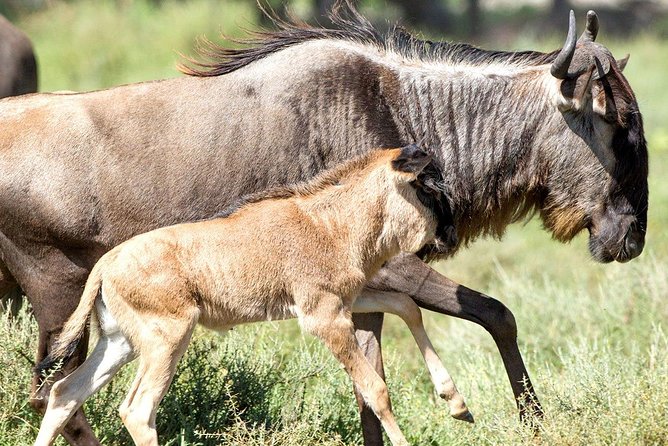
You may see wildebeest and other hoofed mammals moving in their annual clockwise pattern. Predators follow the herds, so your guide may spend time scanning for lions, cheetahs, and other hunters. The best moments may be quiet ones: a distant line of animals, a sudden alarm, or a predator waiting near a herd.
A second ten-hour day focuses on the central Serengeti. This area is known for lions and leopards, and the description also lists cheetahs, elephants, giraffes, hippos, ostriches, and the seldom seen pangolin. Some of these animals are far easier to find than others. Treat pangolin as a lucky possibility, not an expected sighting.
The central park day is a good reason to choose this itinerary even if the river crossing does not happen. It gives you time in a productive wildlife area rather than making the Serengeti a single overnight stop. The listed camp is described as combining old African character with comfort in the park, but the exact camp name and room type are not supplied. Confirm them before booking.
The long hours can be tiring. That is the tradeoff for covering more ground and keeping your options open. A small group helps, since six people are easier to coordinate than a full-size vehicle, but you should still ask how many passengers will share your particular vehicle.
Ngorongoro Crater: a compact final game drive
The final wildlife day takes you toward Ngorongoro Crater for a game drive. The crater is described as sheltering close to 30,000 animals, including the Big Five. Its enclosed setting can produce a high concentration of wildlife in a relatively compact area.
You may look for zebra, buffalo, lions, wildebeest, baboons, elephants, flamingos, ostriches, hippos, cheetahs, and black rhino. The variety is the main appeal. After several broad Serengeti days, the crater can feel more concentrated and dramatic.
The listed time is about seven hours, and the route includes an overnight at recommended accommodation after the drive. The crater’s colors and changing cloud cover are part of the visual appeal, but the day is still built around wildlife rather than a relaxed scenic outing.
Ngorongoro can also be a logistical pressure point. One serious account describes being left stranded there after a dispute involving payment and company finances. The company apologized in its response and said other people had also been affected. I cannot resolve that dispute from the available information, but I would take it seriously. Confirm exactly how you will leave the crater, who is responsible for the next transfer, and what happens if the planned vehicle or lodging is unavailable.
Guides, vehicles, and the value of a small group
The tour promises a professional English-speaking guide, or another language by arrangement, with wildlife knowledge. The positive accounts specifically praise Mike for patience, organization, driving, help, and care. Another account credits Mike and the owner with making no shortcuts while looking for the migration and covering central and northern Serengeti.
Those details matter. A safari guide does more than steer. The guide chooses routes, reads animal behavior, explains what you see, and decides how long to wait. Unlimited mileage only has real value when paired with a guide who is willing to use that freedom thoughtfully.
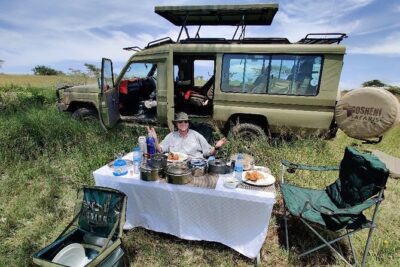
The vehicle is a 4×4 with a pop-up roof. That setup lets you stand for a clearer view and gives you a better angle for photographs than a closed vehicle. The maximum group size is six, so ask if the vehicle will be private to your party or shared with other bookings.
Pickup is offered, the start time is 7:30 a.m., and the meeting area is in Arusha. The details also say the starting point is near public transportation. Most people can participate, but the schedule includes early breakfasts, long drives, walking in Mto wa Mbu, and game drives lasting up to ten hours. You need reasonable stamina and patience for time on rough roads.
The company question deserves attention
The feedback is mixed. Several accounts praise the safari, the staff, the organization, and the care provided by Mike and the wider team. One family safari account specifically highlights patience and the effort made to find wildlife across central and northern Serengeti.
But one account makes a serious allegation involving full advance payment, an accountant, and being left without support in Ngorongoro. The company’s response apologizes and explains that the named person was only part of the company, but it does not remove the need for caution.
Before booking, I would request:
- The exact company name and payment recipient
- A written invoice with the complete route and accommodation
- The guide’s name and direct phone number
- Confirmation of pickup and the final drop-off plan
- The number of nights included
- A clear statement of refund and cancellation terms
Free cancellation is available if you cancel at least 24 hours before the start time. Changes or cancellations inside that window are not accepted for a refund. That policy is useful, but it does not replace basic checks before making a major payment.
Who should book this safari?
I would consider this trip if you want a long, wildlife-first safari with a real chance of seeing the migration near the Grumeti River. It suits you if you like full days, do not mind long drives, and value the freedom to keep searching for animals.
It is also a good fit if you want more than wildlife. The Mto wa Mbu walk and Maasai village visit add local context, while Tarangire and Lake Manyara keep the route from becoming a Serengeti-only trip.
I would be more cautious if you need a fixed eight-day schedule, high certainty about accommodation, or a polished luxury operator with no unresolved payment concerns. The title and duration do not match, and the accommodation names are missing. Those gaps should be settled before you commit nearly $5,000 per person.
Should you book it?
This safari offers a strong route, a useful small-group size, and an appealing promise of unlimited search time. The most highly praised elements are the patient guiding associated with Mike, the effort to find the migration, and the care shown by parts of the team.
I would not book it on enthusiasm alone. First get the six-day versus eight-day question resolved, then verify every camp, transfer, payment recipient, and guide contact. If those checks come back clean and your dates fall between May and July, this could be a rewarding way to pursue the Grumeti migration while still seeing northern Tanzania’s major parks. If the company cannot provide clear written answers, choose a better-documented operator.
FAQ
Where does the safari start?
The experience starts in Arusha, Tanzania, with a listed start time of 7:30 a.m. Pickup is offered.
How long does the safari last?
The tour summary describes the experience as approximately six days, while the title refers to eight days. The listed route contains six stops. Confirm the exact duration before booking.
When might I see the Great Migration crossing the Grumeti River?
The itinerary identifies May through July as the period when there is a strong chance of seeing wildebeest cross the Grumeti River. A crossing is not guaranteed.
What parks are included?
The route includes Tarangire National Park, Lake Manyara National Park, Serengeti National Park, and Ngorongoro Crater.
How large is the group?
The activity has a maximum of six participants.
What is included in the price?
The price includes a 4×4 with a pop-up open roof, park entrance fees, full-board accommodation as described, unlimited mineral water, government taxes, and a professional guide who speaks English or another arranged language. Tips, travel insurance, and international flights are not included.
Can I cancel for a full refund?
You can cancel for a full refund if you do so at least 24 hours before the experience starts. Cancellations or changes made less than 24 hours before the start time are not accepted for a refund.
Just added in Arusha
- Extraordinary Hot air Bolloon ride in Serengeti | BURIGI CHATO SAFARIS CO L.T.D★ 5.0 · 6 reviews
- 4 Days Private Midrange Lodge Safari to Serengeti & Ngorongoro★ 5.0 · 4 reviews
- 3 days leopard safaris★ 5.0 · 4 reviews
- 8 Days Serengeti Migration safari★ 5.0 · 11 reviews
- tarangire, ngorongoro & lake manyara park 3 days private tour★ 5.0 · 11 reviews
- Mt. Kilimanjaro: Shira plateau to Cathedral point 3872m Day hike★ 5.0 · 7 reviews
- serengeti, ngorongoro & tarangire 4 days private tour★ 5.0 · 18 reviews
- tarangire & ngorongoro 2 days tour★ 5.0 · 14 reviews
Wildebeest Migration Safaris, compared.
8 Days Great Wildebeest Calving Migration Safari from Arusha
Read our review →
10-Day Serengeti Wildebeest Migration Safari from Arusha
Read our review →
8 Day Spectacular Migration Serengeti mid -Range Tanzania Safari
Read our review →
9-Day Serengeti Migration Footsteps Tanzania Safari
Read our review →
Private 6-Day Great Migration Ndutu Serengeti Safari Tour
Read our review →
4 Day Great Migration Safari Serengeti & Ngorongoro Crater
Read our review →Browse the lists this tour appears in