
Reviewed · WILDEBEEST MIGRATION SAFARIS
6-Day Essence of Serengeti & Ngorongoro Migration Safari
The real draw here is four full days in the Serengeti, where the Great Migration is never treated as a quick photo stop. You have time to search for wildebeest, zebra, lions, cheetahs, leopards, hippos, and crocodiles, then finish with the Ngorongoro Crater, one of Tanzania’s most dramatic wildlife settings.
I like the early starts, which give you the best chance of seeing active animals and a fine sunrise. I also like the private format, because your group travels with its own guide and vehicle rather than following a large coach. The main drawback is the long driving time, especially on the first day, and the schedule needs clarification because Tarangire and Lake Manyara are named in the overview but not given detailed days.
Key points at a glance
- Four nights or days focused on the Serengeti: This is the heart of the trip, with several game drives rather than one hurried visit.
- Ngorongoro Crater included: The crater offers dense wildlife viewing in a compact area and a chance to see black rhino.
- Migration timing matters: The herds follow rainfall, so sightings and locations change from year to year.
- Private guiding: Only your group participates, with a professional guide and driver.
- Long first day: Pickup at 8:00 am leads to the Serengeti by way of the Ngorongoro Conservation Area, with game viewing along the route.
- Price includes core safari costs: Meals, park activities, taxes, drinking water, and guide services are included in the $3,713 per-person price.
Four Serengeti days give this safari its purpose
This is not a quick northern Tanzania sampler. The detailed plan puts most of your time into Serengeti National Park, with game drives on four consecutive days. That is a smart choice if your main goal is wildlife, because one quiet drive does not define a safari.
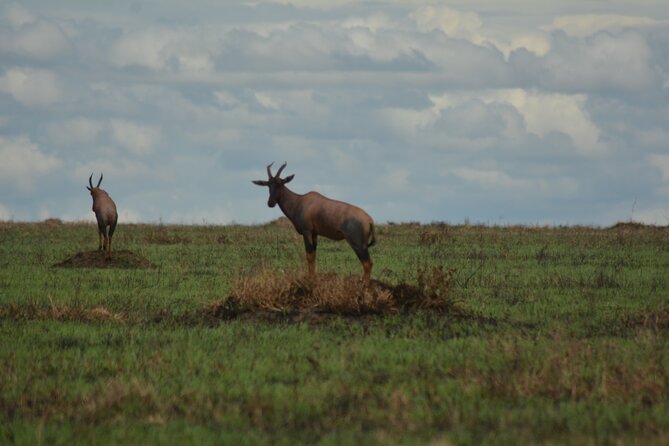
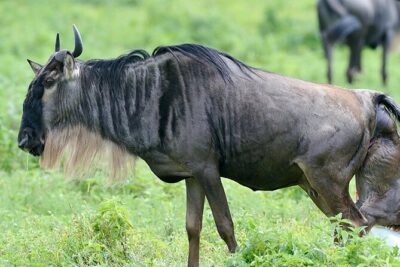
The Serengeti is famous for its huge open plains and the circular movement of more than a million grazing animals through the Serengeti-Mara ecosystem. The main herds include about 1.5 million wildebeest, 250,000 zebra, and roughly half a million antelope. Those figures describe the wider migration, not a guarantee that you will see every animal in one place.
Rainfall controls the route. In November and December, the herds generally move toward the southern plains. During the longer rains from April to June, they head back north. The timing shifts each year, so you should book this trip for the chance to see a natural event, not for a fixed parade on a fixed date.
That uncertainty is part of the value of spending several days here. If the herds are not close to your camp on one morning, another drive may bring better luck. You may also spend time with resident wildlife, including lions, leopards, cheetahs, hyenas, jackals, giraffes, buffalo, hippos, and crocodiles.
Other park itineraries that start in Arusha:
- Serengeti Balloon Safari and authentic bush breakfast
★ 5.0 · 2,480 reviews - Balloon Safari & Bush Breakfast in Serengeti – Miracle Experience
★ 5.0 · 1,646 reviews - 4 Days Group Camping Safari
★ 5.0 · 1,101 reviews
Day 1: a long road from Arusha to the Serengeti
Your guide is scheduled to collect you at 8:00 am from your hotel or the airport. The route heads through the Ngorongoro Conservation Area, with a picnic lunch and game viewing along the way.
The trip takes most of the day. The schedule lists about 15 hours, which tells you to expect a serious road-and-safari day rather than a relaxed transfer. You also make a short stop at a viewpoint on the rim of the Ngorongoro Crater. This is an excellent first look at one of Tanzania’s great natural sights, but it is only a rim stop at this stage, not your crater game drive.
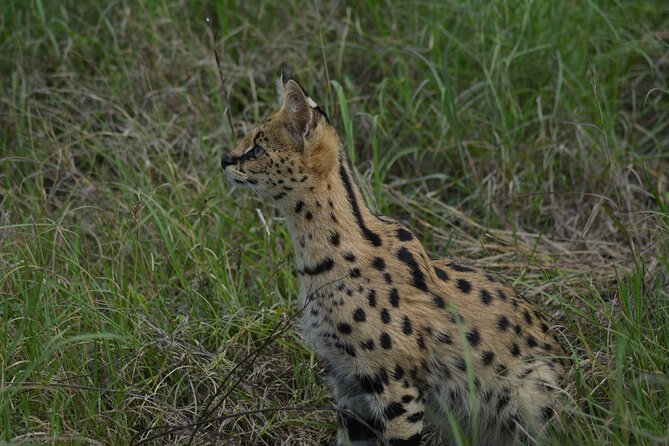
As you leave the highlands, the surroundings open into the Serengeti plains. You may begin seeing animals before reaching camp, which makes the long drive feel less like dead time. The first full game-viewing opportunity includes the possibility of lions, hyenas, leopards, cheetahs, jackals, and giraffes.
Pack patience for this day. You will want water, sun protection, and a way to keep small items handy in the vehicle. Unlimited drinking water is included, along with lunch and dinner, but the schedule is demanding.
Days 2 through 4: the main wildlife search
Day 2 begins with breakfast and a game drive around 6:30 am. You spend six to seven hours exploring the park, with a break around 2:00 pm before continuing according to the plan.
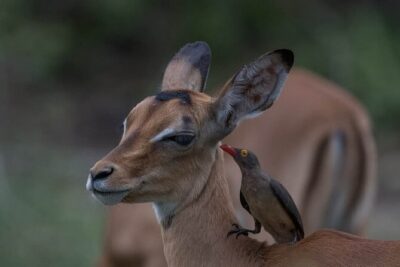
The early start is useful. Animals are often easier to find when the day is cool, and morning light is kinder for photographs. You might see impala, buffalo, hippo, and crocodile, along with the predators that follow the grazing herds.
Day 3 is set aside for another full day of Serengeti game drives. The point is not to rush between named attractions. Instead, your guide can search different areas for wildlife based on the season, recent sightings, and the movement of the herds. That flexibility matters more than a long checklist of stops.
Day 4 focuses on Central Serengeti and its short-grass plains. This area is linked with large concentrations of wildebeest and zebra. If you visit around the calving period in January, you may see young wildebeest arriving in huge numbers. The timing is brief, normally about three weeks, and the number of births can approach half a million.
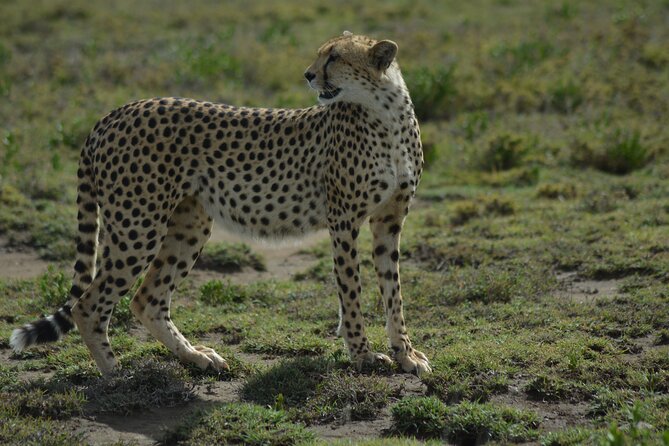
Calving season brings both spectacle and tension. Newborn wildebeest can run within minutes, and many are strong enough to keep up with the herd after a few days. The open grass gives little cover, so predators such as lions, cheetahs, and hyenas may be active nearby.
Do not expect the same migration scene in every month. January can bring calving in the south, while November and December may see movement toward the southern plains. April through June generally brings the herds back north. Your guide can help explain what you are seeing, but no safari company can control rainfall or animal movement.
Day 5: sunrise, the last Serengeti drive, and the crater rim
Day 5 recommends a very early wake-up for a morning game drive. This is one of the best suggestions in the schedule. A sunrise over the Serengeti gives you a memorable setting, and the cooler hours can bring more animal activity.
After the drive, you return to camp for brunch and travel toward Ngorongoro. The route changes the mood of the trip. The Serengeti is broad and open, while the crater is enclosed by walls rising about 2,000 feet.
The Ngorongoro Crater covers about 102 square miles and is roughly 2,000 feet deep. Its grassland, river, swamps, and soda lake support a high concentration of wildlife. The area is especially valued for the possibility of seeing black rhino, one of the rarer animals on a northern Tanzania safari.
The schedule gives about seven hours for this day, but driving times can vary. You should treat this as a transition day with a final Serengeti outing, not as another full day in the park.
Other safaris people book out of Arusha:
- 5 Days Group Camping Safari
★ 5.0 · 730 reviews - 3 Days Serengeti & Ngorongoro Group Camping Safari
★ 5.0 · 574 reviews - 7-Day Premium Luxury Tanzania Safari All-Inclusive
★ 5.0 · 426 reviews - 3-Day Classic Serengeti Safari
★ 5.0 · 263 reviews
Day 6: concentrated wildlife inside Ngorongoro Crater
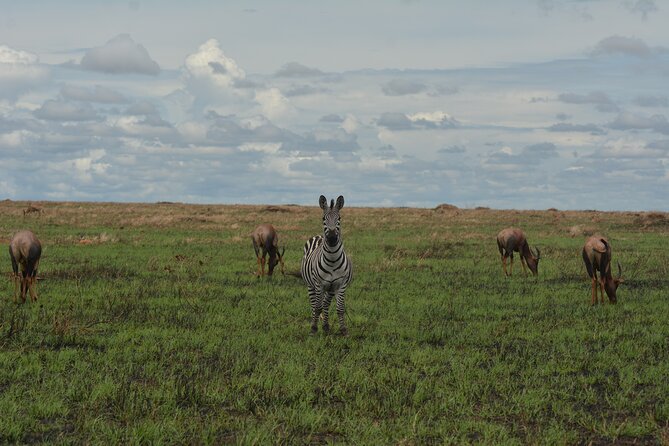
The final morning begins with an early view of sunrise from the crater edge, followed by breakfast and a descent into the crater. The Ngorongoro Conservation Area is a UNESCO World Heritage site, and the crater formed about three million years ago.
Inside, the compact setting makes wildlife easier to find than in the wide Serengeti. The crater is about 610 meters deep and covers roughly 260 square kilometers. Around 25,000 ungulates live in the crater, according to the supplied tour information, and more than 500 bird species are found in the wider area.
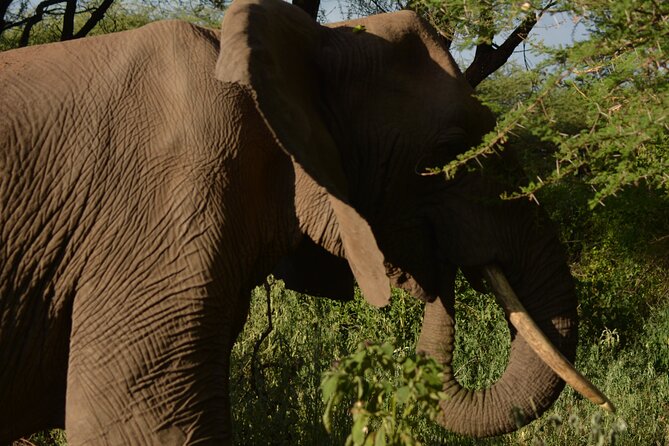
You may see wildebeest, zebra, gazelle, elephant, and many birds within a relatively short period. Lions are also possible, and with luck you may catch sight of black rhino. The crater is not a guarantee of every animal, but its enclosed geography gives you a strong chance of seeing a wide range of species in one day.
The drawback is that the crater can feel busy compared with the more spacious Serengeti. Its popularity is easy to understand, but you should expect more vehicles in a concentrated wildlife area. The reward is efficient game viewing, especially if you have limited time and want a final burst of animal sightings.
What about Tarangire and Lake Manyara?
The experience is presented as including Tarangire National Park and Lake Manyara National Park. Tarangire is associated with ancient baobab trees, while Lake Manyara is known for its tree-climbing lions.
However, the detailed six-day schedule provided here gives days 1 through 5 to the Serengeti and Day 6 to Ngorongoro. It does not specify a separate Tarangire or Lake Manyara visit. This is the most important point to confirm before paying, especially if those two parks are central to your plans.
You should ask for the final route in writing. Find out whether Tarangire and Lake Manyara replace part of the Serengeti schedule, occur before Day 1, or are included only in a broader package description. Four Serengeti days may be exactly what you want, but it is different from a four-park circuit.
Guides, vehicles, and the private format
This is a private activity, so only your group participates. That gives you more control than a large shared departure, at least in principle. You can ask to pause longer at a sighting, take an early drive, or spend less time at a stop that does not interest you.
The tour includes a professional guide and driver. Amani is named as a guide who accompanied a group from Kilimanjaro Airport through the six-day journey. Abouh is praised for friendly service and for going beyond the basic job, while Innocent is mentioned for active email replies during trip planning.
Those names do not mean one of them will definitely lead your safari. They do tell you what to ask when booking: request the assigned guide’s name, confirm whether the same person drives and guides, and ask what vehicle is planned for a private group.
The quality of a safari often depends on communication. A guide who explains animal behavior, adjusts the route, and listens to your interests can make a quiet hour feel worthwhile. A private vehicle is most valuable when you use that flexibility rather than simply following a fixed timetable.
Meals, camping, and comfort
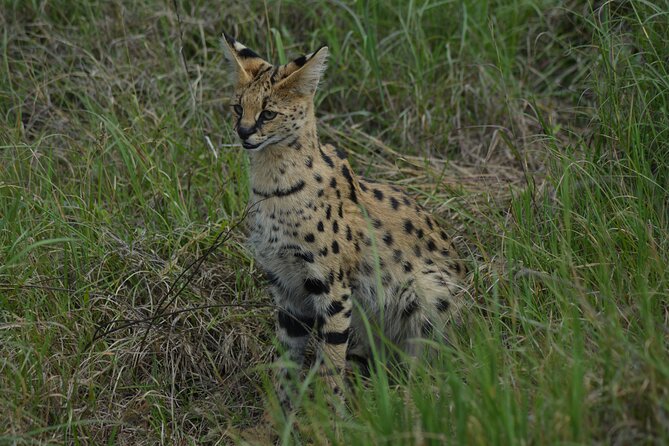
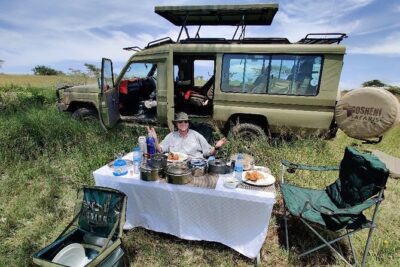
Breakfast, lunch, and dinner are included for all six days, along with unlimited drinking water. The information also describes large, comfortable tents on a camping version of the trip, and separate comments refer to good facilities and varied food.
Still, the exact accommodation setup is not fully spelled out in the details provided. You should confirm whether your $3,713 price covers tented camping, permanent tented camps, lodges, or a mixture. Ask about bathrooms, electricity, meal arrangements, and whether lunch is packed or served at camp on each day.
This matters because the schedule includes long drives and early departures. A comfortable place to sleep and a reliable breakfast can make a real difference by Day 4. You are not buying a short park visit. You are signing up for repeated dawn starts, hours in a safari vehicle, and a great deal of outdoor time.
Is $3,713 per person good value?
At $3,713 per person, this is a major purchase, but the price includes the main working parts of a northern Tanzania safari: park activities, taxes and fees, a professional guide and driver, six breakfasts, six lunches, five dinners, and drinking water.
The strongest value comes from time. Four detailed days in the Serengeti give you more chances to see changing wildlife conditions than a one-day visit. Ngorongoro then adds a different kind of game viewing, with animals concentrated inside the crater.
The price does not include international flights, visas, or tips. Those costs can change your final budget. Pickup is offered, but the meeting information lists a start time of 12:00 am, while Day 1 says the guide arrives at 8:00 am. Confirm the exact pickup time and location before arrival.
I would compare the price with the accommodation level and vehicle details, not just the park list. If the trip uses good camps, a private vehicle, and a strong guide, the cost may be reasonable for six days in Tanzania. If it uses basic camping, you should compare it carefully with other private safari options.
Who should book this six-day safari?
I would choose this for you if the Serengeti and migration are the main reason you are coming to Tanzania. It suits wildlife-focused visitors who can handle early mornings, long drives, and a schedule built around animal sightings rather than city comfort.
It also fits a couple, family, or small private group that wants a guide dedicated to them. The format is less suitable if you want a slow holiday with short transfers or if you need a confirmed four-park itinerary without changes.
The six days are especially useful for photographers and first-time safari visitors. You have repeated chances to watch animal behavior, rather than racing from one park to the next. The Ngorongoro finale gives you a compact wildlife day after the wide-open Serengeti.
Practical details before you book
Confirmation is provided at booking, and most people can participate. The activity is near public transportation, though the safari itself involves extended road travel and game drives.
Free cancellation is available up to 24 hours before the experience starts. Changes or cancellations inside that 24-hour window are not accepted for a refund. Since the start time is unclear in the supplied details, confirm the local start time before relying on that deadline.
Before booking, ask these three questions:
- Is Tarangire and Lake Manyara actually included in my six-day route?
- What accommodation and vehicle are included at $3,713?
- What are the exact pickup time and pickup point in Arusha?
Should you book it?
Book this safari if you want a serious Serengeti stay, a private guide, and a strong chance to see varied wildlife across several game drives. The early mornings, included meals, water, park costs, and Ngorongoro finale create a useful all-in package.
Hold off until the operator confirms the route if Tarangire and Lake Manyara are essential. Also confirm accommodation, vehicle type, assigned guide, and pickup time. Once those points are clear, this looks best for someone who values time in the Serengeti over a quick tour of every northern Tanzania park.
FAQ
How long is the safari?
The experience lasts six days, approximately.
Where does the safari begin?
The tour is based in Arusha, Tanzania, and pickup is offered from your hotel or the airport.
Is this a private tour?
Yes. Only your group participates in the private activity.
What parks are included in the detailed schedule?
The day-by-day schedule covers Serengeti National Park and the Ngorongoro Conservation Area, including the Ngorongoro Crater.
Are Tarangire National Park and Lake Manyara National Park included?
They are named in the experience overview, but the detailed six-day schedule does not assign separate days to them. Confirm the final route before booking.
What meals are included?
The package includes six breakfasts, six lunches, and five dinners. Unlimited drinking water is also included.
What is not included in the price?
Tips, a Tanzanian visa, and international flights are not included.
More Serengeti safaris from Arusha
- 5-Day Highlights mid-Range Crater, Serengeti, Tarangire
★ 5.0 · 296 reviews - Private 6-Day Tarangire Manyara Crater and Serengeti with Mid-Range Lodges
★ 5.0 · 238 reviews - 10-Day Serengeti Wildebeest Migration Safari from Arusha
★ 5.0 · 218 reviews - 8 Day Spectacular Migration Serengeti mid -Range Tanzania Safari
★ 5.0 · 161 reviews
More Ngorongoro trips from Arusha
- 5 Days Camping Tarangire, Serengeti & Ngorongoro crater & Visiting Maasai
★ 5.0 · 229 reviews - 4 Days Join Group tour Tarangire Serengeti and Ngorongoro crater
★ 5.0 · 219 reviews - 4-Day Safari from Arusha: Tarangire, Serengeti and Ngorongoro
★ 5.0 · 173 reviews - 2 Days Tarangire and Ngorongoro Group Camping Safari
★ 5.0 · 146 reviews
Just added in Arusha
- 4 Days Private Midrange Lodge Safari to Serengeti & Ngorongoro★ 5.0 · 4 reviews
- Extraordinary Hot air Bolloon ride in Serengeti | BURIGI CHATO SAFARIS CO L.T.D★ 5.0 · 6 reviews
- 3 days leopard safaris★ 5.0 · 4 reviews
- 8 Days Serengeti Migration safari★ 5.0 · 11 reviews
- tarangire, ngorongoro & lake manyara park 3 days private tour★ 5.0 · 11 reviews
- tarangire & ngorongoro 2 days tour★ 5.0 · 14 reviews
- Mt. Kilimanjaro: Shira plateau to Cathedral point 3872m Day hike★ 5.0 · 7 reviews
- serengeti, ngorongoro & tarangire 4 days private tour★ 5.0 · 18 reviews
Wildebeest Migration Safaris, compared.
8 Days Great Wildebeest Calving Migration Safari from Arusha
Read our review →
10-Day Serengeti Wildebeest Migration Safari from Arusha
Read our review →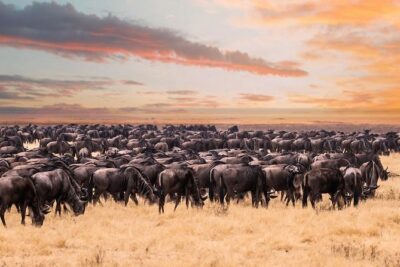
8 Day Spectacular Migration Serengeti mid -Range Tanzania Safari
Read our review →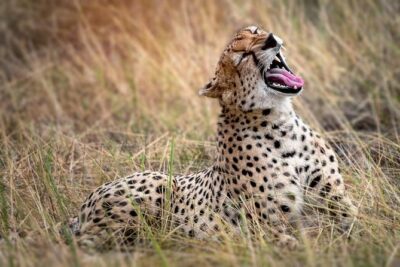
9-Day Serengeti Migration Footsteps Tanzania Safari
Read our review →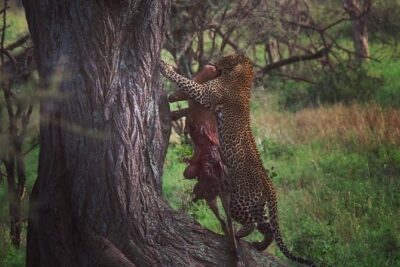
Private 6-Day Great Migration Ndutu Serengeti Safari Tour
Read our review →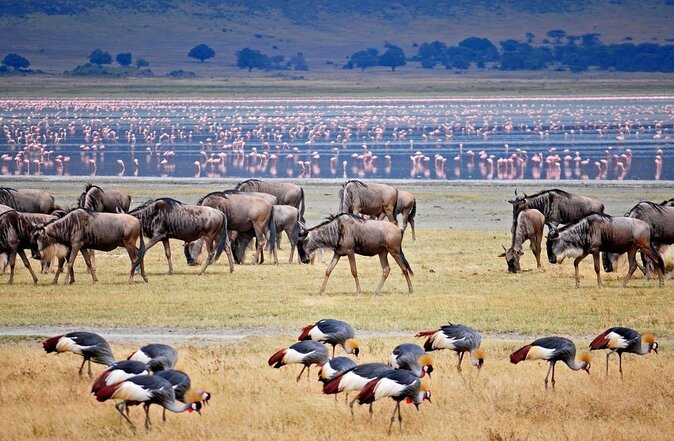
4 Day Great Migration Safari Serengeti & Ngorongoro Crater
Read our review →Browse the lists this tour appears in