
Reviewed · KILIMANJARO TREKS
6 days Kilimanjaro Climbing Machame Route in Tanzania
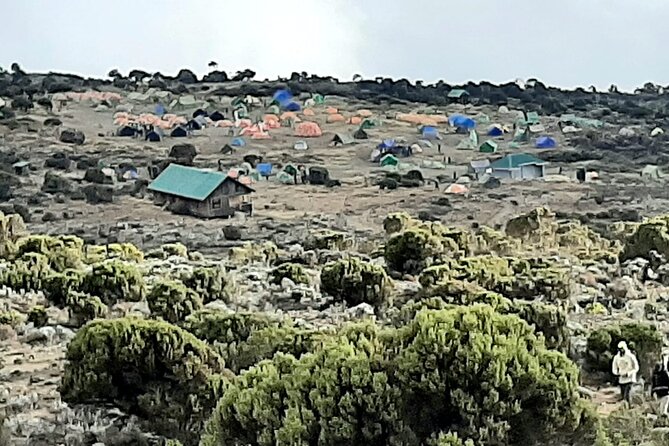
The Machame Route gives you Kilimanjaro in its most scenic form, but it asks for steady legs and a willing attitude. You walk through rainforest, moorland, semi-desert, and alpine scree before making the midnight push to Uhuru Peak, Africa’s highest point. Nights are spent in tents, not mountain huts.
I like the route’s acclimatization profile, especially the high climb to Lava Tower followed by a lower night at Barranco. I also like the personal scale of Twende Africa Tours, with guide Eli praised by name and Peter handling arrangements for some climbers. The main drawback is simple: six days is demanding, and the summit night is long, cold, and physically punishing.
Key points at a glance
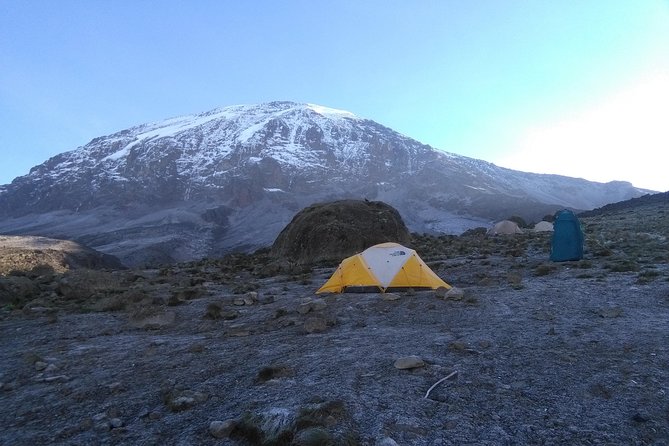
- Machame’s changing scenery: Walk from montane forest to moorland, semi-desert, alpine desert, and icy summit terrain.
- Tented mountain nights: This is a camping route, with no hut accommodation along the trail.
- A useful acclimatization day: The Lava Tower climb and descent to Barranco help your body adjust to altitude.
- A serious summit night: You start around midnight, climb through scree to Stella Point, then continue toward the 5,895-meter summit.
- Local support: Twende Africa Tours organizes private climbing groups, with guide Eli and coordinator Peter named in recent feedback.
- A $2,800 commitment: The price includes national park fees, private transportation, dinner, and shared return transfers, but you should confirm exactly what accommodation and meals are covered.
Why the Machame Route is worth the effort
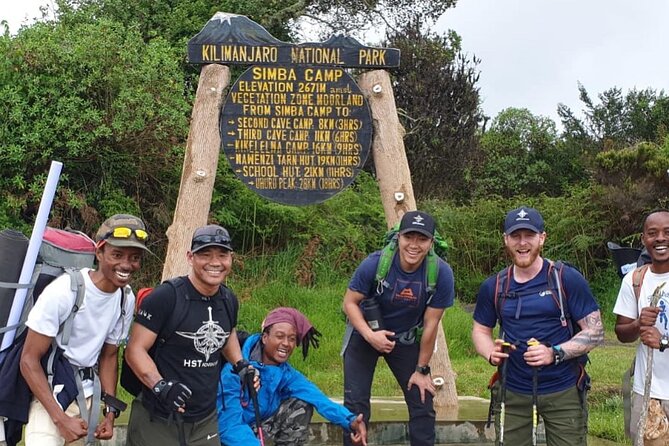
Kilimanjaro is not a technical climb in the mountaineering sense, but it is still a major physical challenge. You need to walk uphill for several hours a day, sleep at altitude, and keep moving when the air becomes thin and the trail turns rough.
Machame earns its nickname, the Whisky Route, because it is more demanding than the Marangu Route. That comparison matters. Marangu uses hut accommodation and a generally more direct trail. Machame uses tents and steeper, more varied paths, but gives you better scenery and a stronger sense of crossing the mountain’s different ecological zones.
The route is designed for the slightly adventurous hiker who does not mind muddy forest paths, exposed rocky sections, cold camps, and a very early summit start. The supplied success figure is about 85 percent, but that should not make you casual about preparation. Altitude affects people differently, and the final night is still the hardest section of the trip.
At $2,800 per person, this is not a budget walk. The value rests in the national park access, transportation, private group arrangement, mountain crew, tented route, and six-day itinerary. Since the included list names dinner, park fees, private transportation, two nights of accommodation, and a shared round-trip transfer, I would ask for a precise breakdown before paying. The mountain itinerary clearly involves several tent camps, so confirm how the phrase two nights accommodation applies to the full package.
Other routes up the mountain from Arusha:
- 8-Day Small-group Lemosho Kilimanjaro Summit Trekking
★ 5.0 · 186 reviews - 5 Days Best of Tanzania Luxury Safari Northern Circuit
★ 5.0 · 174 reviews - 7-Day Machame Kilimanjaro Summit Tour from Arusha
★ 5.0 · 125 reviews
Day 1: Machame Gate to Machame Camp
Your first transfer from Moshi to the Kilimanjaro National Park Gate takes about 45 minutes and passes through Machame village on the mountain’s lower slopes. The stated meeting point is in Arusha, so confirm the exact pickup plan if you are staying in Arusha rather than Moshi.
After registration and the park entrance formalities, you begin in montane forest. The trail winds upward along a ridge, with thick vegetation and damp conditions underfoot. The lower part can be muddy and slippery, so gaiters are not decorative extras here. Trekking poles are also useful.
The day covers about 11 kilometers and takes five to seven hours. You gain roughly 1,170 meters, moving from 1,830 meters to 3,000 meters. That is a respectable first day, though the forest provides shade and a more gradual introduction than the bare upper slopes.
You finish at Machame Camp. The tented setup is part of the route’s character, but it also means you should be comfortable sleeping outdoors in changing mountain weather. Dinner is listed as included, while the meal arrangements for the rest of the trek should be confirmed directly.
Day 2: Heather and moorland on the way to Shira
The forest thins after breakfast, and the route changes character quickly. You climb through heather and moorland, crossing a small valley and following a steep, rocky ridge before turning west toward a river gorge.
This is a shorter day by distance, only about five kilometers, but the climb is not trivial. You gain from 3,000 meters to approximately 3,840 meters and walk for four to five hours. The shorter schedule gives you more time to rest at Shira Camp, which is useful as altitude begins to matter.
The shift from forest to open moorland is one of Machame’s rewards. You get wider views and a stronger sense of height, but you also lose some shelter from sun, wind, and rain. Keep a warm layer and rain protection handy rather than burying them at the bottom of your pack.
Shira is an important stopping point because it gives you a night at altitude before the route climbs higher. Take this evening slowly. Eat what you can, drink regularly, and do not treat the shorter walking time as an invitation to rush around camp.
Day 3: Lava Tower, the Shark’s Tooth, and Barranco
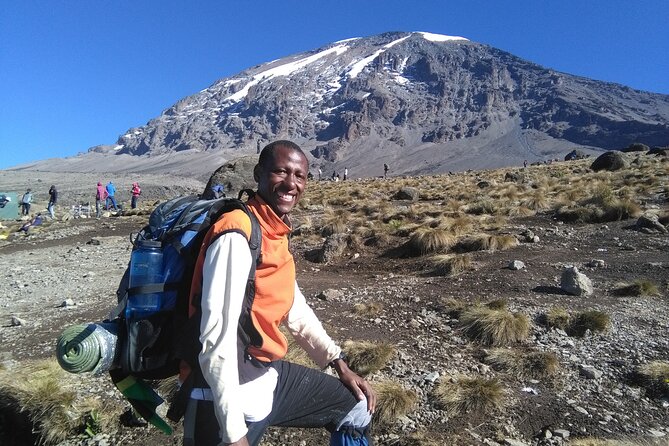
Day 3 is the route’s key acclimatization stage. From the Shira Plateau, you climb east along a ridge and pass the junction toward Kibo, the main summit cone. The route then turns southeast toward Lava Tower, also called the Shark’s Tooth.
The high point is around 4,630 meters, with an optional junction toward Arrow Glacier listed at 4,876 meters. You then descend to Barranco Camp at roughly 3,986 meters. The day covers about 11 kilometers and takes five to seven hours.
On paper, ending close to your starting elevation may seem like lost effort. It is not. Climbing high and sleeping lower gives your body a valuable chance to adjust before the summit push. This is one of the smartest features of the six-day route.
The terrain is now semi-desert, with less vegetation and more exposed rock. Weather can feel sharper at these elevations. You should keep your pace slow and even, follow the guide’s instructions, and avoid using the high point as a contest.
Barranco Camp is memorable because the next morning begins with the Barranco Wall. It also offers a chance to recover after one of the trek’s most useful days. If altitude begins to trouble you, tell your guide early. Quietly trying to hide symptoms helps nobody.
Same base, a different kind of day out:
- Serengeti Balloon Safari and authentic bush breakfast
★ 5.0 · 2,480 reviews - Balloon Safari & Bush Breakfast in Serengeti – Miracle Experience
★ 5.0 · 1,646 reviews - Tanzania Classic – 7 Days
★ 5.0 · 1,151 reviews - 4 Days Group Camping Safari
★ 5.0 · 1,101 reviews
Day 4: The Barranco Wall and Barafu Camp
After breakfast, you tackle the Barranco Wall. This is a steep ridge rather than a technical rock-climbing pitch, but it demands careful footwork and patience. You may use your hands at points, and trekking poles can become awkward on the steeper sections.
The route continues through the Karanga Valley, with lunch listed at about 4,200 meters. You then join the Mweka Trail and climb to Barafu Hut, your camp at around 4,600 meters.
This is a long day of about nine kilometers and roughly eight hours. The vegetation becomes alpine desert, and the surroundings feel increasingly bare. The route’s South Circuit gives you views of Kibo and Mawenzi from different angles, a visual reward before the hardest night.
Barafu is where you prepare for the summit. Dinner is followed by a short rest, or at least an attempt at one, before the midnight departure. Pack the clothing and equipment you need for the summit separately so you are not searching through your bag when the alarm comes.
The altitude at Barafu can make even simple tasks feel slow. Eat, drink, organize your layers, and follow the crew’s schedule. This is not the night for last-minute packing.
Day 5: Midnight to Uhuru Peak and down to 3,100 meters
The summit day begins around midnight. You climb northwest through heavy scree toward Stella Point on the crater rim. This section is often the hardest part of the entire climb because it combines darkness, cold, steep ground, thin air, and fatigue from the previous days.
The ascent to Stella Point is listed as about five kilometers and takes six to eight hours. At 5,685 meters, you pause briefly and, weather permitting, see the sunrise. That moment is one of the strongest reasons to accept the discomfort of a midnight start.
From Stella Point, you continue for about two hours through snow toward the summit at 5,895 meters. The supplied schedule describes the summit elevation as 5,895 meters, or 19,300 feet. The figures in the day-by-day information vary slightly for some camp elevations, so do not worry about small numerical differences. The practical point is that you are climbing above 5,600 meters in very thin air.
The summit section is physically serious. You should expect a slow pace, short steps, and frequent pauses. A successful climb depends less on speed than on conserving energy and responding honestly to how you feel.
After reaching the summit, you descend 12 kilometers, with about three hours listed for the lower part of the descent. The total day can involve 6 to 8 hours of ascent followed by the descent, making it the most demanding day by far.
You eventually reach around 3,100 meters. That lower elevation matters, but your legs will still be tired. Keep your descent controlled, since loose scree can be hard on knees and ankles.
Day 6: Forest descent to Mweka Gate
The final morning takes you down through forest to Mweka Park Gate. The distance is about 10 kilometers, with three to four hours of walking, descending from approximately 3,100 meters to 1,830 meters.
At lower elevations, the trail can again become wet and muddy. Gaiters and poles are useful here, just as they were on Day 1. You may find shorts and a T-shirt comfortable in the warmer forest, but keep rain gear and warmer clothing within reach.
At Mweka Gate, you receive your summit certificates. The Twende Africa Tours vehicle is scheduled to meet you there and drive you back to your Moshi hotel in about 30 minutes.
The last day looks easy beside summit day, but tired legs can make downhill walking surprisingly uncomfortable. Take your time, especially on slippery ground, and enjoy the return to thicker forest and warmer air.
What the local support adds
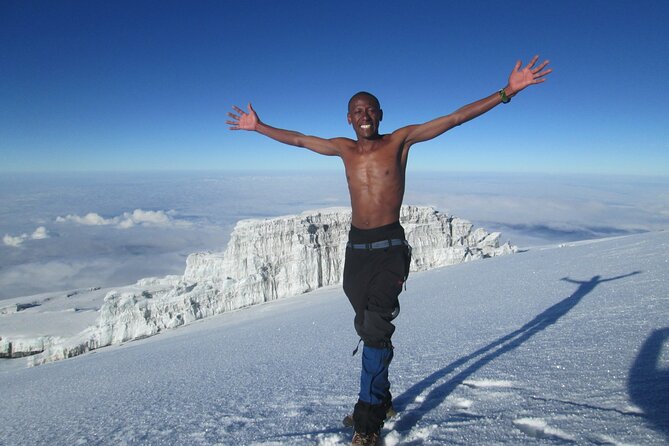
The company is described as a small local business, with Peter handling arrangements and guide Eli named as part of the mountain team. That can be useful when you are arranging a complicated trip from abroad, especially if you want one point of contact for airport pickup, briefing, and the climb.
The published feedback gives special credit to the guides, porters, and cooks. One account specifically praises the care and support from the full team, while another calls out the cooking and the hard work of the porters. Those roles matter on a route like Machame. Your guide manages pace and decisions, porters move the camp equipment, and cooks help keep meals going when you are tired and have little appetite.
It is also worth remembering that porter support carries an ethical responsibility. The information provided does not spell out porter welfare standards, tipping guidance, crew numbers, or equipment details. Ask about these points before departure. A clear answer helps you budget fairly and choose a responsible operator.
The private format means only your group participates. That gives the trip a more personal feel and may make communication easier, though it does not remove the physical demands of the mountain.
Who should choose this six-day climb
I would choose this route if you value scenery, camping, and a varied trail more than hut comfort. You should have a moderate level of physical fitness and be ready for five to eight hours of walking on most days, followed by the much longer summit effort.
This is a good fit for someone who wants a six-day schedule but understands that it leaves little spare time. The six-day Machame itinerary is often chosen for its balance between duration and acclimatization, yet a longer schedule may feel less rushed for some people. No longer option is provided here, so ask Twende Africa Tours about alternatives if you are concerned about altitude.
You should think twice if you dislike tents, muddy paths, steep ridges, cold starts, or shared mountain logistics. The route is not a sightseeing walk with a summit added at the end. It is a sustained high-altitude trek.
The booking process requires each participant’s passport name, number, expiry date, and country. Children must be accompanied by an adult. Confirmation is issued within 48 hours, subject to availability, and cancellation is free if made at least 24 hours before the start time. Changes or cancellations inside that window are not accepted for a refund.
Should you book the Machame Route?
Book it if you want Kilimanjaro’s more scenic and adventurous side, accept tented camping, and can prepare for a difficult summit night. The high climb to Lava Tower followed by the Barranco descent is a real strength, and the local team, including guide Eli and coordinator Peter, gives the trip a personal point of contact.
Before paying $2,800, get clarity on the two nights of accommodation listed among the inclusions, the full meal plan, airport or hotel pickup, and what is covered beyond dinner. If those details match your expectations, this six-day climb offers a strong route for a fit hiker who wants dramatic scenery and a serious African mountain challenge.
FAQ
How long does the Kilimanjaro climb take?
The experience lasts approximately six days, from the first walk near Machame Gate to the descent through Mweka Gate and transfer back toward Moshi.
Where does the activity start?
The meeting point is listed in Arusha, in Tanzania’s Arusha Region, with a start time of 9:00 am. Pickup is offered, so confirm the exact pickup location when booking.
Which Kilimanjaro route does this climb use?
It uses the Machame Route, also called the Whisky Route. The route uses tents rather than huts and passes through several vegetation zones.
How high is the summit?
The summit is listed at 5,895 meters, or about 19,300 feet. Stella Point on the crater rim is listed at 5,685 meters.
What is included in the price?
The listed inclusions are dinner, national park fees, private transportation, two nights of accommodation, and a round-trip shared transfer.
Is the tour private?
Yes. The activity is described as private, with only your group participating.
What level of fitness do I need?
You should have a moderate level of physical fitness. The route includes several hours of hiking per day, steep sections, and a midnight summit ascent.
Do I need to provide passport details?
Yes. The passport name, number, expiry date, and country are required for every participant at booking.
Can I cancel for a refund?
You can cancel at least 24 hours before the local start time for a full refund. Cancellations or changes made less than 24 hours before the start are not accepted.
Just added in Arusha
- Extraordinary Hot air Bolloon ride in Serengeti | BURIGI CHATO SAFARIS CO L.T.D★ 5.0 · 6 reviews
- 4 Days Private Midrange Lodge Safari to Serengeti & Ngorongoro★ 5.0 · 4 reviews
- 3 days leopard safaris★ 5.0 · 4 reviews
- 8 Days Serengeti Migration safari★ 5.0 · 11 reviews
- tarangire, ngorongoro & lake manyara park 3 days private tour★ 5.0 · 11 reviews
- Mt. Kilimanjaro: Shira plateau to Cathedral point 3872m Day hike★ 5.0 · 7 reviews
- serengeti, ngorongoro & tarangire 4 days private tour★ 5.0 · 18 reviews
- tarangire & ngorongoro 2 days tour★ 5.0 · 14 reviews
Kilimanjaro Treks, compared.



8-Day Small-group Lemosho Kilimanjaro Summit Trekking
Read our review →

5 Days Best of Tanzania Luxury Safari Northern Circuit
Read our review →

Climbing Kilimanjaro through 7 days Machame Route
Read our review →
7-Day Machame Kilimanjaro Summit Tour from Arusha
Read our review →Browse the lists this tour appears in