
Reviewed · KILIMANJARO TREKS
7 Days Kilimanjaro Climb Machame route
The best reason to choose this climb is the seven-day pace. You cross rainforest, high moorland, the Shira Plateau, alpine desert, and glacier country before making the final push to Uhuru Peak. The extra day gives your body more time to adjust, which matters far more than shaving a day off the price.
I especially like the changing scenery and the strong camp crew built into the trip. Guides Mtui, Emmanuel, and Noel are named as part of the team, while porters and cooks move ahead to prepare camp and meals. The main concern is simple: you must bring or rent your own mountain gear, including a sleeping bag, trekking poles, and suitable clothing.
Key points to know before booking
- Seven days on the Machame Route: A slower itinerary with several useful acclimatization sections.
- A private climb: Only your own group participates, with pickup offered from Moshi or Arusha.
- A demanding summit night: You start around midnight and hike by headlamp for about six hours to the crater rim.
- Meals and camp support included: Breakfast, lunch, and dinner are provided, with cooks and porters accompanying the group.
- Gear is not included: You are responsible for mountain clothing, a sleeping bag, and trekking poles.
- A strong support team: Guides Mtui, Emmanuel, and Noel are named, along with a large porter crew on previous climbs.
Why seven days is the right length for Machame
Kilimanjaro is not a technical climb in the mountaineering sense, but it is a serious high-altitude trek. The trail is steep in places, the summit is at 5,895 meters, and the final ascent begins around midnight after only a short rest at Barafu Camp.
That makes the seven-day plan a sensible choice. You gain time on the mountain without racing from camp to camp. Day 3 is especially useful: you climb to about 4,530 meters before descending to Barranco Camp. This follows the useful acclimatization principle of climbing higher during the day and sleeping lower.
I would choose this itinerary over a shorter Machame climb if your schedule and budget allow it. The added day does not make Kilimanjaro easy, but it gives you more time to adjust and enjoy the route instead of treating every walking hour as a race.
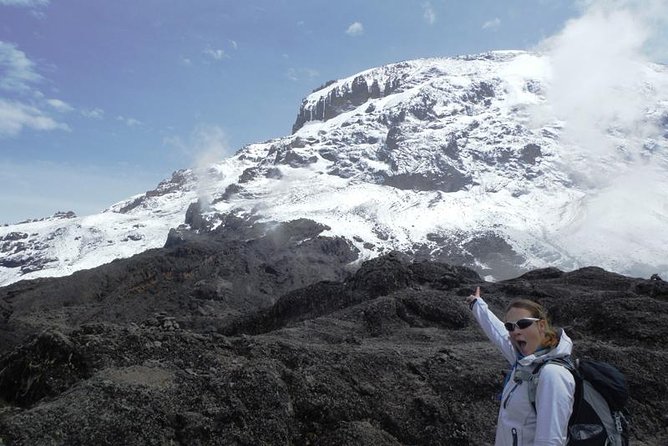
The Machame Route approaches from the southwest and joins the Shira route before crossing beneath Kibo’s southern ice fields. The setting changes often enough to keep the trek interesting. You begin beneath mossy forest, pass heathers and wildflowers, then enter open high country with views toward Mount Meru and Kilimanjaro’s two main peaks, Kibo and Mawenzi.
Other routes up the mountain from Arusha:
- 8-Day Small-group Lemosho Kilimanjaro Summit Trekking
★ 5.0 · 186 reviews - 5 Days Best of Tanzania Luxury Safari Northern Circuit
★ 5.0 · 174 reviews - 7-Day Machame Kilimanjaro Summit Tour from Arusha
★ 5.0 · 125 reviews
Day 1: Machame Gate to Machame Camp
Your climb begins with breakfast and a drive from Moshi to Machame Gate. Pickup is offered, and the gate is where registration takes place and the trekking team gathers. You have time to check your equipment before setting out with the guides, porters, and cooks.
The first walk leads through Kilimanjaro’s cloud forest. Moss-covered trees give the route a cool, enclosed feel, and the vegetation changes as you climb. Near the end of the day, the forest thins into heather, tall grass, and wildflowers.
Machame Camp is the first overnight stop. The porters walk ahead to prepare camp, which means you do not carry the full load of tents, cooking supplies, and food. You still need a daypack with water, clothing layers, and personal items, but the support system makes a major difference.
The first day is listed at about 18 hours in the itinerary, a figure that appears to refer to the overall stop duration rather than walking time. You should ask the operator to confirm the expected trekking hours before you book. Either way, this is a proper first day, not a gentle sightseeing walk.
Day 2: Shira Plateau and the first wide views
After breakfast, you continue through open country toward Shira Camp. This is described as one of the easier days, but it still contains several uphill sections. Take plenty of water, since exposed sections can feel hot when the sky is clear.
The plant life becomes a useful altitude marker. Trees shrink away, replaced by high-altitude species such as giant senecio, listed in the itinerary as Scenecio kilimanjari, and lobelia. You do not need to know the plant names to appreciate the change. Kilimanjaro starts to feel less like a forested mountain and more like a high volcanic world.
After lunch, you climb onto the Shira Plateau. The plateau formed when lava from Kibo filled the Shira crater. From Shira Camp, Kibo lies to the west and Mount Meru to the east. On a clear day, Mount Meru can appear to float above the clouds, one of the trip’s most memorable views.
This is also a day when sun protection matters. The trail is more open, and you have less shade than in the forest. Keep water, sunscreen, and a hat within easy reach.
Day 3: High at Lava Tower, low at Barranco
Day 3 is the key acclimatization day. You walk east across the Shira Plateau, pass the junction with the Lemosho Route, and cross increasingly bare terrain. The day ends only about 110 meters higher than it begins, but you climb roughly 690 meters before descending.
The high point is about 4,530 meters. Faster hikers may take a detour to Lava Tower, a roughly 300-foot volcanic formation. The route then drops to Barranco Camp, which sits at a lower elevation and gives your body a better chance to recover overnight.
This up-and-down pattern can feel strange. You may wonder why you are climbing high only to lose much of that height later. The answer is acclimatization. The day exposes you to higher altitude without forcing you to sleep at the day’s highest point.
Barranco Camp also prepares you for the next morning’s challenge. The great Barranco Wall rises nearby, and you can see the route ahead. The day is listed at about 10 hours, so pace yourself and do not spend all your energy trying to be first into camp.
Same base, a different kind of day out:
- Serengeti Balloon Safari and authentic bush breakfast
★ 5.0 · 2,480 reviews - Balloon Safari & Bush Breakfast in Serengeti – Miracle Experience
★ 5.0 · 1,646 reviews - Tanzania Classic – 7 Days
★ 5.0 · 1,151 reviews - 4 Days Group Camping Safari
★ 5.0 · 1,101 reviews
Day 4: Scrambling up Barranco Wall
The day begins with the most hands-on section of the route. The climb up Barranco Wall takes about an hour and a half and involves scrambling. In places, you use your hands to pull yourself upward.
This is not described as technical rock climbing, but it is more physical than a normal trail. You will want both hands free, so keep your trekking poles secured when the path steepens. Move patiently and let the guide show you the easiest line.
After the wall, you make a short descent into the greener Karanga Valley. The contrast is striking: a hard climb leads into a more sheltered valley before the trail rises again. Camp is generally placed on the ridge above the valley, helping you gain more altitude gradually.
The day lasts about six hours, making it shorter than Day 3 and Day 5. That gives you some room to rest, eat, and prepare your gear. You should use it. The summit attempt is not far away, and your sleep at this point is valuable.
Day 5: Alpine desert and Barafu Camp
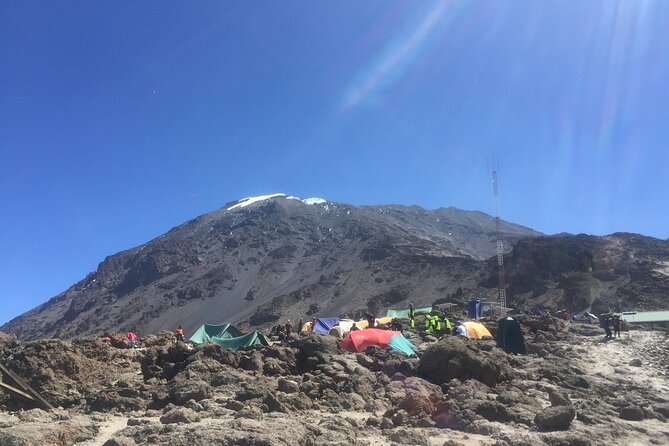
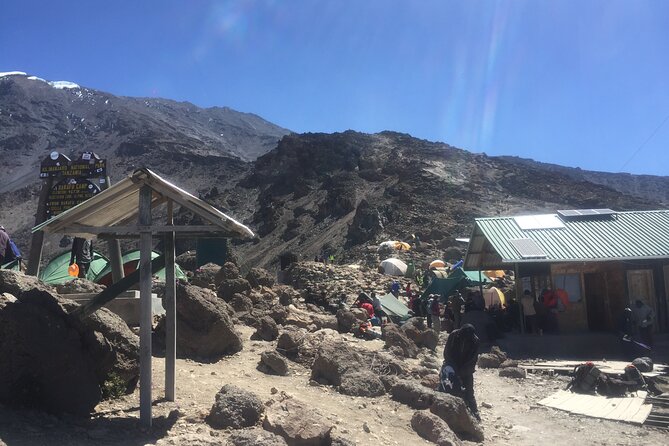
From Karanga, you hike toward Barafu Camp. The route passes through alpine desert, with little vegetation and a more severe, exposed feel. You can see several of Kibo’s glaciers, including the Heim, Kersten, and Decken Glaciers, and you pass the junction where the Mweka descent route connects with the Machame trail.
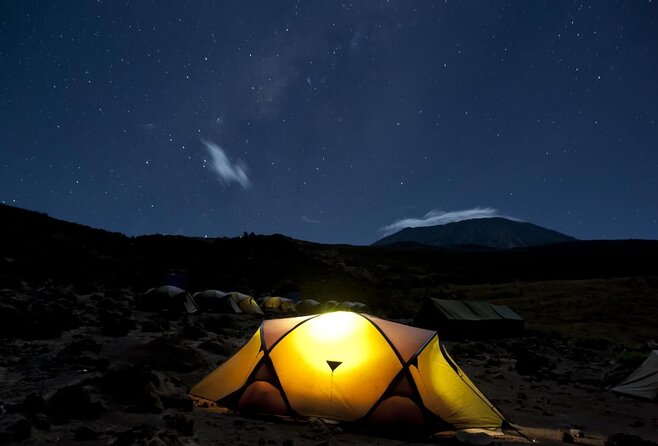
Barafu is the launch point for the summit attempt. Kibo and Mawenzi provide the main mountain views, but the camp itself is a place to rest rather than linger. Dinner comes before an early bedtime, since you wake around midnight.
The walk to Barafu takes about seven hours. By then, you may feel tired even before the hardest part begins. Organize your summit clothing, headlamp, water, and snacks before sleeping. The itinerary does not list mountain gear or personal clothing as included, so this preparation is your responsibility.
A sleeping bag is also excluded. That is an important cost to add when comparing the $2,860 price with other climbs. The tour covers food and the organized mountain support, but you need to budget for renting or buying the equipment you lack.
Day 6: The midnight push to Uhuru Peak
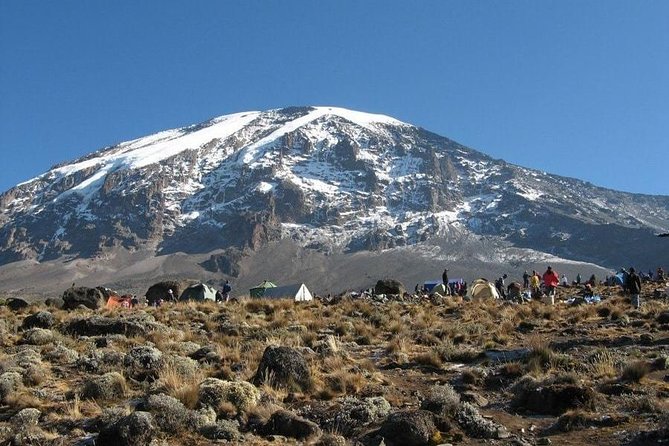
The summit day starts around midnight. For roughly six hours, you climb by headlamp toward the crater rim. This is the toughest part of the trek because the trail is steep, the air is thin, and you are walking when your body normally expects to sleep.
The route reaches Stella Point on the crater rim first. From there, the climb to Uhuru Peak is more gradual, though altitude makes it slow and tiring. The crater-rim section takes about an hour, and the summit itself is at 5,895 meters, the highest point in Africa.
You can take photographs at Uhuru Peak and spend some time there before beginning the descent toward Mweka. Keep your expectations realistic. The summit moment may be joyful, quiet, exhausting, or all three. Your guide’s steady pacing and support matter most here.
The supplied itinerary lists about six hours for this stop, but you should confirm whether that figure refers to the ascent portion only or the full summit day. The descent begins after the summit, and the complete day can feel much longer than the headline figure suggests.
Reaching Stella Point earns a green certificate, while reaching Uhuru Peak earns a gold certificate at Mweka Gate. That distinction is useful to know before the climb. The main goal is Uhuru, but reaching Stella Point is still formally recognized.
Day 7: Forest descent and the Mweka Gate finish
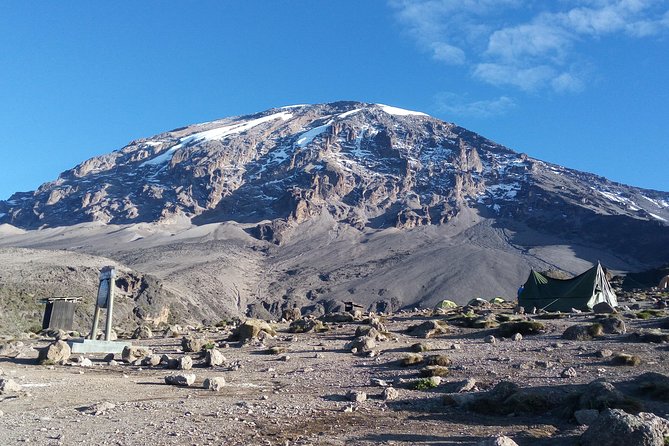
After breakfast, you descend through Kilimanjaro’s cloud forest to Mweka Gate. This final section is beautiful, but take care on the way down. The trail can be slippery, and tired legs often make descent harder than expected.
At Mweka Gate, you sign the registration book and receive your summit certificate if you reached Stella Point or Uhuru Peak. Vehicles then take you back to Moshi or Arusha. The trip ends with a long-awaited hot shower, one of the small pleasures that feels much larger after a week on the mountain.
The descent day is listed at about five hours. It is not a sightseeing stop, but it provides a clear finish to the climb and returns you to road transport without retracing the route to Machame Gate.
What the $2,860 price covers
At $2,860 per person, this is a substantial trip, but the price reflects a full seven-day mountain operation rather than a simple guided walk. You receive breakfast, lunch, and dinner for the trek, plus porters and cooks who travel with the group and prepare camp ahead of your arrival.
Pickup is offered, and group discounts may be available. Since the climb is private, only your own group participates. That gives you more control over pacing and group dynamics than a large shared departure, although you should ask how many people will be in your private party and how porter support is arranged.
The cost does not include mountain gear, trekking poles, sleeping bags, or clothing. Build those expenses into your total before deciding. If you already own cold-weather trekking equipment, the price looks more favorable. If you need to rent nearly everything, the final budget will be higher.
Meals are included for breakfast, lunch, and dinner. Previous groups also had local food, songs, and language lessons as part of the camp atmosphere. Those details suggest that the experience is not limited to walking from camp to camp. Still, food preferences and special dietary needs are not explained, so ask about them before departure.
The guides, porters, and camp rhythm
The named guides are Mtui, Emmanuel, and Noel. The support crew includes porters and cooks, with one previous group traveling with more than 20 porters. You should treat this as a team effort rather than a walk led by one guide.
Porters go ahead to establish camp, while the cooks handle meals. That system allows you to focus on walking and acclimatization, but it also makes tipping an important subject to clarify before departure. No tipping guidance is provided here, so ask Hazzes Adventure Ltd for its current policy.
Camp life will be basic. The information confirms tents and organized camps, but it does not specify tent sizes, toilet arrangements, showers, or dining facilities. Ask for those details if comfort standards matter to you.
The experience provider is Hazzes Adventure Ltd. The three supplied accounts praise the organization, pickups, accommodation arrangements, guides, and the care provided by the crew. The most useful practical takeaway is that the operation has experience with the full seven-day Machame program, not just summit-day guiding.
Who should book this climb?
I would recommend it to a fit adult who wants a serious mountain challenge with a slower schedule and private group support. You should be comfortable walking uphill for several hours, sleeping at camps, and managing cold, fatigue, and altitude.
This is not a good choice if you want a relaxed holiday with flexible sleeping hours. The midnight summit start is demanding, and the route includes steep sections, especially Barranco Wall and the climb toward Stella Point.
It suits you best if scenery matters as much as the summit. The forest, Shira Plateau, Mount Meru views, volcanic formations, glaciers, and changing plant life give the week real variety. If your only goal is to reach Uhuru Peak as cheaply and quickly as possible, a different itinerary may appeal more, but a shorter route would give you less time for altitude adjustment.
Free cancellation is available up to 24 hours before the experience starts. Changes or cancellations inside that window are not accepted, and poor weather may lead to a different date or a full refund.
Should you book the seven-day Machame Route?
I would book this trip if you want the classic Machame scenery, a private climb, and the best acclimatization schedule offered within this seven-day format. The strongest features are the gradual height gain, the excellent variety of terrain, and the full cooking and porter team.
Before paying, confirm the expected walking hours, camp facilities, guide-to-climber ratio, equipment rental options, and any extra costs. Pay special attention to the sleeping bag and clothing exclusions.
Book it if you are prepared for a demanding week and value patient pacing over a bargain price. Skip it if you are not physically ready for long uphill days or if you expect a comfortable hotel-style mountain experience.
FAQ
How long is the Kilimanjaro Machame Route climb?
The climb lasts approximately seven days. The itinerary begins at Machame Gate and finishes at Mweka Gate, followed by transport to Moshi or Arusha.
What is the highest point reached on the tour?
The summit is Uhuru Peak at 5,895 meters. Climbers who reach Uhuru Peak receive a gold certificate, while those who reach Stella Point receive a green certificate.
Are meals included?
Yes. Breakfast, lunch, and dinner are included for the trek. The climb also includes cooks who travel with the group.
Is mountain equipment included?
No. Mountain gear, trekking poles, sleeping bags, and clothing are not included. You must bring or arrange those items separately.
Is this a private tour?
Yes. Only your group participates in the activity. Pickup is offered, and the tour can begin with transport from Moshi or Arusha.
What happens if bad weather cancels the climb?
If poor weather causes the experience to be canceled, you are offered a different date or a full refund. For a full refund under the normal cancellation policy, you must cancel at least 24 hours before the start time.
Just added in Arusha
- 4 Days Private Midrange Lodge Safari to Serengeti & Ngorongoro★ 5.0 · 4 reviews
- Extraordinary Hot air Bolloon ride in Serengeti | BURIGI CHATO SAFARIS CO L.T.D★ 5.0 · 6 reviews
- 8 Days Serengeti Migration safari★ 5.0 · 11 reviews
- 3 days leopard safaris★ 5.0 · 4 reviews
- tarangire, ngorongoro & lake manyara park 3 days private tour★ 5.0 · 11 reviews
- Mt. Kilimanjaro: Shira plateau to Cathedral point 3872m Day hike★ 5.0 · 7 reviews
- serengeti, ngorongoro & tarangire 4 days private tour★ 5.0 · 18 reviews
- tarangire & ngorongoro 2 days tour★ 5.0 · 14 reviews
Kilimanjaro Treks, compared.



8-Day Small-group Lemosho Kilimanjaro Summit Trekking
Read our review →

5 Days Best of Tanzania Luxury Safari Northern Circuit
Read our review →

Climbing Kilimanjaro through 7 days Machame Route
Read our review →
7-Day Machame Kilimanjaro Summit Tour from Arusha
Read our review →Browse the lists this tour appears in