
Reviewed · KILIMANJARO TREKS
7-Day Private Kilimanjaro Hiking Tour via Machame from Arusha
Kilimanjaro’s Machame Route gives you the mountain in changing moods: mossy cloud forest, open highland, bare volcanic slopes, glaciers, and a freezing midnight summit climb. You leave Arusha at 9 a.m. and spend seven days moving toward Uhuru Peak, Africa’s highest point.
I like two things here. First, the route includes a real acclimatization day from Shira Plateau to Barranco Camp, with a climb to 4,530 meters before descending. Second, the private format means your group travels with its own guides, porters, and cooks rather than joining a fixed public group.
The main drawback is the schedule. The summit day begins around midnight, reaches 5,895 meters, and includes a long descent to Mweka Camp. This is not a casual mountain walk, and the operator specifically requires a strong fitness level.
Key points before you book
- Seven days from Arusha to Uhuru Peak: The route spends six nights on the mountain before returning through Mweka.
- Machame Route variety: You pass through cloud forest, heath, alpine desert, and the glaciated upper slopes of Kibo.
- Barranco Wall is the day-four challenge: Expect a roughly 90-minute scramble where you may use your hands.
- The third day helps with altitude: You climb as high as 4,530 meters, then sleep lower at Barranco Camp.
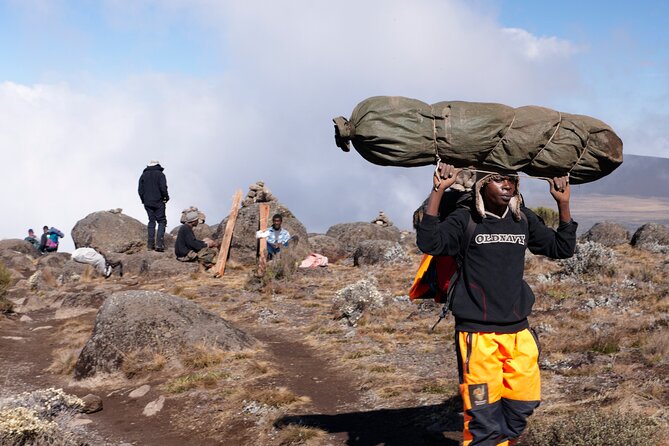
- Private support team: Your guides, porters, and cooks are assigned to your group for the trek.
- $2,699 per person: The price makes the most sense if you value private organization, support staff, route planning, and supplied mountain equipment.
Why the Machame Route works well in seven days
Machame is one of Kilimanjaro’s most popular camping routes. That popularity has a clear advantage: access to the trailhead is straightforward, and the route has a good progression through several climate zones.
It also means you will not have the mountain to yourself. Camps can feel social and busy, especially on a route used by many climbing groups. If you want complete solitude, this is not the best choice. If you like the idea of sharing a major goal with other climbers while keeping your own private team, Machame is a sensible middle ground.
The route approaches from the west and joins the southern circuit before the summit. It uses the important climb-high, sleep-lower pattern on day three. That day is tiring, but it gives your body useful time at altitude before the final ascent.
The company has been arranging Kilimanjaro and Mount Meru climbs for nearly two decades. The service is built around guides, porters, cooks, route planning, and mountain equipment. Names associated with the company’s guiding teams include Colman, Ernest, Ema, and Shaban, although your own guide assignment should be confirmed before departure.
Other routes up the mountain from Arusha:
- 8-Day Small-group Lemosho Kilimanjaro Summit Trekking
★ 5.0 · 186 reviews - 5 Days Best of Tanzania Luxury Safari Northern Circuit
★ 5.0 · 174 reviews - 7-Day Machame Kilimanjaro Summit Tour from Arusha
★ 5.0 · 125 reviews
Day 1: Arusha to Machame Gate and the cloud forest
You leave Arusha at 9 a.m. for the drive to Machame Gate. The trip takes about an hour and a half, passing coffee farms and villages before reaching the national park entrance.
The gate stop is not just a formality. Your climb must be registered, and the porters and guides make final preparations there. You may spend some time waiting while the paperwork and loading are completed, so do not expect to step out of the vehicle and begin walking at once.
The first hike leads to Machame Camp through Kilimanjaro’s cloud forest. Moss-covered trees give the opening hours a cool, almost storybook feel. As you gain height, the forest thins into heather, tall grasses, and wildflowers.
If the sky is clear, Kibo Peak may appear ahead. That first glimpse matters because it gives the climb a visible target, even though the summit still feels far away.
The day is listed as roughly one hour of hiking, making it the shortest walking day. That does not mean you should rush. Use it to settle into a steady pace, test your boots, organize your sleeping gear, and learn how your support team operates.
Your porters and cooks move ahead to prepare camp. That support is one of the practical reasons to choose an organized climb rather than attempting to handle every task yourself.
Day 2: Shira Plateau and the first big views
Day two brings about six hours of hiking, with several uphill sections. Carry plenty of water because clear weather can make the trail hot, even as the air becomes cooler at higher elevations.
This is the day when Kilimanjaro begins to open up. You can look back toward the plains and forests below, then up toward the twin peaks of Kibo and Mawenzi. The views grow wider as the trees shrink.
The vegetation changes in a noticeable way. Forest gives way to high-altitude plants such as giant senecios and lobelia. These unusual plants are part of what makes Kilimanjaro more than a simple uphill walk. The mountain’s plant zones change quickly, and each one gives you a different sense of height.
After lunch, you climb onto the Shira Plateau, formed when Kibo’s lava flows filled the Shira crater. Shira Camp offers a chance to rest for the afternoon, with Kibo to the west and Mount Meru to the east.
The stop is useful for pacing. You are gaining altitude, but the schedule does not force you into a punishing evening. Keep the afternoon quiet. Drink, eat, and prepare for the longer acclimatization day ahead.
Day 3: High on the trail, low at Barranco
Day three is the most important acclimatization day in the program. You gain only about 110 meters overall, but you climb much higher during the day before descending to camp.
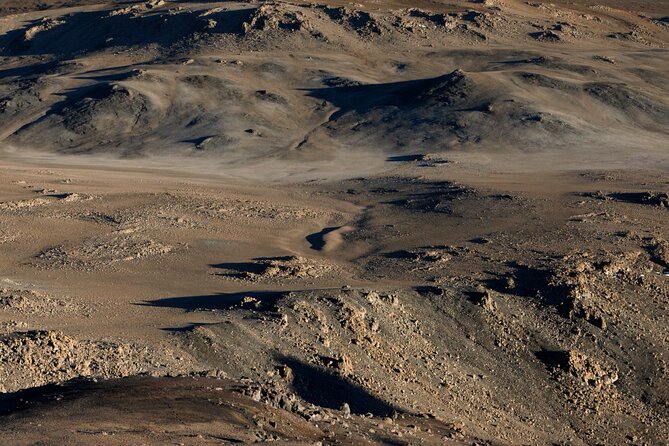
From Shira Plateau, you head east toward the junction with the Shira and Lemosho routes. The scenery becomes more barren, with less vegetation and a greater sense that you are entering the high mountain zone.
By early afternoon, you reach the day’s highest point at about 4,530 meters. The full elevation gain before the descent is around 690 meters. Then you drop to Barranco Camp, which sits lower and gives you a better place to sleep.
This is the sort of day that can feel inefficient if you look only at distance. It is actually central to the route’s design. You climb high, spend time at altitude, and then sleep lower. That pattern helps prepare you for summit night.
There is an optional detour via Lava Tower for faster hikers. The formation rises about 300 feet from the mountainside. Since the published schedule already makes this a long seven-hour day, ask your guide whether the detour fits your group’s pace and condition.
Barranco is a favorite camp among the mountain staff, and it is easy to see why. The camp sits below dramatic volcanic walls, with the next morning’s challenge visible above you.
Same base, a different kind of day out:
- Serengeti Balloon Safari and authentic bush breakfast
★ 5.0 · 2,480 reviews - Balloon Safari & Bush Breakfast in Serengeti – Miracle Experience
★ 5.0 · 1,646 reviews - Tanzania Classic – 7 Days
★ 5.0 · 1,151 reviews - 4 Days Group Camping Safari
★ 5.0 · 1,101 reviews
Day 4: The Barranco Wall and Karanga Valley
The day begins with the most technical-feeling section of the trek: the Barranco Wall. The climb takes about an hour and a half and includes scrambling over rocky sections.
You may need to use your hands in places, but this is not described as a technical climbing route requiring ropes. The challenge is the steep, uneven movement and the need to place your feet carefully. Your guide should set the pace and help you choose a comfortable line.
Once over the wall, the trail becomes more level for a while. Then you make a short but steep descent into the green Karanga River Valley.
The entire day takes about five hours, so it is shorter than day three. Still, do not treat it as an easy day. The Barranco Wall can be tiring, especially after the altitude exposure of the previous day.
I like this section because it breaks up the long uphill rhythm. You use your hands, change direction, descend, and climb again. It feels more like a mountain route than a simple hiking path.
Day 5: Alpine desert and Barafu Camp
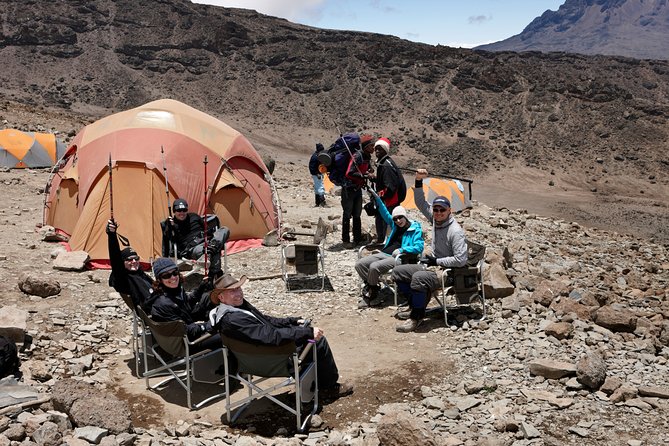
Day five takes about five hours and leads to Barafu Camp. The route passes through alpine desert, where vegetation becomes sparse and the surroundings feel exposed.
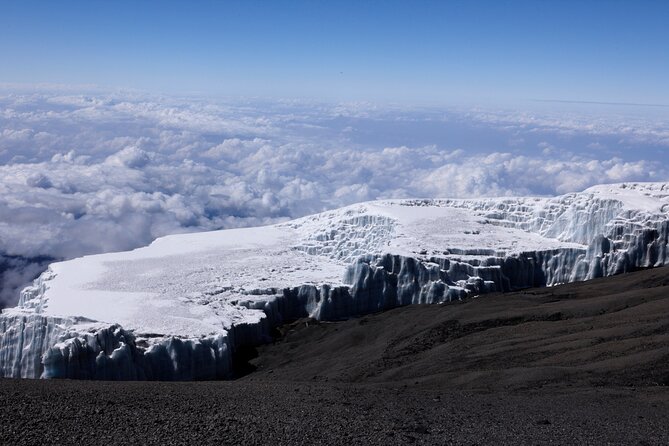
Along the way, you can see several of Kibo’s glaciers. You also pass the junction where the Mweka descent route meets the Machame trail. This is useful to note because it gives you a preview of the route you will use after summiting.
The day’s scenery is stark. There is little shade and little plant life, so the quality of your clothing, water supply, and sun protection matters. The operator’s emphasis on high-end equipment is most relevant here, as well as during the cold summit push.
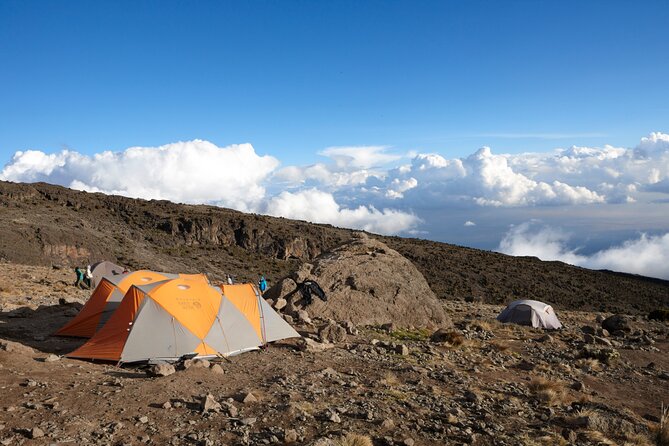
Barafu Camp offers views of both Kibo and Mawenzi. It is also the staging point for summit night. After dinner, you are expected to sleep, though the schedule calls for waking before midnight.
That short rest is one of the hardest parts of the itinerary. You may have spent five days hiking and adjusting to altitude, then suddenly need to eat, dress, and start walking in darkness. Pack your summit clothing so you can reach it quickly, and keep your headlamp accessible.
Day 6: Midnight to Uhuru Peak, then down to Mweka
Summit day begins around midnight. You hike by headlamp for about six hours toward the crater rim at Stella Point.
The trail is steep, and this is the most demanding ascent of the trek. The altitude affects nearly everyone, even strong hikers. You should expect a slow pace, frequent pauses, and a long period of walking in the cold and dark.
Reaching Stella Point is a major milestone. From there, the trail to Uhuru Peak follows a more gradual climb along the crater rim. The walk takes about an hour, but the altitude makes it tiring.
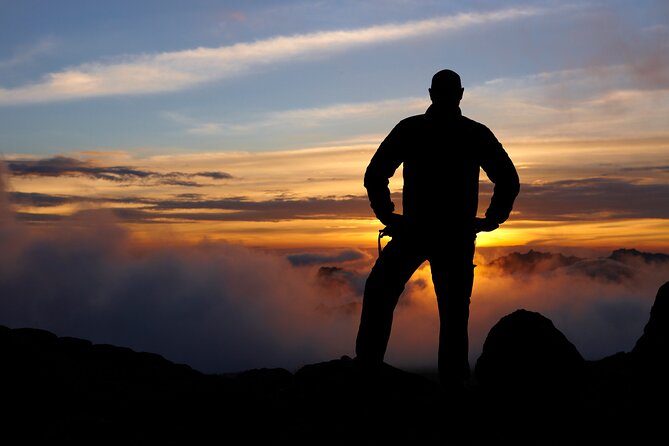
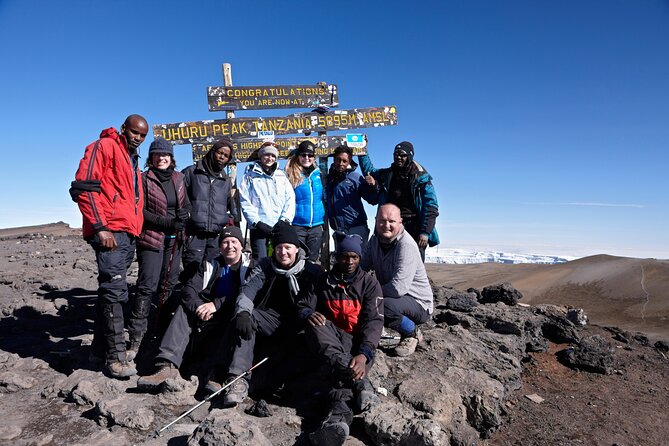
At Uhuru Peak, you have reached 5,895 meters, or 19,341 feet. You can take photos with your guide and group before beginning the descent. The views may include the crater, clouds, the mountain slopes, and glaciers, depending on weather and visibility.
The return is not an afterthought. You descend from the summit to Barafu Camp, then continue toward Mweka Camp. That makes summit day a very long physical effort, even though the itinerary lists only one hour at the peak section itself.
The lower you go, the easier breathing should feel, but your legs may be worn out. Focus on controlled steps. Trekking poles, if you use them, can help on the descent, though the supplied details do not specify whether they are included.
Day 7: Mweka Forest and the return to Arusha
After breakfast, you finish the trek by walking through the forest to Mweka Gate. The final hike takes about two hours.
The forest can be slippery after rain, so keep your footwear secure and do not let the excitement of finishing make you careless. The mood usually changes quickly here. You are still hiking, but the end is close.
Vehicles meet you at the lower station of Mweka Gate and take you back to Arusha. The return drive marks a sharp change from tented camps and thin air to roads, buildings, and ordinary transport.
This final morning is short compared with the summit day, but it completes the route properly. You descend through a different forest zone rather than retracing the entire approach.
What the $2,699 price means in practical terms
At $2,699 per person, this is not a budget trek. The value depends on what you want from a Kilimanjaro climb.
You are paying for a private tour structure, route planning, guides, porters, cooks, park access arrangements, transport from Arusha, and a support system designed around a successful summit. The supplied details also emphasize high-end equipment, which can matter on a mountain where cold, rain, and altitude can change the day quickly.
The private format is particularly useful for couples, families, or friends who want to set their own group rhythm. It does not mean you avoid other people entirely. Machame is popular, and camps will include many other climbing parties.
The strongest value comes if you care about organization and personal support more than the lowest possible price. A cheaper option may exist, but you should compare what it includes, especially guide coverage, porter treatment, food preparation, equipment, transport, and emergency planning.
The company is a founding partner of the Kilimanjaro Porters Assistance Project, according to the supplied information. That may matter to you if responsible porter treatment is part of your booking decision, though you should still ask for current details about porter welfare and tipping expectations.
Who should choose this climb
This tour suits you if you are physically fit, comfortable camping for six nights, and ready for a serious altitude challenge. You do not need a technical climbing background based on the route description, but you do need stamina and the ability to handle steep, uneven ground.
It can also work well for families with older children or teenagers. The company has arranged climbs for family groups that included teenagers and a 10-year-old, but the stated requirement remains strong physical fitness. You should assess each person individually rather than assume a family booking will be easy.
Choose this route if you want:
- A private mountain team
- Several distinct climate zones
- A route with a meaningful acclimatization day
- The Barranco Wall as a hands-on challenge
- A planned summit attempt at Uhuru Peak
- Support from porters, guides, and cooks
Think twice if you dislike busy camps, long summit days, or sleeping outdoors. The Machame Route is popular, and the final ascent is cold, steep, dark, and tiring.
Booking confirmation is provided at the time of purchase. Pickup is offered, and the listed start time is 9 a.m. from Arusha. Cancellation is allowed for a full refund if made at least three full days before the local start time. Later cancellations and changes are not accepted, and the experience may be rescheduled or refunded if its minimum number of participants is not reached.
Should you book the Machame Route with Duma Explorer?
I would choose this climb if you want a private, well-supported Kilimanjaro attempt and like the idea of seeing the mountain change zone by zone. The Shira to Barranco acclimatization day, the Barranco Wall, and the Mweka descent give the route plenty of variety.
I would not choose it simply because the price looks attractive or because the summit is famous. Seven days is still a demanding schedule, and the midnight-to-Uhuru-to-Mweka push is the part you must take seriously.
Before paying, confirm what equipment is supplied, how porter tips are handled, what meals are included, and who will guide your particular group. If the answers suit your needs, this is a strong choice for a private Kilimanjaro climb with a clear route plan and substantial mountain support.
FAQ
Where does the tour begin?
The tour begins in Arusha, Tanzania. Pickup is offered, and the listed start time is 9 a.m.
How long does the Kilimanjaro climb take?
The experience lasts approximately seven days. The itinerary runs from the drive to Machame Gate on day one through the descent to Mweka Gate and return to Arusha on day seven.
Is this a private tour?
Yes. Only your own group participates in the private tour activity, although you will share the popular Machame Route and mountain camps with other climbing groups.
What level of fitness is required?
A strong physical fitness level is required. The route includes steep uphill sections, the Barranco Wall, high-altitude hiking, a summit ascent beginning around midnight, and a long descent after reaching Uhuru Peak.
What is the highest point reached?
The summit is Uhuru Peak on Mount Kilimanjaro, at 5,895 meters or 19,341 feet.
Which camps are included on the route?
The itinerary includes Machame Camp, Shira Camp, Barranco Camp, Karanga Camp, Barafu Camp, and Mweka Camp. Camp names and the sequence are part of the seven-day route plan.
Can I cancel for a full refund?
Yes, if you cancel at least three full days before the experience start time, based on local time. Cancellations made less than three full days in advance are not refunded, and late changes are not accepted.
More Hiking & Trekking in Arusha
- Mountain Kilimanjaro Day Hike
★ 5.0 · 102 reviews - Private Full Day Hiking Experience to Marangu Route
★ 5.0 · 61 reviews - 4 Days Mount Meru Trekking
★ 5.0 · 55 reviews - 4 days Best experience Kilimanjaro Hike, Serengeti &Ngorongoro
★ 5.0 · 54 reviews
Just added in Arusha
- 4 Days Private Midrange Lodge Safari to Serengeti & Ngorongoro★ 5.0 · 4 reviews
- Extraordinary Hot air Bolloon ride in Serengeti | BURIGI CHATO SAFARIS CO L.T.D★ 5.0 · 6 reviews
- 3 days leopard safaris★ 5.0 · 4 reviews
- 8 Days Serengeti Migration safari★ 5.0 · 11 reviews
- tarangire, ngorongoro & lake manyara park 3 days private tour★ 5.0 · 11 reviews
- Mt. Kilimanjaro: Shira plateau to Cathedral point 3872m Day hike★ 5.0 · 7 reviews
- serengeti, ngorongoro & tarangire 4 days private tour★ 5.0 · 18 reviews
- tarangire & ngorongoro 2 days tour★ 5.0 · 14 reviews
Kilimanjaro Treks, compared.



8-Day Small-group Lemosho Kilimanjaro Summit Trekking
Read our review →

5 Days Best of Tanzania Luxury Safari Northern Circuit
Read our review →

Climbing Kilimanjaro through 7 days Machame Route
Read our review →
7-Day Machame Kilimanjaro Summit Tour from Arusha
Read our review →Browse the lists this tour appears in