
Reviewed · KILIMANJARO TREKS
8-Day Small-group Lemosho Kilimanjaro Summit Trekking
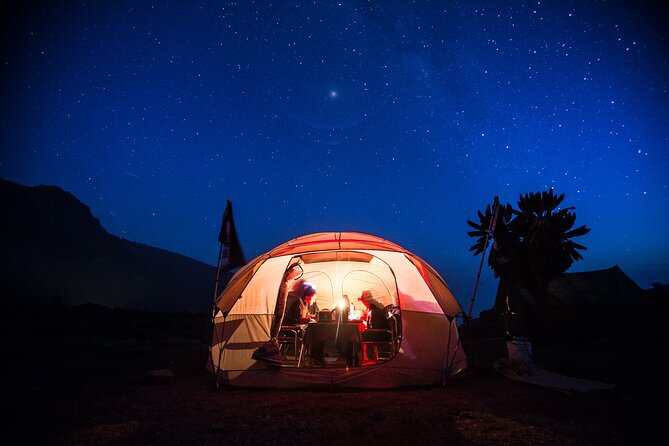
Kilimanjaro is not a technical climb, but it is a serious high-altitude hike. This 8-day Lemosho route gives you time to cross several climate zones, adjust to thin air, and reach Uhuru Peak at 19,340 feet. You start in rainforest, walk across the Shira Plateau, pass volcanic towers and giant senecio plants, then tackle summit night under the stars.
I like two things right away. The extra day gives your body more time to adjust, and the small-group format allows guides to watch your pace and condition closely. I also like the practical setup: hotel pickup in Arusha, park fees, tents, meals, and transfers are included. The main catch is simple: this is still a demanding climb, especially the midnight summit push and the long descent afterward.
Key points to know before booking
- Eight days on the mountain: The longer schedule gives you a better chance to adjust to altitude than a rushed itinerary.
- A varied route: You walk through rainforest, heather, high desert, volcanic scree, and arctic terrain.
- A small-group setting: Groups can include up to 15 people, with some departures much smaller.
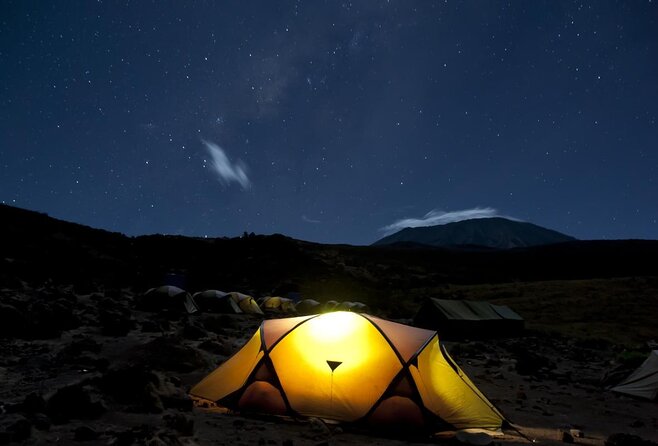
- Camping is part of the deal: Tents, camping equipment, meals, park fees, and transfers are included.
- Summit night is the hardest test: Expect a midnight start, six to seven hours to Stella Point, then another hour to Uhuru Peak.
- Guides are central to the experience: Guides including Amani, Raymond, Manny, Cinga, Herment Mosha, Goodluck, and others are praised for patient pacing, encouragement, and careful attention to safety.
Why the Lemosho route works well
Lemosho approaches Kilimanjaro from the west. Instead of rushing toward the summit, you spend several days gaining height at a measured pace. That matters because altitude, not rock climbing skill, is the main challenge for most people on Kilimanjaro.
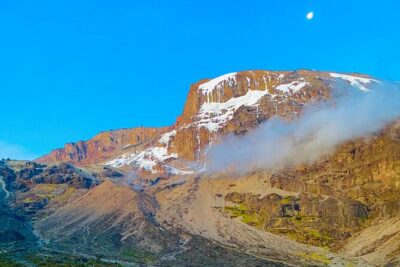
The route also gives you a strong visual progression. On the first day, you are walking beneath tall forest. By Day 2, the trees thin out and the Shira Plateau opens ahead. Later, you cross bare volcanic ground, pass the Lava Tower, climb the Barranco Wall, and finish in a cold, exposed world of scree and glaciers.
I would not call this an easy beginner hike. The operator says it suits both beginners and experienced climbers, but beginners still need strong fitness and a steady attitude. You should be comfortable walking for several hours on consecutive days, sleeping in tents, and continuing when the weather is cold or wet.
The small-group promise is useful, but read the maximum carefully. The advertised limit is 15 people, which is still a fairly large hiking party. Some departures are much smaller, including one group of four, and that setup can feel more personal. If group size matters to you, ask for the expected number before booking.
Other routes up the mountain from Arusha:
- 5 Days Best of Tanzania Luxury Safari Northern Circuit
★ 5.0 · 174 reviews - 7-Day Machame Kilimanjaro Summit Tour from Arusha
★ 5.0 · 125 reviews - Mountain Kilimanjaro Day Hike
★ 5.0 · 102 reviews
Day 1: Mti Mkubwa Camp and the first rainforest miles
Your morning begins with pickup from your Arusha hotel, with the stated start time at 8:00 a.m. The drive takes you toward the western entrance, where the group checks in at Londorossi Gate.
The hiking distance is about 3 miles, or 4.8 kilometers, with roughly three to four hours on foot. The trail rises gently through montane forest, a forgiving introduction after the drive and park formalities.
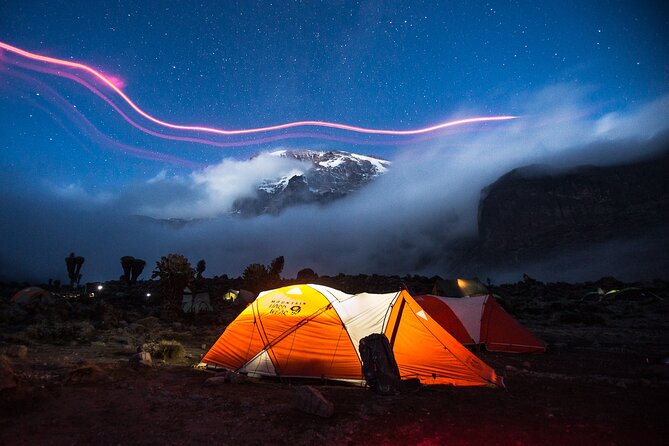
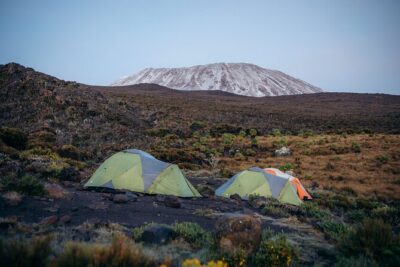
You spend the night at Mti Mkubwa, which means Big Tree in Swahili. Camp sits in the rainforest, and tents are set up before you arrive. This is a short hiking day, but do not treat it as a throwaway. I would use it to learn the daily rhythm, check your footwear, organize your sleeping gear, and pay attention to how your body feels.
The first night is also a useful reminder that this is camping, not a hotel stay. The package includes camping equipment and meals, but you should still expect basic mountain conditions.
Day 2: Leaving the trees for the Shira Plateau
Day 2 covers about 4.9 miles, or 8 kilometers, in five to six hours. The trail leaves the forest and enters tall grass, heather, volcanic rock, and lichen.
This is one of the most rewarding changes on the route. The rainforest feels enclosed and green, while the Shira Plateau feels broad and exposed. You may get your first clear views of Kibo, the main summit, rising in the distance.
The altitude reaches about 11,500 feet, or 3,505 meters. That number matters more than the mileage. You will notice that your pace slows, and your guide may encourage you to walk gently rather than chase the clock.
This is where the trip begins to feel like a high-altitude expedition. The walking remains non-technical, but the air is thinner and the ground can be uneven. Keep your day bag light and carry only what you need for water, layers, snacks, and personal items.
Day 3: A full day on the Shira Plateau
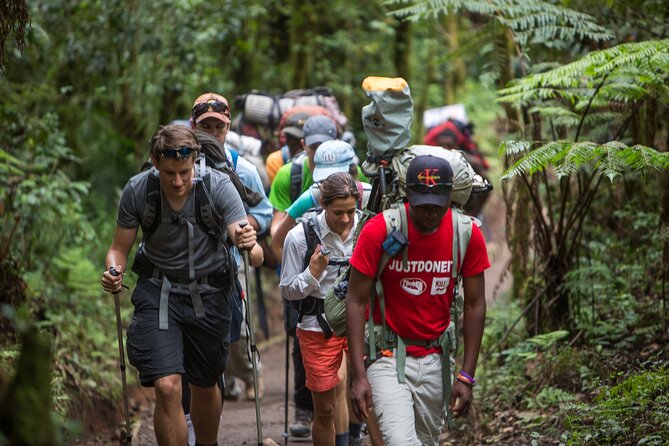
The third day is a longer outing, about 8.7 miles, or 14 kilometers, over five to seven hours. You continue east toward Kibo and spend the day exploring the Shira Plateau.
One option is a visit to the old collapsed Shira Cone, the oldest of Kilimanjaro’s three volcanoes. The route ends at Moir Camp, set in a large gorge at the end of a dormant lava flow. This gives the day a more rugged feel than the earlier forest walk.
The highest point listed for the day is about 13,800 feet, or 4,206 meters. You are gaining altitude, but the route is designed to let you spend time high before summit night. That is one reason I see real value in the eight-day schedule.
The tradeoff is that this can be a tiring day before the more demanding Lava Tower and Barranco sections. If you are new to altitude, do not spend your energy trying to be first into camp. Eat, drink, and rest when you can.
Same base, a different kind of day out:
- Serengeti Balloon Safari and authentic bush breakfast
★ 5.0 · 2,480 reviews - Balloon Safari & Bush Breakfast in Serengeti – Miracle Experience
★ 5.0 · 1,646 reviews - Tanzania Classic – 7 Days
★ 5.0 · 1,151 reviews - 4 Days Group Camping Safari
★ 5.0 · 1,101 reviews
Day 4: Lava Tower, Senecio forest, and Barranco Camp
Day 4 is built around acclimatization. You climb toward Lava Tower, listed at about 15,000 feet, or 4,500 meters, then descend toward Barranco Camp. The walking distance is about 4.3 miles, or 7 kilometers, over four to six hours.
This is a smart pattern: go high, then sleep lower. You reach a stark volcanic area near Lava Tower before descending through the enormous Senecio forest. The giant plants give this part of Kilimanjaro a strange, almost prehistoric character.
The route then finishes at Barranco Camp, in the shadow of Barranco Wall. Clouds can move through the valley, and the setting feels dramatic even before you begin the next day’s climb.
The altitude change can make this day feel harder than its distance suggests. You may also feel the effects of the previous days. I would keep your expectations modest here. The goal is not speed. It is to prepare for the upper mountain.
Day 5: Up Barranco Wall and across Karanga Valley
The Barranco Wall is the day’s main feature. The distance is only about 2.2 miles, or 3.2 kilometers, but the climb takes four to five hours because the route rises steeply and requires careful foot placement.
This is an adventurous stretch, but it is not described as a technical climb. You should still expect a hands-on scramble in places and a slower pace. Guides are especially valuable here, since they can set a safe rhythm and help the group move together.
After the wall, you continue through the South Circuit toward Karanga Valley. The day reaches about 13,100 feet, or 3,992 meters, before camp.
I like this section because it feels earned. You have left the forest far behind, crossed the plateau, and are now moving through the high volcanic zone. It is also a good test of how well you handle repeated climbs and descents.
Day 6: Kosovo Camp and preparation for the summit
Day 6 takes you toward Kosovo Camp at about 16,000 feet, or 4,876 meters. The stated walking time is five to six hours, though the day is meant to move slowly.
You pass Barafu Camp and get views of Kibo and Mawenzi, two of Kilimanjaro’s major peaks. Kosovo Camp is on an exposed ridge, so you should get familiar with the camp area before darkness arrives.
This day is less about covering distance than getting ready for the hardest part. You rest, acclimatize, eat, and organize your summit clothing and headlamp. The guides also need time to assess how everyone is doing.
A common mistake is to treat the final afternoon as a chance to wander. I would conserve energy. Summit night begins around midnight, and the schedule ahead is long. The cold, high camp setting can also make sleep difficult, so use the available rest time wisely.
Day 7: Stella Point, Uhuru Peak, and the long descent
Summit day begins around midnight. The ascent to Stella Point takes about six to seven hours, followed by roughly one more hour to Uhuru Peak. The route covers about 5 kilometers uphill and then 12 kilometers downhill, for a total of about 13 miles, or 21 kilometers.
This is the toughest day by a wide margin. You climb through heavy scree toward the crater rim, with the Rebmann and Ratzel glaciers nearby. The ground is loose, the air is thin, and the darkness makes the climb feel longer.
Stella Point sits at about 18,885 feet on the crater rim. From there, Uhuru Peak is about another hour away at 19,340 feet, or 5,895 meters. Reaching the summit usually means managing a mental challenge as much as a physical one. The final stretch can look close but still feel slow.
The sunrise is the great reward, but do not let the photographs hide the difficulty. You still have to descend. After the summit, you go down to Mweka Camp for dinner and a celebration. The descent is easier on your lungs but can be hard on tired legs.
I would pay close attention to your guide on this day. Guides such as Raymond, Amani, Manny, Cinga, and Herment Mosha are repeatedly praised for patient pacing, encouragement, and concern for safety. That kind of support matters most when you are cold, tired, and tempted to rush.
Day 8: Mweka Gate and the return to Arusha
The final morning is a three to four hour walk to Mweka Gate, covering about 6.4 miles, or 10.3 kilometers. The trail descends to about 5,400 feet, or 1,645 meters.
This is a reflective walk, but it is still a real hike. Your knees and feet may be tired after summit day, so take care on the descent. At Mweka Gate, the Climb Kili vehicle transfers you back to your hotel.
A hot shower at the end is not a minor detail. After eight days of hiking and camping, it may feel like the day’s finest attraction.
What the $2,895 price includes
The price is $2,895 per person. That is a substantial amount, but it covers the costly parts of an organized Kilimanjaro climb: park fees, camping equipment, meals, guides, support crew, and round-trip transfers from your Arusha hotel.
The value depends on what you want from the trip. If you were planning to arrange permits, food, camping gear, guides, and transport yourself, the package saves a great deal of work. You are also paying for the route planning and the support of a crew that knows how to manage the mountain schedule.
Do check exactly what is not included before you pay. The supplied details confirm the items above, but they do not list every personal expense, such as equipment purchases or any optional spending outside the trek.
The strong overall rating and 100 percent recommendation figure suggest a very positive record, but I would still judge the trip by its practical fit. A high summit rate cannot replace preparation, fitness, or a sensible response to altitude.
The human side of the climb
The crew is a major part of this experience. Names connected with recent climbs include Amani, Raymond, Manny, Cinga, Herment Mosha, Goodluck, John, Dastan, Jackson, Veda, Steve, Isaya, Emmanuel, and others.
Specific praise focuses on patient lead guides, friendly assistant guides, careful food service, and porters who help keep camp running. One guide, Raymond, is noted for asking about meal times, breaks, start times, and how people were feeling. That is exactly the kind of flexible leadership you want on a long mountain route.
Some crews also teach basic Swahili, adding a personal touch to the long days. You may hear familiar phrases such as pole pole, meaning slowly slowly, a useful reminder that steady progress is more important than speed.
The support crew also means that this is not a wilderness trip in the independent sense. You are part of a guided system, and that system works best when you communicate clearly, respect the pace, and take care of your own personal gear.
Who should book this trek
I would recommend this trek to you if you want Kilimanjaro’s classic summit experience but prefer a planned trip with guides, camping support, meals, and transport already arranged.
It suits a fit beginner who is willing to train and accept a slow pace. It also suits experienced hikers who want a longer acclimatization schedule rather than the shortest possible route.
I would hesitate if you dislike camping, struggle with long walking days, or want a relaxed sightseeing holiday. The itinerary includes several days of five to seven hours, a midnight summit start, and a very long summit day.
Confirmation is sent within 48 hours of booking, subject to availability. The cancellation policy allows a full refund if you cancel at least 24 hours before the experience begins. Cancellations or changes made later are not accepted for a refund.
Should you book the 8-day Lemosho route?
I think this is a strong choice if your priority is a well-supported summit attempt with time to adjust to altitude. The Lemosho route gives you varied scenery, a gradual approach, and a memorable progression from rainforest to the Roof of Africa.
Book it if you are ready to train, pack carefully, and move slowly. Ask about your expected group size, confirm what personal costs remain, and be honest with the guide about how you feel at altitude. If you want the best chance of enjoying Kilimanjaro rather than simply rushing up it, the eight-day schedule makes good sense.
FAQ
Where does the Kilimanjaro trek begin?
The trek begins with pickup from your Arusha hotel. The stated start time is 8:00 a.m., and the group then travels to Londorossi Gate on Kilimanjaro’s western side.
How long is the experience?
The trek lasts approximately eight days, including the final walk from Mweka Camp to Mweka Gate and the transfer back to your hotel.
How high is Uhuru Peak?
Uhuru Peak is listed at 19,340 feet, or 5,895 meters, above sea level.
How many people can join the group?
The maximum group size is 15 people. Some departures may be smaller, but you should confirm the expected group size before booking.
Is camping equipment included?
Yes. The package includes camping equipment, park fees, and meals during the trek.
Are hotel transfers included?
Yes. Round-trip transfers from your Arusha hotel are included.
How physically fit do I need to be?
You should have a strong level of physical fitness. The trek includes several walking days of five to seven hours, plus a midnight summit climb and a long descent.
When does the summit climb begin?
The summit attempt begins around midnight on Day 7. You hike six to seven hours to Stella Point, then continue for about one hour to Uhuru Peak.
Can I cancel for a full refund?
Yes, if you cancel at least 24 hours before the experience start time. Cancellations and changes made less than 24 hours before the start are not accepted for a refund.
More Hiking & Trekking in Arusha
- Private Full Day Hiking Experience to Marangu Route
★ 5.0 · 61 reviews - 4 Days Mount Meru Trekking
★ 5.0 · 55 reviews - From Arusha/Moshi: Kilimanjaro Hike Marangu Route Day Trip
★ 4.5 · 54 reviews - 4 days Best experience Kilimanjaro Hike, Serengeti &Ngorongoro
★ 5.0 · 54 reviews
Just added in Arusha
- 2-Day Private Luxury Safari from Zanzibar with Flights★ 3.2 · 5 reviews
- 7-Day Private Tanzania Safari with Sunset Walking on the Crater Rim and Maasai★ 5.0 · 40 reviews
- Saadani Day Trip★ 5.0 · 13 reviews
- Nyssa Luxury Balloon in Safaris and Serengeti★ 5.0 · 69 reviews
- Arusha National Park Private Safari★ 5.0 · 59 reviews
- Arusha National Park Day Trip★ 4.5 · 18 reviews
- Arusha: Maasai Village Tour★ 4.8 · 22 reviews
- 3 Days Serengeti & Ngorongoro Tour★ 5.0 · 22 reviews
Kilimanjaro Treks, compared.
5 Days Best of Tanzania Luxury Safari Northern Circuit
Read our review →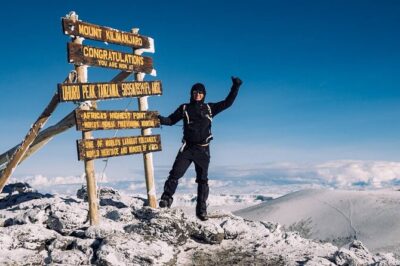
Climbing Kilimanjaro through 7 days Machame Route
Read our review →
7-Day Machame Kilimanjaro Summit Tour from Arusha
Read our review →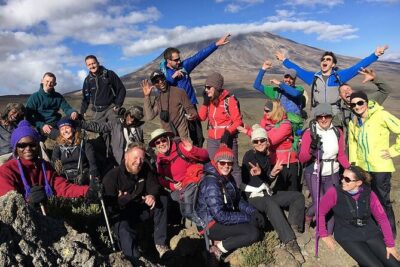
7 Days Kilimanjaro via Machame route affordable price
Read our review →Browse the lists this tour appears in