
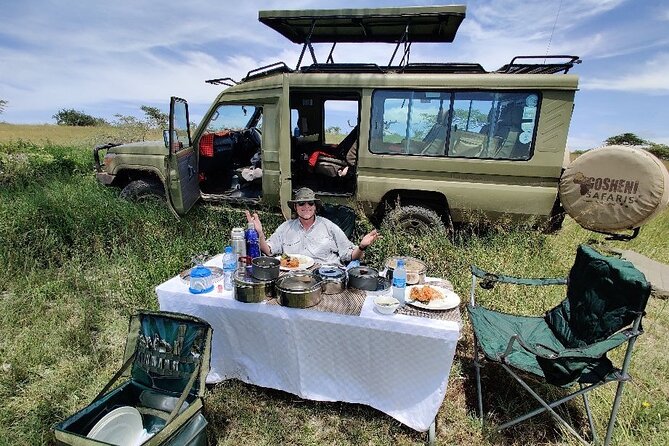
Reviewed · WILDEBEEST MIGRATION SAFARIS
8 Days Great Wildebeest Calving Migration Safari from Arusha
The main attraction here is the wildebeest calving season, when the southern Serengeti and Ndutu area can fill with newborn animals, zebra herds, and predators looking for an easy meal. You also get a useful sweep of northern Tanzania, from elephant country in Tarangire to the wildlife-packed floor of Ngorongoro Crater.
I like the range of habitats and the fact that your meals, park fees, lodging, bottled water, transfers, and private vehicle are included. I also like the small maximum of seven people, which gives you a better chance to ask questions and share the vehicle comfortably. The trade-off is the pace: six days of moving between parks and game drives can mean long hours on rough roads.
Key points to know
- The calving focus is strongest in Ndutu: February is especially important, but the broader season runs from December through April.
- You visit five major wildlife areas: Tarangire, Lake Manyara, Ndutu, central Serengeti, and Ngorongoro Crater.
- The tour includes seven nights: Your first night is at Mount Meru Hotel, followed by luxury camps and lodges.
- A private vehicle is included: The group size is capped at seven, with a driver-guide handling the route and wildlife searches.
- The guides are a major part of the experience: Named guides connected with this program include William, Albert, Emanuel, George Mathias, Calvin Kileo, Ombeni, Michael Sangiwa, Rahim, Innocent Mafuru, and Michel.
- The price covers most daily costs: At $2,999.62 per person, accommodation, meals, entrance fees, transport, airport transfers, and bottled water are included, while alcohol costs extra.
Why calving season changes the safari
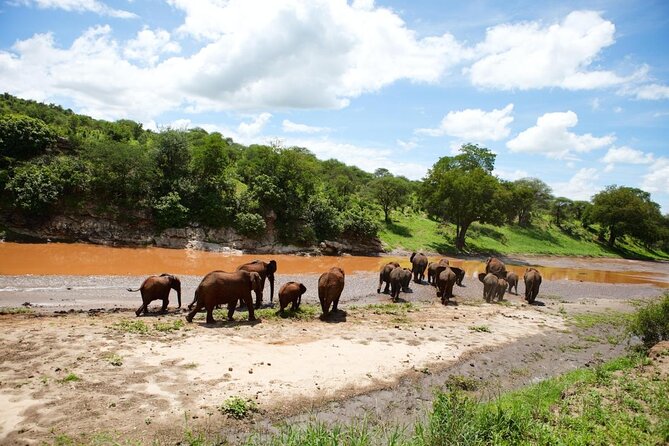
The Great Wildebeest Migration is not one fixed event in one fixed place. Herds move through the Serengeti ecosystem in response to food and rain, so timing and exact sightings can never be promised. This itinerary aims for the southern Serengeti and Ndutu area during the period when wildebeest give birth.
That timing gives you a different kind of safari. Instead of focusing only on huge moving herds, you may see newborn calves, protective adults, zebra, and predators drawn to the young animals. The calving period is especially associated with February and can last for roughly three weeks at its peak, while the tour itself is offered from December through April.
I would choose this trip for the wildlife event, not simply for a checklist of parks. The chance to see a birth or a predator hunt is real but never guaranteed. Nature does not follow the printed schedule, and a strong guide matters greatly when animals are spread across a wide area.
The route also gives you more than migration viewing. Tarangire has a different feel from Ndutu. Lake Manyara is compact and scenic. Ngorongoro Crater offers a concentrated wildlife drive. Together, the parks give you a broad introduction to Tanzania in eight days.
Other park itineraries that start in Arusha:
- Serengeti Balloon Safari and authentic bush breakfast
★ 5.0 · 2,480 reviews - Balloon Safari & Bush Breakfast in Serengeti – Miracle Experience
★ 5.0 · 1,646 reviews - 4 Days Group Camping Safari
★ 5.0 · 1,101 reviews
Day 1 at Mount Meru Hotel
Your trip begins with pickup at Kilimanjaro Airport and transfer to Mount Meru Hotel. The published meeting information also lists an 8:30 am start from Arusha, so confirm the exact pickup plan before you arrive, especially if you are flying in on the same day.
This first night is useful rather than flashy. It gives you a place to rest before the safari begins and lets the operator handle the transition from airport to road journey. Since the next morning starts with a drive to Tarangire, use the evening to organize camera batteries, sun protection, luggage, and any personal items you want close at hand.
The trip includes breakfast, lunch, and dinner on the safari days marked in the schedule. Alcoholic drinks are not included, though they can be purchased separately.
Day 2 in Tarangire National Park
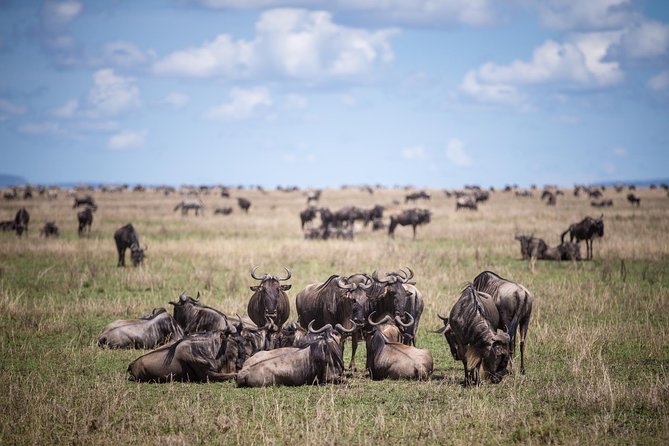
Tarangire is a strong opening park because it offers a clear change from Arusha and a good chance to see large elephant groups. The park is also known for baobab trees, often called the Tree of Life, and for the Tarangire River, which flows through the year.
The itinerary calls attention to tree-climbing lions as well as elephants. Those sightings depend on luck and timing, but the park’s mix of open areas, trees, and permanent water gives your guide several types of habitat to check.
You will travel in a private vehicle and spend much of the day on a game drive before settling into a luxury tented camp. A tented camp is part of the safari experience, but you should not assume every camp has the same layout or facilities. Ask the operator for the exact property names before departure if room style and amenities matter to you.
Tarangire is also a good reminder that a safari is not only about the Big Five. The baobabs, river, elephants, and changing views give the day its character. You may find this first full day busy, but it is a worthwhile introduction to Tanzania’s northern parks.
Day 3 around Lake Manyara
The next stop is Lake Manyara National Park, a smaller reserve with a compact game-viewing circuit. The lake and surrounding habitats make this one of the more varied stops on the route, even though the park is not as vast as the Serengeti.
The schedule describes Lake Manyara as one of Tanzania’s most diverse reserves and highlights its scenic quality. You can expect a day that feels different from Tarangire, with a lake-centered setting and a shorter route for wildlife viewing.
That compact size is both a strength and a limitation. You can cover more of the park without spending the whole day crossing enormous distances, but the range of sightings may feel less expansive than in the Serengeti. The itinerary gives you a luxury lodge overnight, a welcome change after the road time and tented accommodation.
If you are interested in scenery as well as animals, Lake Manyara earns its place here. If your only goal is to maximize time with migrating wildebeest, this is one of the less central days to that purpose. Still, it breaks up the route and adds variety.
Other safaris people book out of Arusha:
- 5 Days Group Camping Safari
★ 5.0 · 730 reviews - 3 Days Serengeti & Ngorongoro Group Camping Safari
★ 5.0 · 574 reviews - 7-Day Premium Luxury Tanzania Safari All-Inclusive
★ 5.0 · 426 reviews - 3-Day Classic Serengeti Safari
★ 5.0 · 263 reviews
Day 4 reaches the Ndutu area
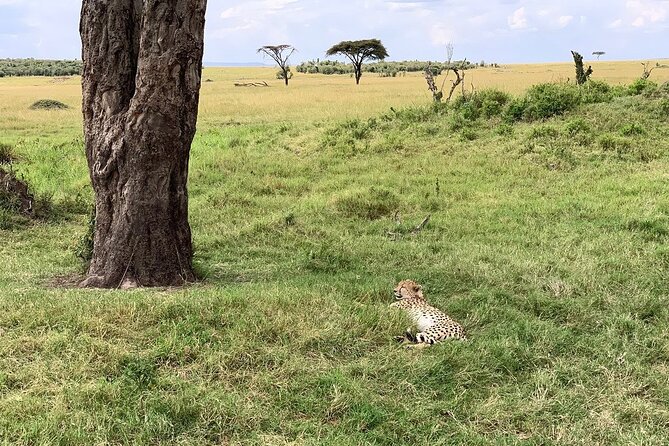
After breakfast, you head toward the Ndutu area in the Ngorongoro Conservation Area. Ndutu is part of the southern Serengeti ecosystem, and this is where the itinerary begins to focus directly on the calving season.
Lake Ndutu is alkaline, like many Rift Valley lakes, but the itinerary notes that wildlife uses its water. The surrounding area includes more than one type of habitat, so the drive is not simply a search across open plains. You may find swamps, woodland, soda lakes, and short-grass plains within the wider area.
This is an important positioning day. Your accommodation is a luxury tented camp, placing you near the southern migration zone rather than treating Ndutu as a quick side trip. Exact wildlife activity will depend on the season, rainfall, and the location of the herds.
The road from the earlier parks means you should be ready for a full travel day. Bring water, keep your camera accessible, and expect the vehicle to be your main base for much of the route. Bottled water is included.
Day 5 follows the calving action
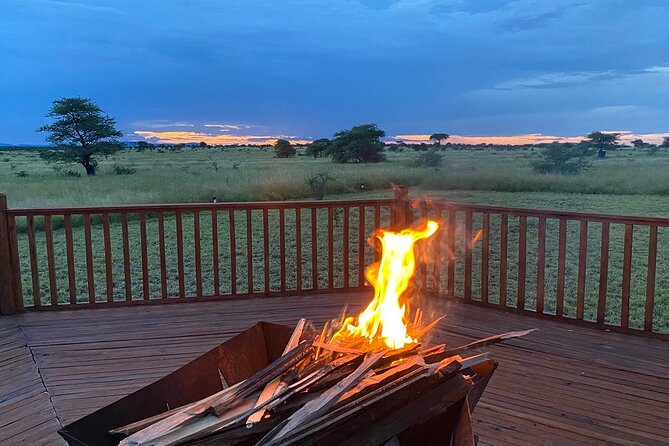
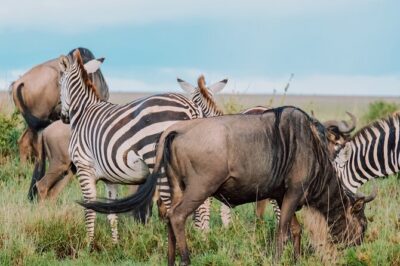
The fifth day is a full game drive around Ndutu. The itinerary gives you time to explore swamps, woodland, soda lakes, and the short-grass plains where wildebeest and zebra gather.
This is likely to be the emotional center of the tour. During the main calving window, thousands of young wildebeest may be present across the area, and predators are drawn to the concentration of vulnerable animals. You might see a dramatic hunt, but it is just as valuable to watch adults guard calves or observe how herds spread across the plains.
The word might matters here. A safari operator can place you in the right region and a good guide can read animal behavior, but no one can promise a kill, a birth, or a particular species. The strongest approach is to enjoy the entire setting rather than measure the day only by rare sightings.
You spend another night in a luxury tented camp before moving north toward central Serengeti. The extra night in Ndutu is helpful because it gives you more than a short drive-through visit and increases your time in the migration zone.
Day 6 in central Serengeti
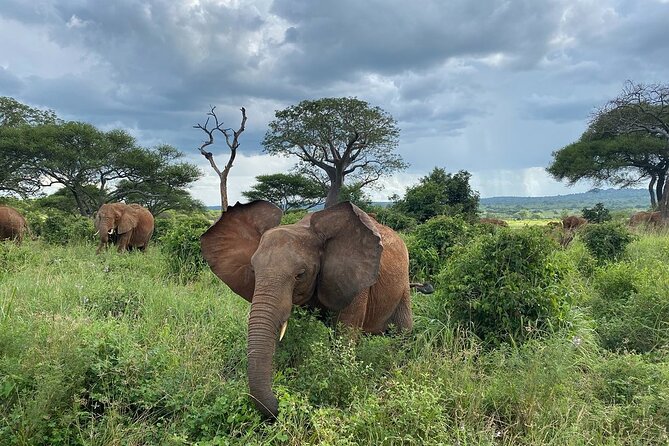
The sixth day is devoted to central Serengeti game drives and tracking the migration trails. The central region gives the itinerary a second Serengeti perspective after the southern plains.
Your driver-guide is central to this day. Guides such as William, Albert, George Mathias, Calvin Kileo, Ombeni, Michael Sangiwa, Rahim, Innocent Mafuru, and Michel are associated with the safari service. The specific guide is not guaranteed in the information provided, but the program places strong emphasis on experienced driver-guides who identify animals, explain plants and wildlife, and handle difficult roads.
That last point matters. On safari, a guide is not just a driver. The person behind the wheel decides how long to watch an animal, where to stop, and how to explain what you are seeing without turning the day into a hurried checklist. Reports about guides on this program repeatedly single out sharp animal spotting, calm driving, humor, and care with children.
Central Serengeti is also the part of the trip where long drives can become tiring. You may spend hours in the vehicle, and road conditions can be rough. The private setup helps because you are not tied to a large coach group, but you should still bring patience and a comfortable layer for changing temperatures.
Day 7 inside Ngorongoro Crater
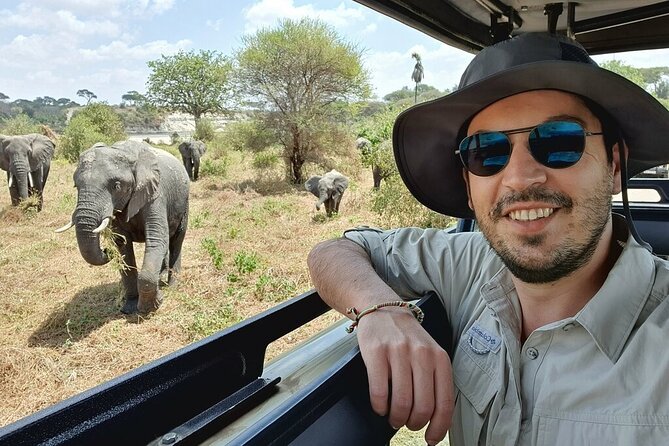
The route then turns to Ngorongoro Conservation Area, followed by a descent of about 600 meters into the crater. This is one of Tanzania’s most concentrated wildlife settings, and the crater drive gives you a final major game-viewing day before the cultural stop on Day 8.
The crater is not interchangeable with the Serengeti. You are looking at a contained natural area with a different sense of scale, and the descent itself adds drama to the day. The itinerary promises an array of wildlife, though it does not guarantee particular species.
You stay at a luxury lodge after the crater visit. That lodge night gives you a comfortable finish to the wildlife portion of the route, but the day may be long once you combine the drive, the descent, the game viewing, and the climb back out.
The crater is a good fit for anyone who wants a strong chance at varied wildlife in one day. It also gives first-time safari visitors a useful contrast with the open migration areas. I would not treat it as a replacement for Ndutu, though. The crater provides concentrated wildlife viewing, while Ndutu is the place tied most closely to calving.
Day 8 adds Mto wa Mbu culture
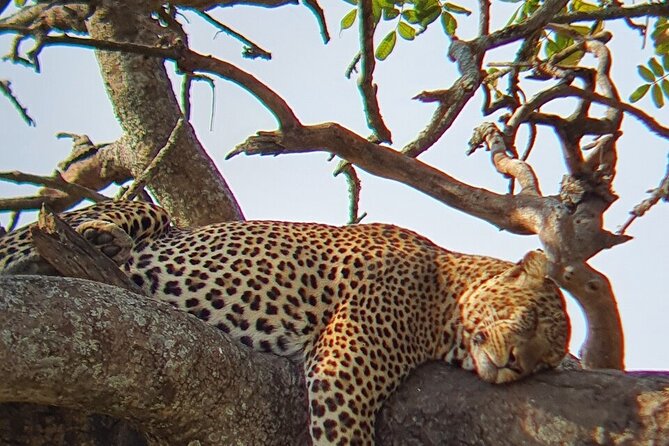
The final day takes you to Mto wa Mbu for a morning cultural tour and walking safari. You also receive a local lunch and time to take in the surrounding views before heading back to Arusha or the airport.
This is a welcome change after several days centered on animals and vehicles. The cultural visit gives you a chance to see part of daily life beyond the national parks, though the supplied details do not specify which communities, workshops, or activities are included. Ask for the exact plan if cultural content is a deciding factor for you.
The timing of your departure flight matters. The schedule says you return to Arusha or continue to the airport in the afternoon, but no exact arrival time is provided. Do not book a tight onward connection without confirming the expected drop-off time with the operator.
What the $2,999.62 price covers
At $2,999.62 per person, this is not a budget overland trip. The value comes from how many major costs are bundled into one price: seven nights of accommodation, meals listed in the schedule, park entrance fees, airport pickup and drop-off, private transport, bottled water, and a driver-guide.
A private vehicle is especially useful on a migration safari. You are not simply being carried between fixed attractions. Your guide needs flexibility to adjust the day around animal movements, road conditions, and the time available in each park.
The maximum group size is seven. That is small enough to keep the vehicle more personal than a large group departure, though the exact amount of space depends on the vehicle layout and luggage. If you are a couple or a family, ask whether the departure will be entirely private for your party or shared with other people.
Alcoholic drinks are excluded. That is a minor extra for most people, but it is worth knowing because nearly everything else used during the safari is bundled. The price also does not mention flights, travel insurance, visa costs, or personal purchases, so you should confirm those separately rather than assume they are included.
Guides, vehicles, and the human side of the trip
The strongest thread running through the guide feedback is the driver-guide service. William is praised for spotting difficult animals, including a black rhino, and for explaining wildlife, plants, and Maasai culture. Albert is described as an excellent animal spotter with strong zoological and botanical knowledge, while Emanuel is paired with him in comments about considerate service.
George Mathias is associated with professional driving, good energy, and a strong desire to find animals. Calvin Kileo is repeatedly linked with patience, empathy, and careful explanations. Ombeni is praised for handling difficult roads, finding animals, and keeping the mood light with singing and humor.
That range of names tells you something practical: the operator has several guides who can shape the trip in different ways. You may get a guide who focuses heavily on wildlife science, one who brings more humor, or one who is especially attentive to children. You cannot select a particular guide from the supplied details, so contact the company if that is important to you.
Families should note that children must be accompanied by an adult. One account specifically describes a family with two infants and guides who were considerate and attentive, but the tour still requires a moderate fitness level. The walking safari at Mto wa Mbu and the long vehicle days are worth considering when planning with very young children.
Who should book this safari
I would recommend this tour if you want a well-organized first safari with a clear focus on migration and calving. It suits you if you value private transport, a small group, included meals, and a route that combines several parks rather than staying in one area.
It is also a good fit if you want a balance of wildlife and culture. You receive five distinct wildlife settings plus the Mto wa Mbu walking and cultural visit.
I would hesitate if you dislike long road journeys, need a slow holiday, or want a fixed guarantee of seeing a specific animal. The itinerary covers a lot of ground in eight days, and wildlife sightings remain unpredictable.
The tour has a five-star rating from 254 submitted ratings and a 100 percent recommendation figure. Those numbers point to very strong satisfaction, especially with guide quality, vehicles, organization, and accommodations. Still, the right decision depends on your tolerance for early starts, rough roads, changing conditions, and full safari days.
Should you book the 8-day calving safari?
Book it if the idea of seeing young wildebeest in Ndutu matters more to you than spending every night in one place. The itinerary gives you a genuine chance to experience the calving season, then adds Tarangire’s elephants, Lake Manyara’s scenery, central Serengeti, Ngorongoro Crater, and a cultural morning in Mto wa Mbu.
I like the balance of included costs and the small group limit. Before paying, confirm the exact guide, camp names, pickup time, vehicle arrangement, and airport drop-off timing. If those details work for your plans, this is a strong value for a first Tanzania safari with a clear natural spectacle at its center.
FAQ
How long is the safari?
The experience lasts approximately eight days and includes seven nights of accommodation.
Where does the tour begin?
The stated starting point is Arusha in Tanzania. Airport pickup is provided from Kilimanjaro Airport on Day 1.
What time does the tour start?
The listed start time is 8:30 am. Confirm the exact pickup time and location with the operator, especially if you are arriving at Kilimanjaro Airport that day.
Which parks and areas does the tour visit?
The route includes Tarangire National Park, Lake Manyara National Park, the Ndutu area, central Serengeti National Park, Ngorongoro Crater, and Mto wa Mbu.
When is the wildebeest calving season?
The safari is timed for the calving season from December through April. The itinerary identifies February as an especially important period, with much of the calving occurring over about three weeks.
How many people can join the tour?
The maximum group size is seven people.
Are meals included?
Yes. Meals are included according to the schedule, with breakfast, lunch, and dinner marked on the relevant safari days. Alcoholic drinks are not included.
Is airport transportation included?
Yes. Airport pickup and drop-off are included. The final drop-off may be in Arusha or at the airport.
What accommodation is provided?
The itinerary includes one night at Mount Meru Hotel, luxury tented camps, and luxury lodges. Exact property names are not provided.
Can I cancel for a full refund?
You can cancel up to 24 hours before the experience start time for a full refund. Cancellations or changes made less than 24 hours before the start time are not refunded or accepted.
More migration safaris from Arusha
- 10-Day Serengeti Wildebeest Migration Safari from Arusha
★ 5.0 · 218 reviews - 8 Day Spectacular Migration Serengeti mid -Range Tanzania Safari
★ 5.0 · 161 reviews - 9-Day Serengeti Migration Footsteps Tanzania Safari
★ 5.0 · 96 reviews - 7 days great migration safari
★ 5.0 · 77 reviews
Just added in Arusha
- 2-Day Private Luxury Safari from Zanzibar with Flights★ 3.2 · 5 reviews
- 7-Day Private Tanzania Safari with Sunset Walking on the Crater Rim and Maasai★ 5.0 · 40 reviews
- Saadani Day Trip★ 5.0 · 13 reviews
- Nyssa Luxury Balloon in Safaris and Serengeti★ 5.0 · 69 reviews
- Arusha National Park Day Trip★ 4.5 · 18 reviews
- Arusha National Park Private Safari★ 5.0 · 59 reviews
- 8 Days Mountain Kilimanjaro Lemosho Route★ 5.0 · 22 reviews
- 7 Days Tanzania Mid-range lodge safari★ 5.0 · 22 reviews
Wildebeest Migration Safaris, compared.
10-Day Serengeti Wildebeest Migration Safari from Arusha
Read our review →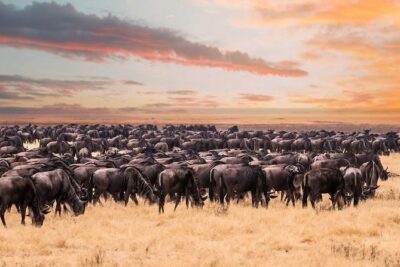
8 Day Spectacular Migration Serengeti mid -Range Tanzania Safari
Read our review →
9-Day Serengeti Migration Footsteps Tanzania Safari
Read our review →
Private 6-Day Great Migration Ndutu Serengeti Safari Tour
Read our review →
4 Day Great Migration Safari Serengeti & Ngorongoro Crater
Read our review →
6 Days Tanzania Budget Camping Safari with Migration
Read our review →Browse the lists this tour appears in