
Reviewed · KILIMANJARO TREKS
Climb Kilimanjaro – Lemosho Route 7 Day Climb
The best part of this Kilimanjaro climb comes early: you enter through the remote Lemosho Glades, where an armed ranger accompanies groups because wildlife is common in the forest. From there, the route crosses the wide Shira Plateau, passes Lava Tower and Barranco, and finishes with a long night climb to Uhuru Peak.
I like the slow altitude gain, with two useful acclimatization days before the hardest sections. I also like the practical setup: airport pickup, hotel nights, mountain meals, tents, porters, and rescue fees are included. The drawback is clear: the summit day is punishing, with 15 hours or more of hiking and an early morning start.
Key points to know before booking
- Wildlife-rich opening: The Lemosho Glades section includes an armed ranger and a chance to see big game during the drive across the western side of Kilimanjaro.
- Seven mountain days: The climb begins at about 2,200 meters and reaches Uhuru Peak at 5,895 meters.
- Acclimatization built in: Shira Camp 2 and the Lava Tower descent help your body adjust to altitude.
- Small group size: The maximum is 12 people, small enough for closer contact with the guide team.
- Summit certificates: Uhuru Peak climbers receive gold certificates, while those reaching Stella Point receive green certificates.
- Budget beyond the advertised price: At $2,280 per person, you still need to allow for flights, a $50 visa, insurance, gear hire, and optional tips of $250 to $350.
Why the Lemosho Route is worth considering
Kilimanjaro has several routes, but Lemosho gives you a strong sense of distance and changing scenery. You start on the western side, away from the busier approach routes, then cross the Shira Plateau before joining the southern circuit toward Barranco and Barafu.
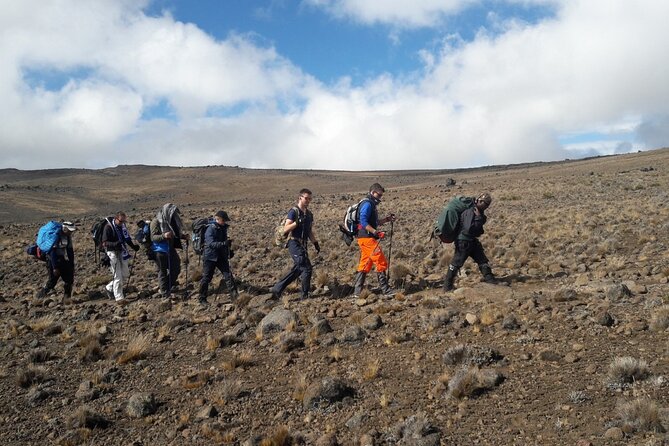
The route is not simply a long walk uphill. You move through forest, moorland, rocky semi-desert, scree, snow, and the high volcanic rim. That variety helps keep the climb interesting, especially on days when your legs feel heavy.
The opening through Lemosho Glades is also unusual. Groups are accompanied by an armed ranger because wildlife is common in the forest around the glades. The five-hour drive to the Londorosi Park Gate gives you a chance to see the western side of the mountain, including the possibility of big game before you begin walking.
The tradeoff is that the route still ends with the same difficult summit attempt faced by every Kilimanjaro climber. The scenery can be superb, but no route removes the effects of thin air, cold, steep scree, and a very long final day.
Other routes up the mountain from Arusha:
- 8-Day Small-group Lemosho Kilimanjaro Summit Trekking
★ 5.0 · 186 reviews - 5 Days Best of Tanzania Luxury Safari Northern Circuit
★ 5.0 · 174 reviews - 7-Day Machame Kilimanjaro Summit Tour from Arusha
★ 5.0 · 125 reviews
Arrival in Arusha and the first night
Your airport pickup takes you from Kilimanjaro International Airport to Springlands Hotel, or a similar property, for bed and breakfast. This first night matters more than it may seem. You have time to rest after your flight, organize your mountain gear, and meet the practical side of the trip before heading uphill.
Two nights of bed and breakfast in Moshi are included in the package. The supplied schedule refers to Springlands Hotel for the first and final nights, though the wording allows a similar hotel.
The listed start time is 9:00 am. Check your airport arrival carefully, since international flights are not included and airport transfers are part of the package. If you want a single room, the supplement is $50 per person.
Day 2: five hours to Lemosho, then the first camp
After breakfast, you drive for about five hours to Londorosi Park Gate. This is a long transfer, but it is part of what makes the western approach special. You cross toward the Shira Plateau, with the western side of Kilimanjaro offering one of the better chances to see big game on the mountain.
The walking begins at about 2,200 meters. You hike roughly 5 kilometers in around three hours, climbing to the Mti Mkubwa, also called Mt. Mkubwa, camp at about 2,600 meters.
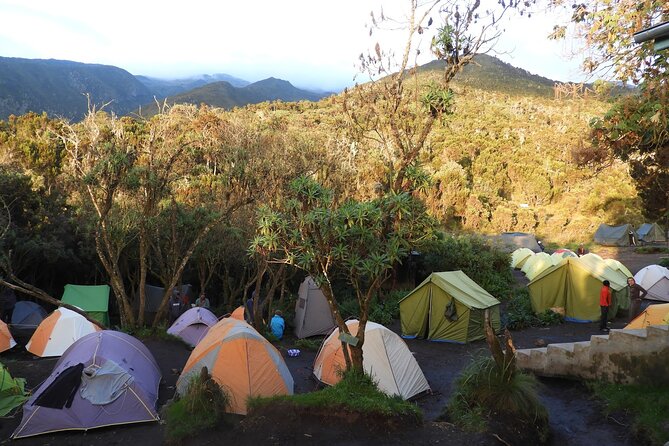
This first walking day is gentle by Kilimanjaro standards. You have time to get used to the rhythm of the mountain: walk slowly, drink regularly, and let the support crew establish camp. Dinner is served at camp, and the overnight is in a tent with a sleeping mattress supplied by the company.
The main concern is the long drive before the walk. If you have just arrived in Tanzania, the day may feel tiring even though the hiking is short.
Day 3: Mti Mkubwa to Shira Camp
The second mountain day covers about 10 kilometers and takes four to five hours. You climb from roughly 2,600 meters to 3,600 meters, moving through lower moorland filled with large shrubs and wildflowers.
The pace is deliberately calm. That is not wasted time. On Kilimanjaro, a slow first few days can make the difference later, when you need strength for the high camps and summit night.
At Shira Camp, Kibo’s west face rises above you. After lunch, you can rest at camp or take a short day hike, depending on the group and guide. This is one of the nicer days for views because you are high enough to feel the scale of the volcano but not yet dealing with the harshest cold and thin air.
You should expect basic camping rather than comfort. The package includes tents, mattresses, food, guides, porters, and cooks, but this is still a mountain camp. The appeal is being close to the route, not having hotel-style facilities.
Same base, a different kind of day out:
- Serengeti Balloon Safari and authentic bush breakfast
★ 5.0 · 2,480 reviews - Balloon Safari & Bush Breakfast in Serengeti – Miracle Experience
★ 5.0 · 1,646 reviews - Tanzania Classic – 7 Days
★ 5.0 · 1,151 reviews - 4 Days Group Camping Safari
★ 5.0 · 1,101 reviews
Day 4: the Shira Plateau and a useful acclimatization day
Day 4 is short on paper, with about 10 kilometers of walking over five to six hours. You climb from 3,600 meters to approximately 3,840 meters and move to Shira Camp 2.
The value of this day is not the distance. It gives you another night at altitude without forcing you into a huge climb. Your body gets more time to adjust before the route turns toward Lava Tower and the higher parts of the southern circuit.
The Shira Plateau is one of the route’s defining features. It feels open and exposed, with the bulk of Kibo visible above the moorland. You may find the plateau easier on the eyes than on the body: the walking is manageable, but the altitude can bring headaches, breathlessness, or poor sleep.
A good guide will watch your pace and condition here. Names associated with the World Adventure Tours team include Izadin and Kimbi. The company’s strongest praise has focused on attentive guides, helpful staff, and well-organized support. Still, ask who will lead your particular group before you leave, since guide assignment is not specified in the trip details.
Day 5: Lava Tower at 4,600 meters, then down to Barranco
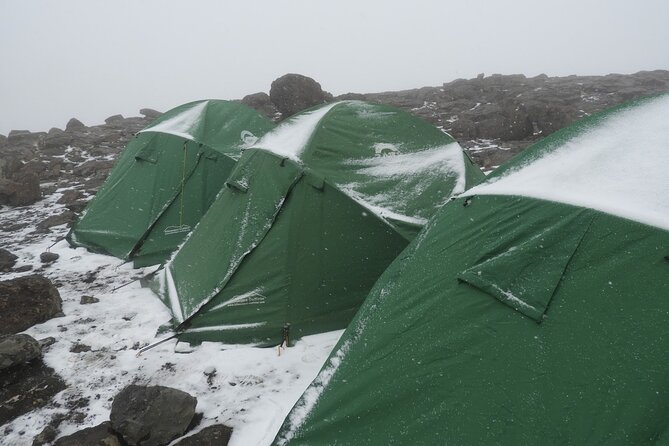
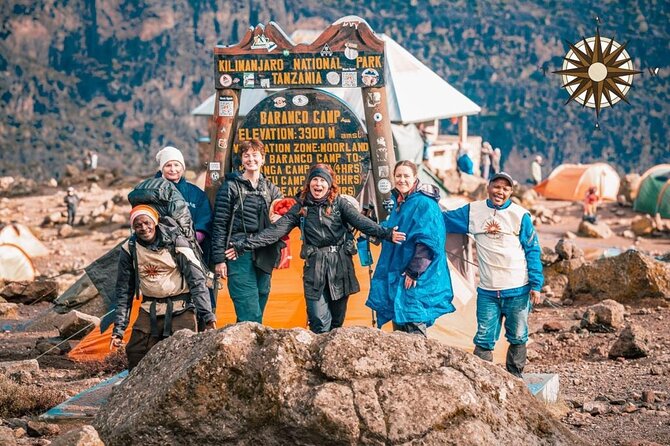
This is the route’s classic acclimatization test. You walk about 11 kilometers for seven to eight hours, moving from roughly 3,840 meters toward Lava Tower at approximately 4,600 meters before descending to Barranco Camp at about 3,940 meters.
The scenery changes to rocky semi-desert. The route climbs toward Lava Tower through increasingly bare ground, and the altitude becomes hard to ignore. This is often where breathlessness, headaches, and irritability begin.
Lunch is served near Lava Tower before you descend almost 680 meters to Barranco. That up-and-down pattern is tiring, but it has a purpose. You sleep lower than your highest point of the day after giving your body exposure to much higher altitude. It is one of the most useful features of the itinerary.
You should not treat the descent as an easy finish. Seven or eight hours of walking, including a high climb and a long drop, makes this a serious day. Eat even if your appetite fades, keep your water close, and tell the guide promptly if symptoms worsen.
Day 6: preparation for the summit attempt
The schedule describes another seven to eight-hour day, with the campsite placed between about 3,960 and 4,640 meters. The terrain is narrow, stony, and exposed to strong winds. You need to reach camp with enough time to prepare for the night climb.
This is when your equipment matters. Set out warm layers, gloves, headlamp, spare batteries, camera batteries, and walking poles before dark. A thermal flask is especially useful because ordinary water can freeze during the summit attempt.
The plan is to go to bed around 7:00 pm and rest for no more than five hours before waking at about 11:30 pm. That sounds odd until you remember that the summit climb begins in darkness and that the group needs to reach Stella Point around sunrise.
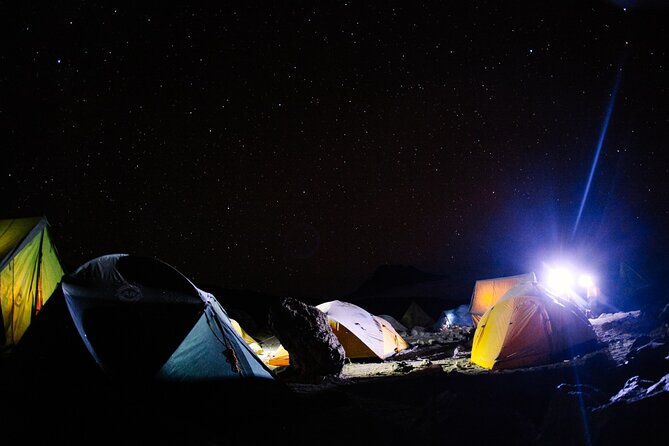
The camp conditions may feel rough. The tents are pitched on a narrow, stony ridge, described as dangerous in the schedule. Familiarize yourself with the area before dark, follow the guide’s instructions, and avoid wandering around once visibility drops.
Day 7: Stella Point, Uhuru Peak, and the long descent
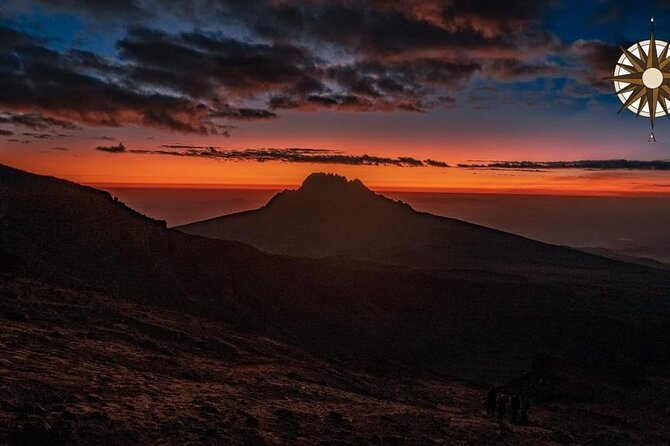
Summit day is the real test. You wake around 11:30 pm, take tea and biscuits, and begin climbing through heavy scree toward Stella Point on the crater rim.
The ascent to Stella Point takes about six hours for many groups. It is slow, dark, steep, and physically draining. The schedule gives the full day as 17 kilometers and 15 or more hours, with the stop duration described as about 20 hours. In plain terms, expect a very long day with almost no room for wasted energy.
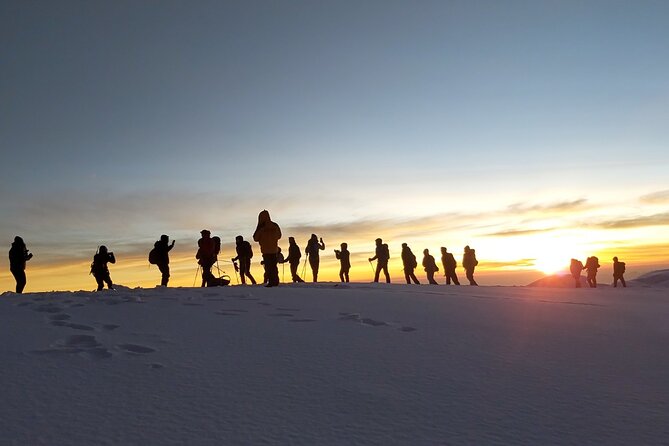
At Stella Point, around 5,685 meters, you may catch sunrise if the weather cooperates. This is one of the great rewards of the route, but you should not let the view distract you from the cold and altitude. Rest briefly, keep moving, and follow the guide’s advice.
From Stella Point, the final ascent to Uhuru Peak reaches 5,895 meters. Snow is normally present along this section. The summit is not a place to linger. Weather, cold, and altitude determine how long you can safely stay.
After the summit, you descend to a lower camp at about 3,100 meters. The descent is a relief, but it is not easy. Your knees and feet have already worked hard, and loose ground can make every step awkward. This is the day to think in small sections: reach the next point, drink, eat, and continue.
If you reach Uhuru Peak, you receive a gold certificate. Reaching Stella Point earns a green certificate. Both are official milestones, but your safety matters more than a certificate.
Day 8: Mweka Gate, lunch, and a proper shower
After breakfast, you continue down from Mweka Gate toward Mweka village. The final walk is usually about an hour and can be muddy. You then drive back to Springlands Hotel, where a hot lunch and a long-awaited shower are provided.
This day is short compared with the summit push, but tired legs can make the descent feel slow. Give yourself time. Trekking poles can help, especially if the path is wet.
At the hotel, you can also give tips to the guide. The suggested amount for guides, porters, and cooks is $250 to $350 per person, listed as optional. That is a meaningful extra cost, so include it in your budget before booking.
What the $2,280 price really covers
At $2,280 per person, the price has solid value if you want a supported climb rather than arranging each part yourself. It includes:
- Airport pickup
- Two hotel nights with breakfast
- Transport to the mountain and back to Moshi
- Park entry and other listed fees
- Rescue fees
- Tents and sleeping mattresses
- Guides, porters, and cooks
- Mountain meals
- Guide, porter, and cook accommodation and mountain entry fees
The listed meal allowance is nine breakfasts, six lunches, and six dinners. That matches the two hotel nights and the mountain portion as presented, but you should confirm the exact meal plan for your dates.
You still pay for international or domestic flights, the $50 Tanzania visa, travel and health insurance, gear hire, a possible $50 single-room supplement, and optional tips. Sleeping bags, clothing, and shoes can be hired, but the package does not state the hire prices.
Insurance deserves serious attention. The climb reaches 5,895 meters and includes rescue fees, but rescue fees are not a replacement for travel and health insurance. The company says it can help arrange insurance if you do not have it, so ask for the exact policy details before paying.
Group size, fitness, and the role of the crew
The maximum group size is 12 people. That is a useful middle ground. You get the social feel of a group, but the guide should still be able to keep track of everyone without managing a huge crowd.
You need a moderate level of physical fitness. The key issue is not speed. The route rewards patience, steady walking, and the ability to keep going for many hours. The summit day is far harder than the earlier schedule suggests, so do not judge your readiness only by the first three days.
The crew is central to the experience. The strongest praise attached to this operation concerns the organization, guide support, friendly staff, cooks, and porters. Izadin is associated with strong guiding on the mountain, while Kimbi is praised for providing excellent support. Gabriel is connected with clear communication before the trip. These names are useful points of contact, but you should confirm who will actually be assigned to your group.
What I would pack and plan for
Bring layers that can handle warm lower elevations and freezing summit conditions. Pack a reliable headlamp, spare batteries, thermal clothing, walking poles, a thermal flask, and suitable mountain footwear. If you plan to hire equipment, arrange it early and confirm sizes before the climb begins.
Keep your essentials accessible during the final ascent. You do not want to empty your bag in the dark to find gloves, a battery, or a warm layer.
Plan for basic camp life. You will eat mountain meals, sleep in tents, and spend long periods outside. A small amount of personal organization goes a long way. Keep wet items separate, protect electronics from cold and moisture, and follow the guide’s advice about water and pace.
Because the cancellation policy is strict, this is not a trip to book casually. The experience is non-refundable and cannot be changed for any reason after booking. Make sure your flights, fitness, insurance, and equipment plan are settled first.
Should you book this Kilimanjaro climb?
I would choose this route if you want Kilimanjaro’s quieter western approach, varied scenery, wildlife potential, and a well-supported seven-day mountain program. The slow start and two acclimatization sections make the plan more sensible than a rushed climb.
I would not choose it if you want a soft adventure, a short summit day, or hotel comfort on the mountain. The Lava Tower day is demanding, the exposed camps are basic, and the final push can last 15 hours or more.
For the right person, the $2,280 price is fair because it covers the expensive working parts of a guided climb: transport, permits and fees, crew wages, meals, tents, and rescue fees. Book it if you are prepared for the cold, the altitude, the long descent, and the extra costs beyond the headline price.
FAQ
How long is the full Kilimanjaro experience?
The full program lasts approximately nine days, including airport arrival and departure, two hotel nights, seven mountain days, and the return to Moshi.
What route does the climb use?
The climb uses the Lemosho Route, beginning through the Lemosho Glades and crossing the Shira Plateau before continuing toward Lava Tower, Barranco, Stella Point, and Uhuru Peak.
How high is Uhuru Peak?
Uhuru Peak is 5,895 meters above sea level. Stella Point is approximately 5,685 meters.
Is airport pickup included?
Yes. Airport pickup from Kilimanjaro International Airport is included, along with transport from Moshi to the mountain and back to Moshi.
What is not included in the price?
Flights, the $50 Tanzania entry visa, travel and health insurance, a possible $50 single-room supplement, hired mountain gear, and optional tips are not included.
How many people can join the group?
The maximum group size is 12 people. The activity requires a moderate level of physical fitness.
Just added in Arusha
- 4 Days Private Midrange Lodge Safari to Serengeti & Ngorongoro★ 5.0 · 4 reviews
- Extraordinary Hot air Bolloon ride in Serengeti | BURIGI CHATO SAFARIS CO L.T.D★ 5.0 · 6 reviews
- 3 days leopard safaris★ 5.0 · 4 reviews
- 8 Days Serengeti Migration safari★ 5.0 · 11 reviews
- tarangire, ngorongoro & lake manyara park 3 days private tour★ 5.0 · 11 reviews
- Mt. Kilimanjaro: Shira plateau to Cathedral point 3872m Day hike★ 5.0 · 7 reviews
- serengeti, ngorongoro & tarangire 4 days private tour★ 5.0 · 18 reviews
- tarangire & ngorongoro 2 days tour★ 5.0 · 14 reviews
Kilimanjaro Treks, compared.



8-Day Small-group Lemosho Kilimanjaro Summit Trekking
Read our review →

5 Days Best of Tanzania Luxury Safari Northern Circuit
Read our review →

Climbing Kilimanjaro through 7 days Machame Route
Read our review →
7-Day Machame Kilimanjaro Summit Tour from Arusha
Read our review →Browse the lists this tour appears in