
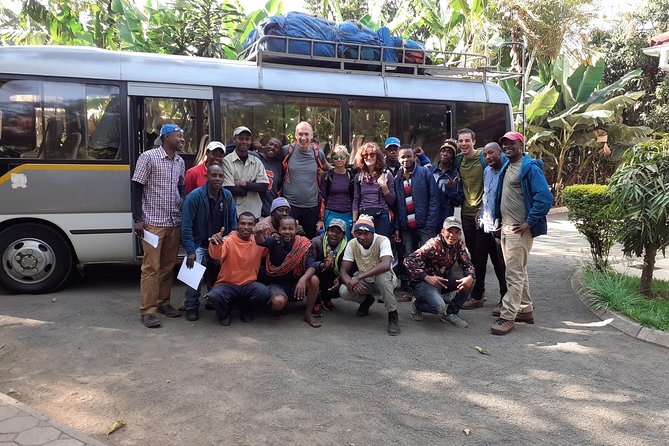
Reviewed · KILIMANJARO TREKS
KILIMANJARO MACHAME ROUTE, (Climb 7days) “Whiskey” route
The Machame Route gives you Kilimanjaro in bold stages: rainforest, heath, alpine desert, and snow-cold summit country. I like the route’s built-in acclimatization, especially the high climb to Lava Tower followed by a night at lower Barranco Camp. I also like the private format and the personal care promised by guide Paul, who has led repeat ascents and can handle gluten-free meals.
The main drawback is the pace. Summit night begins around midnight after several hard days, and the route includes steep climbs, cold, mud, and long descents. Seven days gives you a sensible route plan, but it is still a serious mountain trip, not a casual holiday walk.
Key points to know before booking
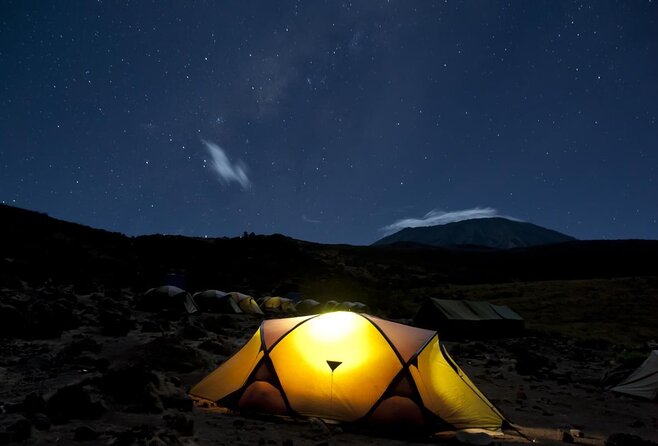
- A classic seven-day Machame itinerary: You climb through several climate zones before descending by the Mweka Route.
- Lava Tower helps with acclimatization: The route takes you to 15,190 feet, then drops to Barranco Camp for the night.
- A private group format: Only your own party takes part in the activity.
- A midnight summit attempt: Expect cold, darkness, short rest breaks, and a final push to 19,341-foot Uhuru Peak.
- Personal guide support: Paul is named as the lead contact, with a team of guides and cooks supporting the climb.
- A sizable price with practical value: At $2,564.11 per person, the cost reflects a private, guided park trek, though the supplied details do not list every inclusion.
Why the Machame Route earns its Whiskey nickname
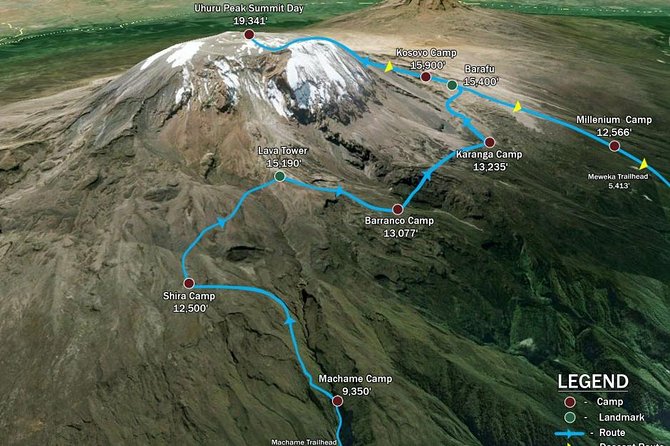
Machame is commonly called the Whiskey Route, a playful contrast to Kilimanjaro’s easier-sounding Coca-Cola Route. The name hints at the trail’s character: steeper paths, rougher ground, and a more demanding rhythm.
You begin at Machame Gate on the southern side of Kilimanjaro and finish at Mweka Gate. That point-to-point design lets you see different sides of the mountain instead of walking back over the same trail.
The route also changes character quickly. On the first day, you walk beneath thick rainforest. By the third day, trees are gone and the trail reaches open alpine desert. On summit morning, you enter Arctic conditions, with wind and cold replacing the warm lower slopes.
I like this changing scenery because it makes the climb feel like a real journey. You are not simply walking uphill for a week. You are moving through distinct plant zones and weather conditions, each with its own demands.
Other routes up the mountain from Arusha:
- 8-Day Small-group Lemosho Kilimanjaro Summit Trekking
★ 5.0 · 186 reviews - 5 Days Best of Tanzania Luxury Safari Northern Circuit
★ 5.0 · 174 reviews - 7-Day Machame Kilimanjaro Summit Tour from Arusha
★ 5.0 · 125 reviews
What the $2,564.11 price means
The listed price is $2,564.11 per person. That is a major expense, but this is not a short guided walk. It is a seven-day private mountain expedition with park access, camp-to-camp support, guides, cooks, and transport back to the hotel area after the descent.
The value is strongest if you want your own group rather than joining strangers. A private activity gives you a more personal setup, and the team can pay closer attention to your pace, meals, and condition. The supplied details specifically point to friendly guides and cooks, and Paul’s ability to provide gluten-free food is useful for anyone with that requirement.
Still, check the final inclusions before paying. The information confirms that admission tickets are included on Day 1, while the other days show no extra admission charge. It does not spell out every item included in the price, such as airport transfers, equipment, tips, or accommodation before and after the climb.
Pickup is offered, and transport is provided from Mweka Village to the hotel in Moshi or Arusha at the end. That removes one awkward detail after a long descent, when your legs will be tired and your clothes may be wet or muddy.
Day 1: Machame Gate to Machame Camp
The climb begins with a drive of about 50 minutes from Moshi to Machame Gate, passing through Machame village on the lower slopes. After park entry, the trail enters dense rainforest and follows a winding route up a ridge.
You cover about 11 kilometers, or 7 miles, over five to seven hours. The starting elevation is 5,380 feet, and Machame Camp sits at 9,350 feet.
This is a full opening day, even though the trail is at the lowest part of the mountain. The rainforest can feel damp, and the path may be muddy. Your first job is not speed. It is finding a steady walking rhythm and keeping enough energy for the days ahead.
The forest is one of the best parts of the opening stage. It gives you shade and a close-up look at Kilimanjaro’s lower climate zone before the trail opens out. Admission is included on this day.
Day 2: Shira Plateau and open heath
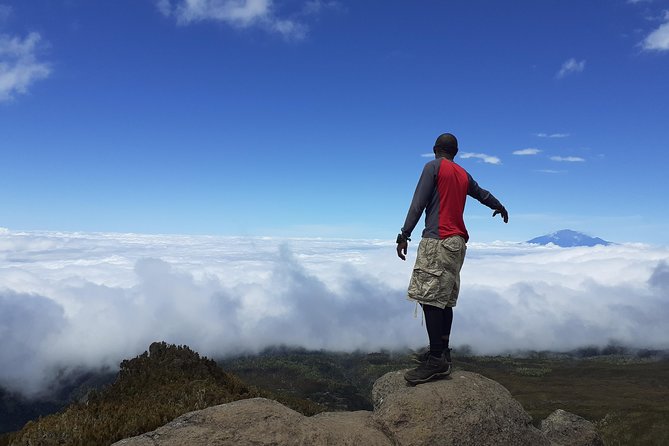
Day 2 leaves the forest behind. From Machame Camp, you climb toward Shira 2 Camp, gaining nearly 3,200 feet while walking only about 5 kilometers.
The hike takes four to six hours and passes into heath and open moorland. The trail reaches a steep, rocky ridge before crossing the Shira Plateau, then continues across a large river gorge.
The shorter distance does not make this an easy day. The elevation gain is noticeable, and the open ground offers less shelter than the rainforest. You should keep your pace slow and drink regularly.
Shira 2 Camp sits at 12,500 feet. Sleeping at this height gives you an early test of how your body responds to altitude. The supplied itinerary lists this day at roughly eight hours overall, so plan for time spent moving, resting, and settling into camp.
Same base, a different kind of day out:
- Serengeti Balloon Safari and authentic bush breakfast
★ 5.0 · 2,480 reviews - Balloon Safari & Bush Breakfast in Serengeti – Miracle Experience
★ 5.0 · 1,646 reviews - Tanzania Classic – 7 Days
★ 5.0 · 1,151 reviews - 4 Days Group Camping Safari
★ 5.0 · 1,101 reviews
Day 3: Lava Tower, then down to Barranco
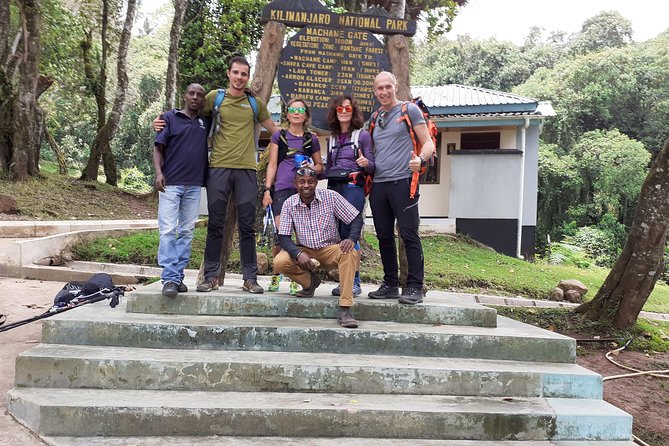
This is one of the most important days on the route. You climb from Shira 2 Camp at 12,500 feet to Lava Tower at 15,190 feet, then descend to Barranco Camp at about 13,044 feet.
The first section covers 7 kilometers and takes four to five hours. Lava Tower is a roughly 300-foot volcanic rock formation, and reaching it gives you a long period at high elevation. From there, you descend about 3 kilometers to Barranco Camp over another two to three hours.
The clever part of this plan is that you climb high and sleep lower. Your body gets time at altitude without requiring you to spend the night at the day’s highest point. That is valuable acclimatization, though it does not remove the risk of altitude sickness.
The scenery changes again. Alpine desert conditions replace the heather, and the Senecio Forest near Barranco adds an odd, striking touch to the otherwise bare surroundings. This is a six-hour hiking day according to the schedule, but the high altitude can make the effort feel longer.
Day 4: Climbing the Barranco Wall
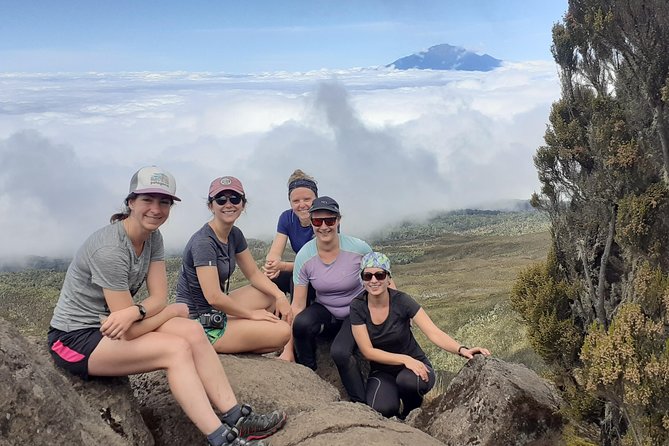
From Barranco Camp, the trail drops into a ravine before reaching the base of the Great Barranco Wall. You then climb the wall, a steep section nearly 900 feet high.
The climb is described as non-technical, but steep does not mean easy. You will use your hands at points for balance, and the narrow, rocky route may feel demanding if you dislike heights or uneven ground. There is no technical climbing equipment listed, but you still need a good level of fitness and sure footing.
From the top, the path crosses hills and valleys before dropping into Karanga Valley. A final steep climb takes you to Karanga Camp at 13,106 feet.
This is a shorter day of about 5 kilometers and four to five hours. That matters because the route gives you more time to recover before the summit push. It is an acclimatization day, not a free day, so keep your effort controlled.
Day 5: Karanga to Barafu Camp
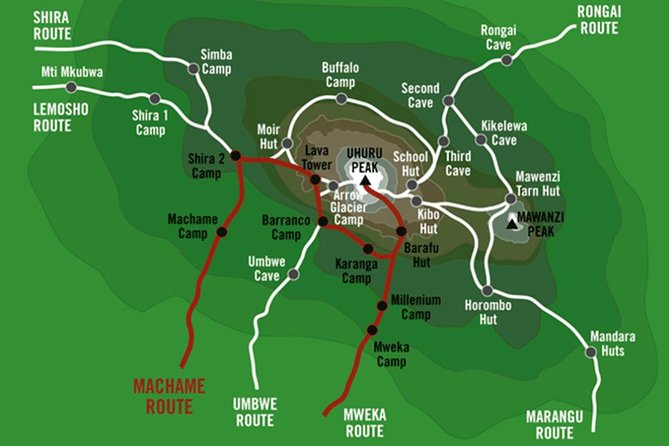
Day 5 covers only about 4 kilometers, but you climb from 13,106 feet to 15,331 feet. The trail takes four to five hours and crosses rocky ground to Barafu Camp.
Barafu means ice, and the camp marks the end of the southern circuit. From here, you have reached the high camp used for the summit attempt. Mawenzi and Kibo, two of Kilimanjaro’s major peaks, are visible from this position.
This day can feel short on paper, yet the altitude adds difficulty. You arrive at Barafu, rest, and eat an early dinner before trying to sleep. The next start comes around midnight, so your evening is mainly about staying warm, organizing your clothing, and resting as much as possible.
The route’s southern circuit design gives you views of the summit from several angles before you make the final attempt. That variety is one reason the seven-day plan feels more rewarding than a rushed ascent.
Day 6: The midnight push to Uhuru Peak
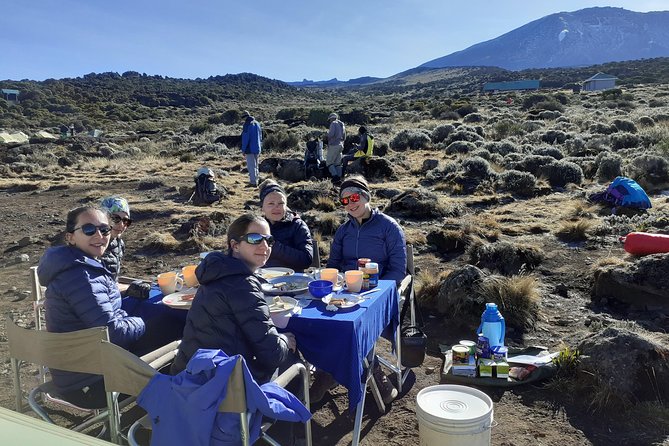
Summit day is the hardest part of the climb. You leave Barafu Camp around midnight and ascend in darkness from 15,331 feet to Uhuru Peak at 19,341 feet.
The climb to the summit covers about 5 kilometers and is scheduled for seven to eight hours. You take frequent short breaks, but the wind and cold can be severe at this height and time of day.
Near Stella Point, at roughly 18,900 feet, the sunrise over Mawenzi is a major reward. From there, you continue toward Uhuru Peak, the highest point on Kilimanjaro. The final stretch may feel slow and exposed, and your body will have already worked hard for several hours.
After reaching the summit, you descend to Mweka Camp at 10,065 feet. This is another 12 kilometers and four to six hours through the rain forest. The descent is a relief for some people, but it can be tough on knees and feet.
The itinerary lists this as a six-hour day, but the stated walking segments add up to much more. Treat it as the longest and most demanding day of the trip. You need warm clothing, sturdy footwear, and enough mental energy for the descent, not just the summit.
Day 7: Mweka Camp to the gate
The final hiking day descends 10 kilometers from Mweka Camp to Mweka Gate. The listed walking time is three to four hours, and the route returns to rainforest.
Lower elevations may be wet and muddy, so your clean summit clothing will not stay clean for long. The forest also marks a welcome return to warmer air and easier breathing.
At Mweka Gate, you collect your summit certificate. You then continue for about an hour to Mweka Village, where a vehicle meets you and takes you back to your hotel in Moshi or Arusha.
This ending is practical. You do not have to arrange a separate ride while tired, and the transfer from the village closes the loop on a demanding week.
The guide team and food matter here
The strongest personal detail attached to this climb is Paul. One experienced climber has used his services three times over six Kilimanjaro ascents and singled him out for care and attention. That is meaningful if you are looking for a guide who can work with people at different experience levels.
Another climber described Paul and the team as making a difficult climb feel more manageable. That does not make the mountain easy, but it points to the value of calm guidance when the trail becomes steep, cold, or mentally tiring.
Food is another practical strength. The team can cater for a gluten-free diet, and the meals have been described as good. If you have dietary needs, tell the operator before departure and confirm exactly what can be prepared.
The team includes guides and cooks, but the supplied details do not give a full staff-to-climber ratio. Ask about that before booking if close one-to-one support is important to you.
Who should book this climb?
This Machame itinerary suits you if you have moderate physical fitness, can walk for several hours on steep or rocky trails, and are ready for a midnight summit attempt.
It is a good fit for:
- A private group that wants its own guides and schedule
- Hikers who prefer changing scenery over a simple out-and-back trail
- Climbers who value a high camp, a southern circuit, and a dedicated acclimatization day
- Anyone who needs gluten-free meal planning
- People who want transport back to Moshi or Arusha after the descent
It is less suitable if you want a relaxed holiday, dislike cold weather, or expect a short summit walk. The route includes long days, substantial altitude gain, steep sections, and a very early start on Day 6.
The experience is described as private, but the supplied information does not give a maximum group size. Ask how many people can join your booking and how many guides and cooks will support the party.
Practical booking details
Confirmation is provided at booking, and the activity is near public transportation. The listed operating hours are Monday through Sunday, from 8:00 AM to 11:30 PM, for the stated booking period ending June 18, 2026.
The cancellation terms are strict. Cancel at least six full days before the start for a full refund. Cancellation two to six full days before the start receives a 50 percent refund, while cancellation within two full days receives no refund. Changes inside those cutoffs are not accepted.
Weather and minimum participation can also affect departure. If poor weather cancels the climb, you are offered another date or a full refund. If the minimum number of participants is not reached, you are offered another date or activity, or a full refund.
Should you book the seven-day Machame climb?
Book it if you want a private, properly staged Kilimanjaro climb and accept that the summit day will be hard. The Lava Tower to Barranco plan gives you useful acclimatization, while the changing zones make the week visually rewarding.
I would be more cautious if your fitness is uncertain or if you are choosing mainly by price. At $2,564.11, you should confirm what the fee includes before committing, then prepare seriously for altitude, cold, mud, and the long descent.
For a fit hiker who wants personal guide support, practical meal care, and a route that feels like a full mountain crossing, this is a strong option. Just treat it as an expedition with a holiday price, not as a standard sightseeing tour.
FAQ
Where does the Kilimanjaro climb begin?
The climb begins at Machame Gate, reached by a drive of about 50 minutes from Moshi through Machame village.
How long is the experience?
The climb lasts approximately seven days.
What route is used for the climb?
The ascent uses the Machame Route, also called the Whiskey Route. The descent finishes at Mweka Gate.
What is the highest point reached?
The summit is Uhuru Peak at 19,341 feet.
Is this a private activity?
Yes. Only your own group participates in the private tour or activity.
Is pickup available?
Yes. Pickup is offered. At the end, a vehicle meets the group at Mweka Village and drives back to the hotel in Moshi or Arusha.
What level of fitness is required?
A moderate level of physical fitness is required. The climb includes several-hour hiking days, steep sections, high altitude, and a midnight summit attempt.
Can the team provide gluten-free food?
Yes. The team can cater for a gluten-free diet.
What happens if bad weather cancels the climb?
You are offered a different date or a full refund if poor weather causes the experience to be canceled.
Just added in Arusha
- 4 Days Private Midrange Lodge Safari to Serengeti & Ngorongoro★ 5.0 · 4 reviews
- Extraordinary Hot air Bolloon ride in Serengeti | BURIGI CHATO SAFARIS CO L.T.D★ 5.0 · 6 reviews
- 3 days leopard safaris★ 5.0 · 4 reviews
- 8 Days Serengeti Migration safari★ 5.0 · 11 reviews
- tarangire, ngorongoro & lake manyara park 3 days private tour★ 5.0 · 11 reviews
- tarangire & ngorongoro 2 days tour★ 5.0 · 14 reviews
- Mt. Kilimanjaro: Shira plateau to Cathedral point 3872m Day hike★ 5.0 · 7 reviews
- serengeti, ngorongoro & tarangire 4 days private tour★ 5.0 · 18 reviews
Kilimanjaro Treks, compared.



8-Day Small-group Lemosho Kilimanjaro Summit Trekking
Read our review →

5 Days Best of Tanzania Luxury Safari Northern Circuit
Read our review →

Climbing Kilimanjaro through 7 days Machame Route
Read our review →
7-Day Machame Kilimanjaro Summit Tour from Arusha
Read our review →Browse the lists this tour appears in