
Reviewed · KILIMANJARO TREKS
8 Days Lemosho Route Kilimanjaro Trekking
Lemosho gives you Kilimanjaro in chapters: thick rainforest, open moorland, the broad Shira Plateau, volcanic stone, glaciers, and a cold night at 4,550 meters before the summit push. I like the quiet opening days and the clever climb-high, sleep-lower route through Lava Tower and Barranco. I also like that the route gives you eight days to adjust instead of rushing you uphill.
The main catch is the summit day. It is a punishing 7 kilometers up to Uhuru Peak, followed by roughly 23 kilometers down to Mweka. The price is also not a small one, and you’ll still need to budget for tips, a sleeping bag, gear rental, insurance, visas, and nights before or after the climb.
Key details before you book
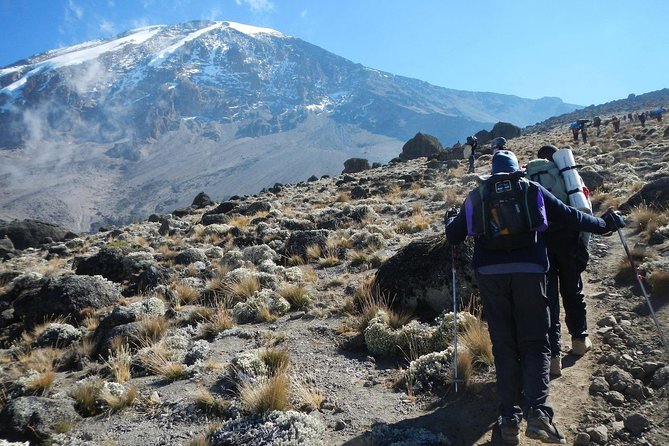
- The route begins quietly in rainforest: Lemosho has fewer people at first, before joining the busier Machame route on Kilimanjaro’s southern circuit.
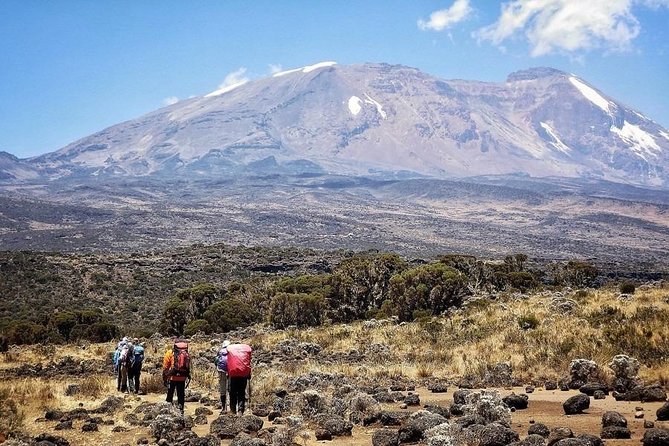
- The Shira Plateau is the scenic centerpiece: Day 2 and Day 3 open into high moorland with wide views toward Kibo and the Northern Ice Fields.
- Day 4 is crucial for altitude adjustment: You climb to Lava Tower at about 16,000 feet, then sleep at Barranco Camp at roughly 13,000 feet.
- The crew is locally operated: Erastus manages the company, and Oliver and John are named members of the mountain team connected with this experience.
- The summit attempt starts around 11:30 p.m.: Expect tea, biscuits, darkness, stone scree, sunrise at Stella Point, and a final push to Uhuru Peak.
- The $2,700.52 price covers the mountain basics: Park fees, rescue fees, camping equipment, food, porters, guides, taxes, and accommodation are included, but several personal costs are not.
Why Lemosho is worth the extra days
Kilimanjaro has several routes, but Lemosho earns its reputation through variety. You start among trees and finish among ice and volcanic rock. In between, you cross high grassland, heather, moorland, semi-desert, and alpine desert.
The route is also designed with acclimatization in mind. That matters more than simply counting kilometers. On Day 4, you climb toward Lava Tower at a high altitude, then descend to Barranco Camp. This climb high, sleep lower pattern gives your body useful adjustment time.
The first two days are quieter than the later southern-circuit section. Once Lemosho joins the Machame route, you should expect a more shared trail experience. That trade-off is fair: you get solitude at the start, then access to the dramatic southern viewpoints that make this side of Kilimanjaro so popular.
This is a private activity, so only your own group participates. That makes the pace and daily routine more personal than a large scheduled group, although the size of your group is not specified.
Other routes up the mountain from Arusha:
- 8-Day Small-group Lemosho Kilimanjaro Summit Trekking
★ 5.0 · 186 reviews - 5 Days Best of Tanzania Luxury Safari Northern Circuit
★ 5.0 · 174 reviews - 7-Day Machame Kilimanjaro Summit Tour from Arusha
★ 5.0 · 125 reviews
Day 1: Arusha to the rainforest
Your day starts at 6:00 a.m. in Arusha. After breakfast at your hotel, your guide gives you a briefing before the roughly two-hour drive to Londorossi Park Gate, located around 2,100 meters above sea level.
There is an important bit of administration near the gate and in the nearby village, where entry formalities are completed. After that, you drive for about another hour to the Lemosho trailhead. This transfer time is worth noting because the mountain walk itself does not begin immediately after leaving Arusha.
At the trailhead, you eat lunch and then set off through undisturbed rainforest. The first walk covers about 6 kilometers and takes around 3 to 4 hours. You sleep in the forest zone, where the trees and damp conditions make a sharp contrast with the high, open country ahead.
This is a gentle introduction by Kilimanjaro standards, but it is still a full travel day. Keep your daypack organized, since you will move from vehicle to trail and from lunch to camp without much spare time.
Day 2: Shira Ridge and the first wide views
Day 2 takes you out of the forest and into moorland. Tall grasses, heather, volcanic rock, and lichen replace the dense trees. The trail rises through rolling hills and crosses several streams before reaching Shira Ridge.
You cover about 8 kilometers in around 5 to 5.5 hours. The route then drops gently to Shira 1 Camp. This is one of the first days when Kilimanjaro begins to feel large and open, with Kibo visible across the plateau.
The Shira Plateau is one of the high points of the trip, both literally and visually. It is broad, exposed, and unusual. You are no longer walking through a typical mountain forest, but you are not yet in the harsh stone country near the summit.
The best approach is to walk slowly and keep drinking. Day 2 brings a noticeable gain in altitude, even though the trail is not described as technically difficult.
Day 3: Shira 2, Moir Hut, and acclimatization
Day 3 is longer, covering approximately 15 kilometers in 5 to 7 hours. You walk east across moorland meadows toward Shira 2 Camp, with a stream nearby and Kibo’s glaciered summit ahead.
From Shira, the route continues toward Moir Hut at the base of the Lent Hills. This is a little-used site, and the nearby hills provide options for short additional walks. Those walks are valuable because they give you time at altitude without forcing you into a huge distance.
The day’s scenery is the main reward. Shira is described as one of the highest plateaus on earth, and the views toward the Northern Ice Fields give you an early sense of the mountain’s scale.
This is also a day to pay attention to your body. Headache, nausea, unusual fatigue, or poor sleep should be reported to your guide. The route includes acclimatization time, but altitude still affects people differently.
Same base, a different kind of day out:
- Serengeti Balloon Safari and authentic bush breakfast
★ 5.0 · 2,480 reviews - Balloon Safari & Bush Breakfast in Serengeti – Miracle Experience
★ 5.0 · 1,646 reviews - Tanzania Classic – 7 Days
★ 5.0 · 1,151 reviews - 4 Days Group Camping Safari
★ 5.0 · 1,101 reviews
Day 4: Lava Tower and the Barranco drop
Day 4 changes the character of the climb. You leave Moir Hut and follow a ridge toward the southeast, passing the junction for the Kibo summit route before heading toward Lava Tower, also called the Shark’s Tooth.
The hike covers about 7 kilometers and takes roughly 7 hours. You may reach around 16,000 feet near the Arrow Glacier junction before descending to Barranco Hut at approximately 13,000 feet.
The distance is not huge, but this is a hard altitude day. You finish close to the height where you began, yet the ascent and descent are exactly why the day matters. Your body gets time at a higher elevation, then you sleep lower at Barranco.
The setting changes to semi-desert, with more exposed volcanic ground and less plant cover. Dinner and overnight rest take place at Barranco Camp. For many hikers, this is one of the most useful days on the route, even if it is not the easiest.
Day 5: The Barranco Wall and Karanga Valley
Day 5 is shorter, covering about 5 kilometers in 4 to 5 hours. You start with the Barranco Wall, which can look intimidating from below.
The route is described as a Class 2 hike, but you should still expect some hands-on movement and a slower pace in places. It is not presented as a technical climbing section, yet the wall demands care, balance, and attention to your guide.
At the top, you can see the Heim Glacier and look out above the clouds. That reward comes early in the day, after which the trail rises and falls through the Karanga Valley.
You spend the night at Karanga Camp at about 3,950 meters. This shorter day is useful because it gives you another chance to adjust before the final rise to Barafu. I like the way the itinerary avoids stacking every difficult section into one huge day.
Day 6: Barafu Camp and preparation for the summit
After breakfast, you climb toward Barafu Camp. The walk covers about 4 kilometers and takes 3 to 4 hours through alpine desert.
The trail intersects with the Mweka Route, which you use for the descent. After roughly an hour more, you reach Barafu Hut. This is the last water stop for porters because there is no accessible water at Barafu Camp.
Barafu means ice in Swahili, and the camp sits on an exposed rocky ridge at about 4,550 meters. Tents can face wind and rocks, so arrive with enough daylight to learn the campsite layout and organize your sleeping bag, warm layers, headlamp, water, and summit snacks.
Dinner is served early. The point of Day 6 is not to collect distance. It is to reach the high camp, eat, rest, and prepare for a midnight start.
Day 7: Stella Point, Uhuru Peak, and Mweka
Summit day begins around 11:30 p.m. with tea and biscuits. You set off into darkness, climbing northwest over stone scree.
The ascent to Stella Point at about 5,685 meters takes around 6 hours. This is likely the toughest part of the trip. The ground is loose, the air is thin, and the long night can test your patience as much as your legs.
At Stella Point, sunrise provides a major psychological lift. You are on the crater rim, but the summit is still about two hours away along a snow-covered trail. Uhuru Peak reaches 5,895 meters, the highest point on Kilimanjaro.
The listed timing gives 8 hours to reach Uhuru Peak, followed by 7 to 8 hours descending to Mweka. The stated distance is approximately 7 kilometers up and 23 kilometers down. That is an enormous day, so your decision to attempt the summit should be guided by your condition and the guide’s judgment.
After the summit, you descend through the Mweka route. The downhill can be rough on tired knees, especially after the cold and effort of the ascent. Save some water and food for this section rather than treating the summit as the end of the day.
Day 8: Celebration, certificates, and the forest descent
Day 8 brings a shorter mountain walk of about 15 kilometers and 3 hours through forest. After breakfast, the staff hold a celebration with dancing and singing.
This is also the moment when tips are presented to the guides, assistant guides, chef or chefs, and porters. Tips are not included in the price, so plan for them before you leave home. The amount is not specified here, and you should ask Mafie Adventures for its current guidance.
You then descend to Mweka Gate. Everyone must sign out at the national park, and certificates are issued there. Reaching Stella Point earns a green certificate, while reaching Uhuru Peak earns a gold certificate.
After the gate, the stated plan includes another hour and approximately 3 kilometers down to Mweka village. The activity then returns to the meeting point in Arusha, although the exact transfer timing is not given.
What the $2,700.52 price covers
At $2,700.52 per person, this is a substantial purchase, but the fee includes many of the costly pieces needed for an organized Kilimanjaro climb.
Included items are:
- Camping equipment, including a mess tent, mattress, and cooking equipment
- Park and parking fees
- Rescue fees
- Taxes and VAT
- Mountain accommodation
- A professional driver and guide
- Porterage
- Seven dinners
- Seven breakfasts
- Eight lunches
The value is strongest if you need a full support team. You are not arranging park access, meals, tents, porter transport, or rescue coverage separately. The eight-day schedule also gives you more acclimatization time than a rushed itinerary.
You still need to pay for climbing gear rental if required, a sleeping bag, bath towels, international flights, accommodation before and after the trek, tips, travel insurance, visa fees, souvenirs, and any government increase in taxes or park fees.
The price does not include a sleeping bag, so ask about rental options before arrival. You should also confirm exactly which climbing clothing and equipment can be rented, since the supplied information says climbing gear is available but does not list individual items.
The Mafie Adventures team and the human side of the climb
The company is locally operated in Tanzania, and you communicate directly with Erastus, the owner and organizer. The booking process is described as straightforward, with quick WhatsApp communication and help making changes close to departure.
Oliver is identified as the main guide on one of the mountain trips, with John also named as part of the crew connected with the experience. Your exact guide assignment may vary, so confirm it before setting out.
I like the local setup because it puts you in direct contact with the person organizing the climb rather than an anonymous overseas booking office. It also gives you a clear person to contact about airport timing, equipment, accommodation, and route questions.
The mountain crew matters enormously on a trek like this. Your guide sets the pace, watches your condition, handles route decisions, and helps manage the long summit day. Porters carry shared equipment, while the chef or chefs handle the meals. Treat the staff well, bring cash for tips, and ask for current tipping advice before you travel.
Who should choose this eight-day trek
Choose this route if you want Kilimanjaro’s most varied scenery and are willing to spend eight days on the mountain. It suits hikers who value a slower altitude schedule, quiet early days, and a private group.
It is also a good fit if you want a fully organized camping trip rather than arranging transport, park access, meals, and porter support yourself. The summit day remains demanding, so you need to be ready for a midnight start and a very long descent.
This is not the right choice if you want a short, easy mountain holiday. The route reaches nearly 5,900 meters, includes exposed camps, and requires sustained walking for many hours. You should also avoid booking it without confirming insurance, gear, sleeping arrangements, and the extra nights you need around the trek.
Pickup is offered, the start point is in Arusha, and confirmation is provided at booking. The activity is near public transportation, but the mountain itinerary itself depends on private transfers and park access.
Should you book it?
I would choose this eight-day Lemosho trek if scenery and acclimatization matter more to you than finding the cheapest Kilimanjaro option. The rainforest opening, Shira Plateau, Lava Tower, Barranco Wall, and sunrise summit attempt give you a full mountain story rather than a quick climb.
Before paying, confirm the exact inclusions, guide assignment, rental gear, sleeping bag cost, airport or hotel transfers, and current park fees. Also check the strict cancellation rule: this experience is non-refundable and cannot be changed after booking.
If you can handle the price, prepare for the summit day, and want a locally run private climb with a strong support structure, this is a sensible route to consider.
FAQ
How long is the Kilimanjaro trek?
The trek lasts approximately eight days, beginning and ending in the Arusha area.
Where does the activity start?
The start point is Arusha, Tanzania, with a stated start time of 6:00 a.m.
Is pickup offered?
Yes, pickup is offered.
Is this a private tour?
Yes. Only your own group participates in the activity.
What route does the trek use?
The trek uses the Lemosho Route, later joining the southern circuit shared with the Machame route.
How high is Uhuru Peak?
Uhuru Peak is approximately 5,895 meters high.
How long is the summit day?
The itinerary gives about 8 hours to reach Uhuru Peak and another 7 to 8 hours to descend to Mweka.
Is camping equipment included?
Yes. The included camping equipment covers a mess tent, mattress, and cooking equipment.
Is a sleeping bag included?
No. Sleeping bags are available for rent but are not included in the listed price.
Are meals included?
Yes. The package includes seven dinners, seven breakfasts, and eight lunches.
Are tips included?
No. Tips for the guide, assistant guides, chef or chefs, and porters are not included.
Can the booking be canceled for a refund?
No. The experience is non-refundable and cannot be changed for any reason after booking.
More Hiking & Trekking in Arusha
- Mountain Kilimanjaro Day Hike
★ 5.0 · 102 reviews - Private Full Day Hiking Experience to Marangu Route
★ 5.0 · 61 reviews - 4 Days Mount Meru Trekking
★ 5.0 · 55 reviews - From Arusha/Moshi: Kilimanjaro Hike Marangu Route Day Trip
★ 4.5 · 54 reviews
Just added in Arusha
- 4 Days Private Midrange Lodge Safari to Serengeti & Ngorongoro★ 5.0 · 4 reviews
- Extraordinary Hot air Bolloon ride in Serengeti | BURIGI CHATO SAFARIS CO L.T.D★ 5.0 · 6 reviews
- 3 days leopard safaris★ 5.0 · 4 reviews
- 8 Days Serengeti Migration safari★ 5.0 · 11 reviews
- tarangire, ngorongoro & lake manyara park 3 days private tour★ 5.0 · 11 reviews
- tarangire & ngorongoro 2 days tour★ 5.0 · 14 reviews
- Mt. Kilimanjaro: Shira plateau to Cathedral point 3872m Day hike★ 5.0 · 7 reviews
- serengeti, ngorongoro & tarangire 4 days private tour★ 5.0 · 18 reviews
Kilimanjaro Treks, compared.



8-Day Small-group Lemosho Kilimanjaro Summit Trekking
Read our review →

5 Days Best of Tanzania Luxury Safari Northern Circuit
Read our review →

Climbing Kilimanjaro through 7 days Machame Route
Read our review →
7-Day Machame Kilimanjaro Summit Tour from Arusha
Read our review →Browse the lists this tour appears in