
Reviewed · KILIMANJARO TREKS
6 Days Kilimanjaro Climbing Machame route
The most exciting part of this six-day Kilimanjaro climb is the changing world under your boots. You begin among forest and plains, cross the Shira Plateau, scramble up Barranco Wall, and finish at Uhuru Peak, Africa’s highest point. The Machame Route is tough, but it gives you dramatic scenery and a useful trek high, sleep low pattern.
I like the route’s varied scenery and its strong acclimatization profile. I also like that the $1,950 price includes camping equipment, transport, bottled water, and all meals, rather than leaving you to assemble those basics yourself. The main drawback is the pace: six days is a serious schedule, and the route can feel crowded because Machame is one of Kilimanjaro’s most popular trails.
Key points to know before booking
- Uhuru Peak is the goal: The summit attempt begins around midnight on Day 5 and can take about six hours to reach the crater rim.
- Barranco Wall demands effort: Day 4 includes a hands-on scramble before the trail climbs toward Barafu Camp.
- The route changes character fast: Forest gives way to high-altitude plants, open volcanic ground, and alpine desert.
- Acclimatization is built into the route: Day 3 climbs to about 4,530 meters before descending to Barranco Camp.
- The price covers the basics: Camping equipment, transport, water, six lunches, five breakfasts, and six dinners are included.
- This is a private activity: Only your own group participates, with pickup offered and a 7:00 am start.
Why Machame is Kilimanjaro’s popular hard route
Machame is often called the Whiskey Route, a playful contrast with the easier Marangu Route. The nickname hints at the trail’s character: this is a camping climb with steeper sections, longer walking days, and a more rugged feel.
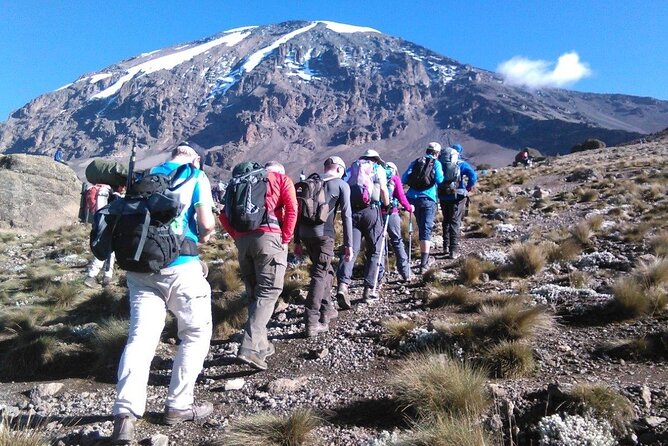
That effort pays off in scenery. The route moves through several vegetation zones, so you can watch the mountain change around you. Trees shrink as you gain height, then give way to unusual plants such as Senecio kilimanjari and Lobelia deckenii. Later, vegetation becomes sparse, and the mountain feels more exposed and volcanic.
The route also uses a useful acclimatization pattern. On Day 3, you climb higher during the day, reaching roughly 4,530 meters, then descend to sleep at Barranco Camp. This high by day, lower at night rhythm is one of the reasons Machame is considered favorable for acclimatization.
Still, do not mistake a good route profile for an easy climb. Six days gives you less time than longer Kilimanjaro itineraries. You need to be comfortable walking uphill for several hours, sleeping in camps, and managing a demanding summit night.
Other routes up the mountain from Arusha:
- 8-Day Small-group Lemosho Kilimanjaro Summit Trekking
★ 5.0 · 186 reviews - 5 Days Best of Tanzania Luxury Safari Northern Circuit
★ 5.0 · 174 reviews - 7-Day Machame Kilimanjaro Summit Tour from Arusha
★ 5.0 · 125 reviews
Day 1: Kilimanjaro National Park and the Shira Plateau
The first day is described as the easiest day on the route, but that does not mean flat or effortless. You should carry plenty of water because parts of the trail are exposed and may feel hot in clear weather.
As you climb, the views open toward the plains and the higher peaks of Kibo and Mawenzi. This is a good day to settle into the pace, watch your breathing, and notice the mountain’s plant zones rather than rushing ahead.
After lunch, the trail continues onto the Shira Plateau. The plateau was formed when lava flows from Kibo filled the Shira crater, giving this section a broad volcanic setting. You continue to Shira Camp, where the plan is to rest for the remainder of the day.
The supplied schedule gives about five hours for this first day. It also notes Kibo to the west and Mount Meru to the east, so clear weather can bring memorable views in both directions. The tradeoff is exposure. With fewer trees around you, sun and wind can feel stronger than they did at the trailhead.
Day 2: Another long day in Kilimanjaro National Park
The Day 2 description supplied for this trip repeats much of the first day’s wording, including the uphill sections, changing vegetation, Shira Plateau, and views toward Kibo and Mount Meru. It gives about six hours of walking.
That repeated description means you should ask the operator for the exact Day 2 camp and trail plan before departure. The available details clearly place you in the high Kilimanjaro zone, but they do not provide a separate, fully specified route description for this day.
Practically, treat this as another full trekking day rather than a rest day. You will need to manage your water, food, and pace carefully. The route is already high enough for altitude to affect some climbers, and the best response is steady walking rather than trying to prove fitness.
Day 3: High walking near Lava Tower, then Barranco Camp
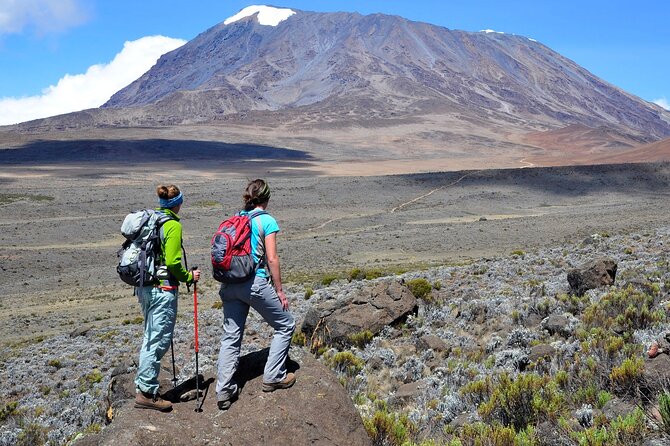
Day 3 is one of the most useful days on the route for acclimatization. The final elevation gain is only about 110 meters, but the trail takes you much higher during the day. You may reach roughly 4,530 meters before descending to Barranco Camp.
After breakfast, you walk east across the Shira Plateau and pass the junction connecting the Shira and Lemosho routes. The surroundings become increasingly barren, with less plant life and more volcanic ground. Lunch comes before the day’s highest point, followed by a quick descent.
Faster hikers may take a detour via Lava Tower, a lava formation rising about 300 feet from the mountain. The supplied schedule presents this as an option, not a guaranteed part of every group’s day, so your guide will determine whether it suits the pace and conditions.
Barranco Camp is one of the most scenic overnight stops on the Machame Route. It sits among stands of Senecio kilimanjari, giving the camp a striking high-altitude setting. You should also appreciate the descent before camp. Sleeping lower after spending time at altitude is exactly the kind of rhythm that makes this route attractive.
Same base, a different kind of day out:
- Serengeti Balloon Safari and authentic bush breakfast
★ 5.0 · 2,480 reviews - Balloon Safari & Bush Breakfast in Serengeti – Miracle Experience
★ 5.0 · 1,646 reviews - Tanzania Classic – 7 Days
★ 5.0 · 1,151 reviews - 4 Days Group Camping Safari
★ 5.0 · 1,101 reviews
Day 4: Barranco Wall and the climb to Barafu Camp
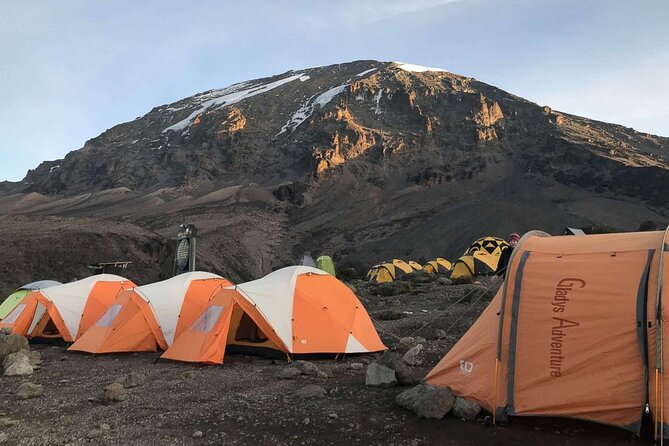
Day 4 is the route’s physical turning point. The morning begins with roughly an hour and a half on Barranco Wall, where the trail becomes a hands-on scramble. In places, you may need to use your hands to pull yourself upward.
This is not technical climbing, but it is more demanding than a normal walking trail. The wall can feel intimidating because of its steep appearance and the need to concentrate on each step. Take your time, follow the guide’s instructions, and avoid turning the climb into a race.
After reaching the top, you make a short descent into the greener Karanga Valley before continuing toward Barafu Camp. Along the way, the route passes views of the Heim, Kersten, and Decken Glaciers. You also pass the junction where the Mweka descent route connects with the Machame trail.
The final approach to Barafu is bleak and open, with little vegetation. In return, the camp offers views of Kibo and Mawenzi, as well as the Rebmann Glacier. The schedule allows about seven hours for this day, and that timing matters because you are expected to sleep soon after dinner. The summit hike begins around midnight.
Day 5: Uhuru Peak and the long descent to Mweka Camp
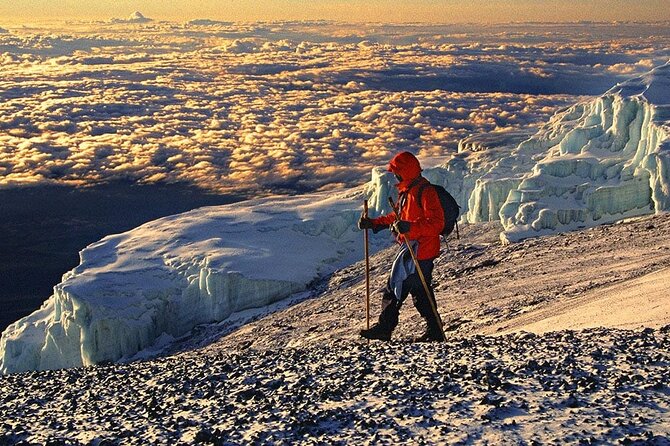
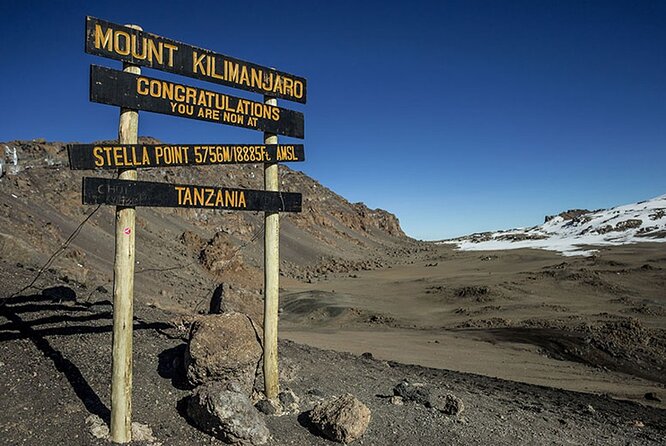
Summit day starts in darkness. Around midnight, you leave Barafu Camp with a headlamp for the climb toward Uhuru Peak. The ascent to the crater rim takes about six hours and is described as the hardest part of the trek.
The trail is very steep until Stella Point. At that altitude, even a gradual slope can feel slow and tiring. Once at Stella Point, the path to Uhuru Peak becomes a more gradual climb along the crater rim. The walking may be technically easier, but altitude makes every hour count.
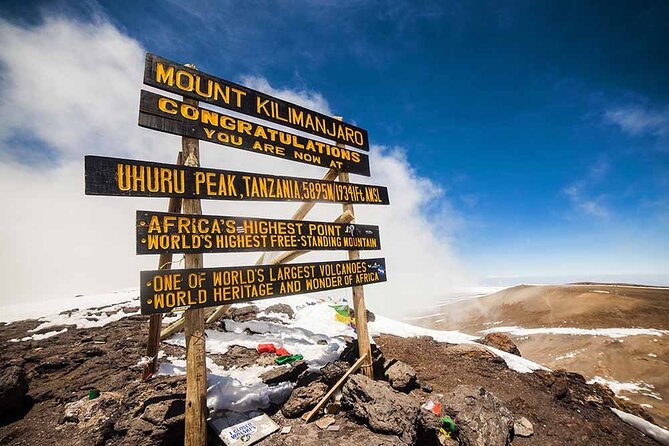
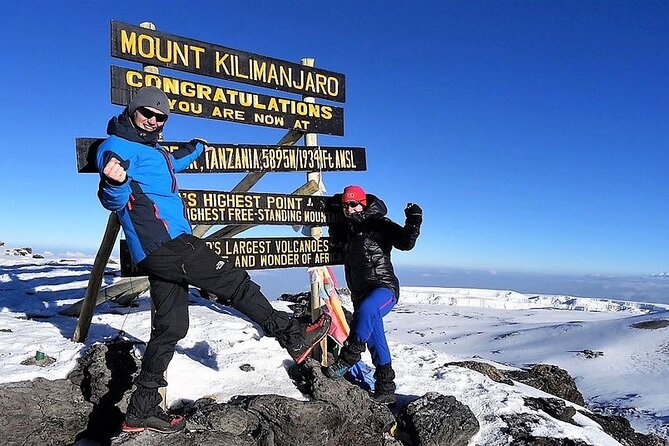
The crater rim section takes about an hour. At Uhuru Peak, you can take photographs with your guide and group before beginning the descent. The views may include the crater, clouds, and the mountain itself, though conditions can change quickly.
The full day is listed at about 12 hours, so the summit is only part of the work. After reaching the top, you descend to Mweka Camp. This is a demanding schedule, and the midnight start can be as challenging as the uphill trail. You need to be ready for cold, darkness, tired legs, and a long return descent in the same day.
Day 6: Cloud forest and the Mweka Gate finish
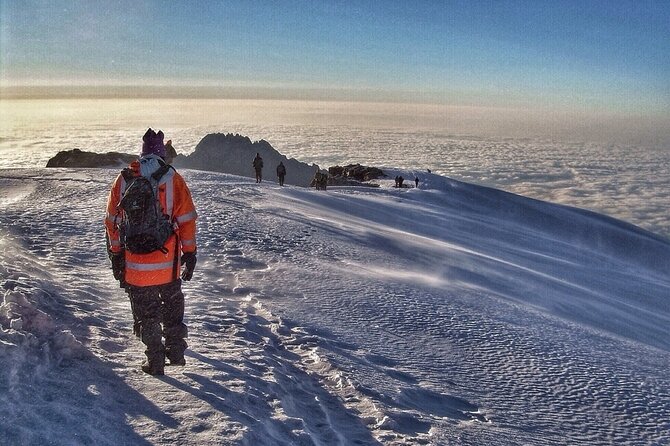
After breakfast, you leave the high mountain behind with a descent through Kilimanjaro’s cloud forest. The final walking day takes about five hours and offers a very different setting from the alpine desert above.
The trail may be slippery, so watch your footing and do not assume the downhill is easy. Descending is often hard on tired knees, especially after the summit day.
The trek finishes at Mweka Gate. Transportation is provided from the lower station of Mweka Gate back to Moshi, and the schedule notes that t-shirts and sodas are available at the gate. The activity is also described as ending back at the meeting point, so confirm the exact drop-off plan if you are staying in Arusha rather than Moshi.
What the $1,950 price covers
At $1,950 per person, this is not a budget walk in the park. You are paying for a six-day mountain operation, including camping equipment, transport, park-related fees and taxes, water, and meals.
The included food schedule is substantial:
- Six lunches
- Five breakfasts
- Six dinners
- Bottled and mineral water
Camping equipment is included, but the details of that equipment are not specified. Ask what tents and sleeping items are supplied, and what you must bring yourself. The same applies to transportation. Pickup is offered, but you should confirm the pickup area and the final return point.
The price does not include international or local flights, taxes connected to those flights, visa fees, travel insurance, personal accident insurance, tips for the driver, guide, and cook, or a cultural village visit. Those exclusions can make the real trip cost higher, so budget for them before you compare this climb with longer or shorter Kilimanjaro routes.
The private format is useful if you want your own group rather than a mixed departure. It may also make it easier to set a sensible pace, but the available details do not specify the number of people, guide-to-climber ratio, or equipment standards. Ask those questions directly.
Guide experience and service checks
The provider is Avocet Tanzania Safaris. The available service record includes strong praise for a guide named Mike on Ngorongoro and other safari trips. Mike is described as patient, attentive, and especially good at finding animals, but the information does not confirm that he leads this Kilimanjaro climb.
That distinction matters. A skilled safari guide is not automatically the mountain guide assigned to your trek. Ask for the name and mountain experience of your actual lead guide, along with details about altitude support, emergency procedures, and the pace planned for summit day.
The provider’s service history is not uniformly smooth. One complaint about a separate safari booking raised concerns over vehicle promises and communication, while the provider’s response disputed the circumstances. Since that issue involved safari arrangements rather than this climb, I would not use it alone to reject the mountain trip. I would use it as a reason to get every transfer, vehicle, inclusion, and meeting detail in writing.
Who this six-day climb suits best
This route suits you if you want Kilimanjaro’s most dramatic trail features and are willing to accept a demanding schedule. You should be comfortable with six trekking days, camping, long uphill stretches, and a midnight summit start.
It is a good choice for someone who values scenery and a private group. The route has more visual variety than a simple up-and-down path, and the high-low pattern is helpful for acclimatization.
You may want a longer itinerary if you prefer a slower pace or want more time to adjust to altitude. Six days is compact for Kilimanjaro. The route may have a strong success profile, but no operator can remove the effects of altitude, weather, fatigue, or individual health.
A medical check and suitable travel insurance are sensible preparations, though medical clearance and insurance are not included in the price. You should also plan for tips, visa costs, flights, and any cultural visit you add.
Booking details and cancellation
The activity begins at 7:00 am, with pickup offered. It is a private tour, so only your group participates. Confirmation is provided at booking, and the activity is listed near public transportation.
Free cancellation is available if you cancel at least 24 hours before the local start time. Cancellations made inside that window are not refundable, and changes made less than 24 hours before departure are not accepted.
Should you book the Machame Route?
Book this climb if you want a scenic, strenuous Kilimanjaro route with camping, private participation, and meals and transport built into the price. The Shira Plateau, Barranco Wall, alpine desert, glaciers, and Uhuru Peak give the six days a strong sense of progression.
Think twice if you want a gentle introduction to high-altitude trekking. The midnight summit, 12-hour summit day, and quick schedule are the real tests. Before paying, confirm the Day 2 plan, pickup and drop-off details, guide assignment, camping equipment, group size, and safety procedures.
If those answers are clear, the $1,950 package can be a practical way to tackle Kilimanjaro without arranging each basic service separately. Just bring realistic expectations: the mountain rewards patience, but it does not hand out easy victories.
FAQ
Where does the Kilimanjaro Machame climb take place?
The experience takes place in Kilimanjaro National Park in Tanzania, with the tour location listed as Arusha.
How long is the climb?
The activity lasts approximately six days.
What time does the activity start?
The listed start time is 7:00 am.
Is pickup available?
Yes, pickup is offered. Confirm the exact pickup location when booking.
Is this a private tour?
Yes. Only your group participates in the activity.
What is included in the price?
The price includes bottled water, mineral water, all fees and taxes, camping equipment, transportation, six lunches, five breakfasts, and six dinners.
Are flights included?
No. International and local flights, along with their taxes, are not included.
Are visas and insurance included?
No. Visa fees, travel insurance, and personal accident insurance are not included.
Is a cultural village visit included?
No. A cultural village visit requires direct payment and is not included in the package.
What is the cancellation policy?
You can cancel for a full refund if you do so at least 24 hours before the experience start time. Cancellations or changes made less than 24 hours before the start are not accepted for a refund.
Just added in Arusha
- 4 Days Private Midrange Lodge Safari to Serengeti & Ngorongoro★ 5.0 · 4 reviews
- Extraordinary Hot air Bolloon ride in Serengeti | BURIGI CHATO SAFARIS CO L.T.D★ 5.0 · 6 reviews
- 3 days leopard safaris★ 5.0 · 4 reviews
- 8 Days Serengeti Migration safari★ 5.0 · 11 reviews
- tarangire, ngorongoro & lake manyara park 3 days private tour★ 5.0 · 11 reviews
- serengeti, ngorongoro & tarangire 4 days private tour★ 5.0 · 18 reviews
- tarangire & ngorongoro 2 days tour★ 5.0 · 14 reviews
- Mt. Kilimanjaro: Shira plateau to Cathedral point 3872m Day hike★ 5.0 · 7 reviews
Kilimanjaro Treks, compared.



8-Day Small-group Lemosho Kilimanjaro Summit Trekking
Read our review →

5 Days Best of Tanzania Luxury Safari Northern Circuit
Read our review →

Climbing Kilimanjaro through 7 days Machame Route
Read our review →
7-Day Machame Kilimanjaro Summit Tour from Arusha
Read our review →Browse the lists this tour appears in