
Reviewed · WILDEBEEST MIGRATION SAFARIS
Tanzania safari with guide in Italian, the great Migration of the Serengeti
The main draw is the chance to follow the Great Migration through northern Tanzania, with time in the Serengeti near the Mara River between July and October. You also get a useful mix of famous parks and less-visited places, from the wildlife-packed Ngorongoro Crater to the stark shores of Lake Natron.
I like the small maximum of six people, which gives you a better chance to ask questions and adjust the pace. I also like the Italian-language guiding, especially if you want more than a quick animal checklist. The main caution is that this is a busy eight-day circuit, with long drives, rough tracks, and no guarantee that the migration will be at the Mara River on your exact dates.
Key points to know before booking
- The Mara River is the migration focus: The route reaches northern Serengeti during the July to October migration period.
- The group is limited to six: You share a 4×4 safari vehicle with a small party and an Italian-speaking guide.
- The route covers seven major safari settings: Lake Manyara, Ngorongoro Crater, Serengeti, Mara River, Lake Natron, Ol Doinyo Lengai, and Tarangire.
- Lake Natron adds a different side of Tanzania: Expect an alkaline lake, volcanic terrain, flamingos, and a walking excursion.
- Meals and park costs are bundled: Full board, park fees, transfers, water, taxes, and AMREF insurance are included.
- The $4,100 price reflects a full package: International flights, local flights, visas, drinks at lodges, and personal extras are not included.
Why this safari route works
This is not a single-park safari. It is a north Tanzania circuit that keeps changing character as you go.
You begin around Arusha, then move through Lake Manyara and Ngorongoro before spending several days in the Serengeti. The route then turns toward Lake Natron and finishes with Tarangire. That variety matters. You are not looking at the same open grassland for eight days. You move from forest and lake shore to volcanic crater, sweeping plains, alkaline desert, and baobab country.
The Serengeti is the star, but the route is stronger because of the stops around it. Ngorongoro Crater gives you a compact setting with a high chance of seeing several major species. Tarangire brings elephants and baobabs. Lake Natron supplies the quiet, unusual contrast that many standard northern Tanzania routes skip.
The tradeoff is time on the road. This is a real safari circuit, not a relaxed lodge holiday. Day 6 and day 7 include rough tracks around Lake Natron, and several days run for about eight hours. You should be comfortable with early starts, bumpy roads, and long periods in a 4×4.
Other park itineraries that start in Arusha:
- Serengeti Balloon Safari and authentic bush breakfast
★ 5.0 · 2,480 reviews - Balloon Safari & Bush Breakfast in Serengeti – Miracle Experience
★ 5.0 · 1,646 reviews - 4 Days Group Camping Safari
★ 5.0 · 1,101 reviews
Day 1: Arriving in Arusha from Kilimanjaro
The first day is simple. You are met at Kilimanjaro International Airport or Arusha Airport, complete entry formalities, and transfer to Arusha. The stated transfer takes about an hour.
That short arrival day is useful after an international flight. It gives you a place to settle before the safari driving begins. Confirm your airport and arrival details in advance, since the operator asks for your flight information, passport data, and mobile number when arranging the trip.
This is also the point to clarify the guide assignment, vehicle plan, and accommodation details. Italian guiding is part of the package, but the named guide can vary. Past departures have included Italian-speaking guides called Jo, Naftal, Mussa, Michael, Kahim, Omari, and Martini.
Day 2: Lake Manyara, birds, monkeys, and forest
Lake Manyara is a compact park with a surprising range of habitats. Forest fed by springs sits below the Rift Valley escarpment, while open grassland, marsh, and lake shore create room for different animals.
You might see elephants, giraffes, baboons, cercopithecine monkeys, and a long list of bird species. The park is noted for about 380 bird species, and the lake can host large groups of pink flamingos at certain times of year. Flamingos are especially associated with the period from December to March here, while many move toward Lake Natron between June and October.
The day allows about eight hours for the park. That gives your guide room to search for wildlife rather than rush through a short stop. It also means you should expect a full day in the vehicle, with dust and heat possible on the tracks.
Lake Manyara works well early in the trip because it introduces several habitats at once. It is not as vast or famous as the Serengeti, but it gives you a good first look at northern Tanzania’s wildlife before the route reaches larger parks.
Day 3: Ngorongoro Crater and a concentrated wildlife day
The Ngorongoro Crater is one of the most unusual settings on this route. It formed when an ancient volcanic cone collapsed about 2.5 million years ago. The crater floor sits inside steep walls that rise roughly 600 meters above it, creating a contained area where more than 25,000 large animals live.
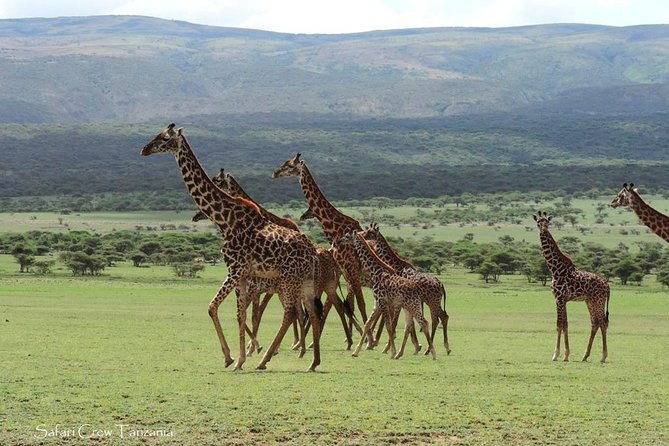
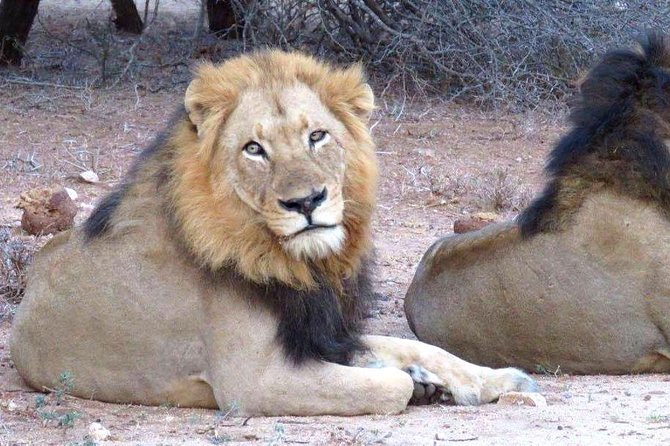
That concentration is the reason this day can be so rewarding. The crater holds many of the region’s typical animals, including large mammals and predators. Giraffes are the notable exception because the crater does not provide the type of feeding area they need.
You spend about seven hours on the crater safari. The scale is impressive, but the confined setting can also mean more vehicles in popular areas. Your guide’s route choices and timing matter here. An Italian-speaking guide can also add context about the crater’s geology and animal behavior, instead of reducing the day to quick sightings.
The crater rim reaches about 2,300 meters above sea level. Bring a light layer for the cooler highland air, even if the crater floor later feels warm. This is one of the days where the route trades wilderness scale for concentrated wildlife.
Other safaris people book out of Arusha:
- 5 Days Group Camping Safari
★ 5.0 · 730 reviews - 3 Days Serengeti & Ngorongoro Group Camping Safari
★ 5.0 · 574 reviews - 7-Day Premium Luxury Tanzania Safari All-Inclusive
★ 5.0 · 426 reviews - 3-Day Classic Serengeti Safari
★ 5.0 · 263 reviews
Days 4 and 5: From Seronera to the Mara River
Day 4 takes you into the Serengeti, with a photo safari around Seronera. The national park covers about 15,000 square kilometers and forms the largest part of a much bigger ecosystem.
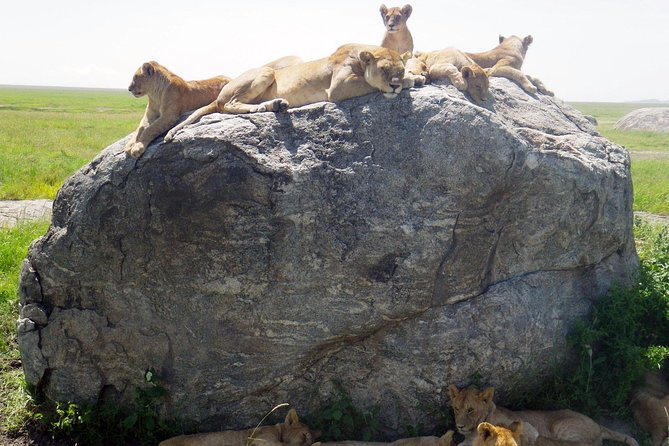
The animal list is broad: wildebeest, zebras, Thomson’s gazelles, lions, leopards, cheetahs, elephants, giraffes, impalas, water antelopes, ostriches, crocodiles, hippos, and more than 400 bird species. Numbers can vary by area and season, so you should treat any wildlife count as a guide to the park’s scale, not a promise of what you will see.
Seronera is an important central Serengeti area, but this itinerary then pushes north toward the Mara River. Day 5 is built around the migration corridor, with about eight hours for the safari.
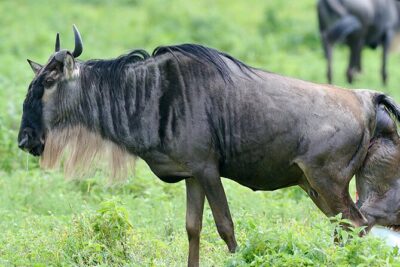
The migration is not a single procession that arrives on schedule. It is a moving search for grass and water by roughly 1.5 million wildebeest and about 300,000 zebras, along with other grazing animals. Between July and October, the northern Serengeti and Mara River area become a major focus.
This is the moment many people picture when they book a Tanzania safari: large herds gathering near water, with crocodiles and predators nearby. Still, you need realistic expectations. Crossing activity depends on weather, water levels, herd movement, and luck. You may see herds near the river without seeing a crossing, or you may find that the animals have moved beyond the day’s route.
The good news is that the Serengeti is worthwhile even when the exact migration spectacle does not happen. Lions, cheetahs, leopards, elephants, giraffes, and birds make the park rewarding on its own. I would choose this itinerary for the broader Serengeti time, not only for one hoped-for river crossing.
Day 6: Leaving northern Serengeti for Lake Natron
The sixth day begins with a final game drive in the northeastern Serengeti. You then leave the park on a rough track toward Lake Natron, with about four hours assigned to the route.
This is a scenic but demanding transfer. The track is described as difficult, so do not expect a smooth highway ride. The reward is a change of scenery and a route that links the Serengeti to one of Tanzania’s more unusual natural areas.
Lake Natron occupies a Rift Valley depression and measures about 50 kilometers long by 25 kilometers wide. Its water is strongly alkaline, and the surrounding area has a stark volcanic appearance.
During the dry season, especially from June to October, millions of pink flamingos can gather around the lake to feed on cyanobacteria. The birdlife here is a major reason to include Natron, but the setting is just as important. You move from the grassy Serengeti to a dry, rugged area shaped by volcanic forces.
Ol Doinyo Lengai and the walking portion
Ol Doinyo Lengai is sacred to the Maasai, who regard it as the home of the god Leng’ai. At nearly 3,000 meters, it is also the only volcano in the world known for natro-carbonatitic lava.
The itinerary does not organize a climb to the summit. The 2007 and 2008 eruption changed the route, making the ascent harder and removing the small flat areas used for rests. Instead, the program includes a walking excursion around the Engare area.
That distinction matters. If you are booking because you want to climb the volcano, this is not the right program. If you want a short walk through volcanic country and a closer look at the area around Lake Natron, this section adds welcome variety after several days in a vehicle.
Day 7: Lake Natron to Tarangire
The morning begins with a walk toward the shores of Lake Natron through rough, almost lunar terrain. You then follow a scenic route through a valley flanked by volcanic peaks before continuing toward Mto wa Mbu and Tarangire National Park.
The listed timing gives about four hours to the Natron excursion and another four hours for Tarangire. That makes this another full day, even though neither activity is listed as an eight-hour safari.
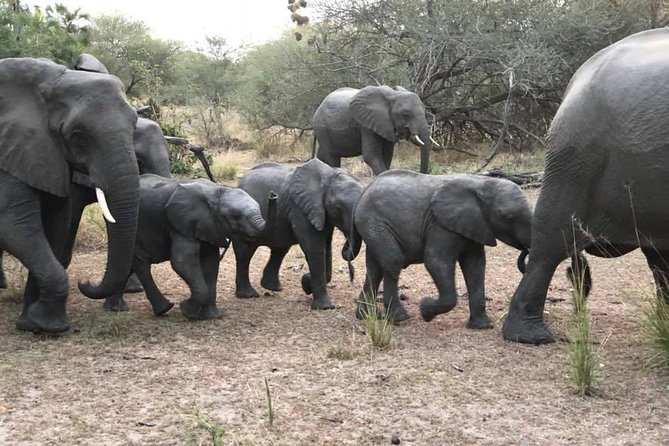
Tarangire feels very different from the Serengeti. Covering about 2,600 square kilometers, it is known for huge baobabs, large elephant herds, and about 500 bird species. The Tarangire River is the park’s main source of water, especially during the dry season, when animals gather around it and the Silale Marsh.
You might see lions, leopards, buffaloes, wildebeest, zebras, antelopes, and gazelles here. But the park’s special appeal is its plant life and elephants. The baobabs give the drives a strong sense of place, and the drier setting makes it a fitting final park after the open Serengeti and volcanic Natron region.
Day 8: A final game drive and return to Arusha
The last day starts with an early game drive in Tarangire. Early timing gives you one more chance to see animals before the return to Arusha for lunch and an airport transfer.
The program allows about four hours for this final stage. Check your departure flight carefully before booking, since the return transfer and airport timing depend on your flight schedule. International and local flights are not included in the price.
Ending in Tarangire is practical. You are closer to Arusha than you would be after another Serengeti night, and the final drive gives the safari a proper wildlife farewell instead of a straight transfer.
What the $4,100 price includes
At $4,100 per person, this is a significant purchase, but it covers many of the expensive parts of a Tanzania safari. The package includes the 4×4 circuit, full board, park fees, transfers, water in the vehicle, all listed taxes and fees, and AMREF insurance.
The six-person limit also matters. A larger vehicle can reduce the value of a wildlife drive, especially when everyone wants a different viewing angle or needs to ask the guide a question. With no more than six people, you have a better chance of keeping the group manageable.
You still need to budget for international and domestic flights, your Tanzanian entry visa, drinks at lodges, and personal spending. The package does not list accommodation names, so ask for the exact lodge and camp plan before paying. Earlier departures have used both lodges and tented camps, but the specific arrangement can change.
Full board is useful on a route with long driving days. You do not need to organize lunch each day, and meals are built into the schedule. Water on board is another small but important inclusion in a hot, dusty environment.
The Italian guide and the small-group format
Italian guiding is the central practical benefit for Italian-speaking visitors. You can ask detailed questions about animal behavior, local culture, geology, and the route without working through a second language.
The guide also affects the safari more than many other parts of the booking. Past guide names include Jo, Naftal, Mussa, Michael, Kahim, Omari, and Martini. Naftal was specifically noted for speaking excellent Italian, while Michael was associated with repeated wildebeest sightings around the river. These names do not guarantee your assigned guide, but they show the operator has a pool of Italian-speaking staff.
The small group suits couples, families, and friends who want a shared safari without filling an entire vehicle. Families with older children have used the company, and the route can work well for a honeymoon or milestone trip. It is less suitable if you want a private vehicle, a very slow schedule, or several nights in one camp.
What to pack and how to prepare
Pack for changing conditions. The Ngorongoro rim can be cool, while the lower parks and Lake Natron may feel hot. A light layer, sun protection, sturdy walking shoes, and a refillable bottle are sensible choices.
Expect dust and rough roads. Protect cameras and phones, and choose soft luggage if the operator gives you a baggage limit. The supplied information does not state a specific weight allowance, so ask before departure.
You should also carry your passport details, visa information, flight data, and the mobile number used for the booking. Confirmation is normally sent within 48 hours, subject to availability. The operator handles reservations by email, so keep a written record of the agreed route, accommodation, guide language, and airport transfers.
Cancellation terms are strict close to departure. Six full days or more before the start allows a full refund. Cancellation two to six full days ahead allows a 50 percent refund, while cancellation less than two full days ahead is nonrefundable. If the minimum number is not reached and the operator cancels, you are offered another date or experience, or a full refund.
Who should book this safari
I would choose this trip if you want the major northern Tanzania parks in one carefully organized route and prefer to discuss the experience in Italian. It is especially suitable for a first safari, a honeymoon, a family with older children, or anyone who wants the Serengeti plus less typical places such as Lake Natron.
I would think twice if you dislike long road transfers or want a quiet luxury stay with plenty of downtime. The itinerary is active, and the migration is governed by nature rather than a timetable.
Should you book it?
Book this safari if the combination of Italian guiding, a maximum group of six, and migration-season Serengeti time matters to you. The route gives you far more than a quick park visit, with Ngorongoro, Lake Manyara, Natron, Ol Doinyo Lengai, and Tarangire adding real variety.
Before confirming, ask for the exact travel dates, accommodation names, assigned guide if available, and flight timing on the final day. If you accept rough roads and a full schedule, the $4,100 price offers a substantial all-in safari package. If you want total flexibility or a private vehicle, ask for a custom version instead.
FAQ
How long is the Tanzania safari?
The safari lasts approximately eight days, beginning with arrival and transfer to Arusha and ending with a final Tarangire game drive, lunch in Arusha, and an airport transfer.
Is an Italian-speaking guide included?
Yes. The safari is operated with an Italian-speaking guide. The specific guide depends on the departure, with past guide names including Jo, Naftal, Mussa, Michael, Kahim, Omari, and Martini.
How large is the safari group?
The maximum group size is six participants.
Which parks and natural areas are included?
The route includes Lake Manyara, Ngorongoro Crater, Serengeti National Park, the Mara River area, Lake Natron, Ol Doinyo Lengai surroundings, and Tarangire National Park.
Is the Great Migration guaranteed?
No. The route reaches the northern Serengeti during the July to October migration period, but herd movement and river crossings depend on natural conditions and cannot be guaranteed.
What is included in the $4,100 price?
The price includes the 4×4 safari circuit, full board, park fees, transfers, AMREF insurance, water on board, all listed fees and taxes, seven lunches, eight breakfasts, and seven dinners. International and local flights, the entry visa, lodge drinks, and personal extras are not included.
More migration safaris from Arusha
- 8 Days Great Wildebeest Calving Migration Safari from Arusha
★ 5.0 · 254 reviews - 10-Day Serengeti Wildebeest Migration Safari from Arusha
★ 5.0 · 218 reviews - 8 Day Spectacular Migration Serengeti mid -Range Tanzania Safari
★ 5.0 · 161 reviews - 9-Day Serengeti Migration Footsteps Tanzania Safari
★ 5.0 · 96 reviews
More Serengeti safaris from Arusha
- 5-Day Highlights mid-Range Crater, Serengeti, Tarangire
★ 5.0 · 296 reviews - Private 6-Day Tarangire Manyara Crater and Serengeti with Mid-Range Lodges
★ 5.0 · 238 reviews - 5 Days Camping Tarangire, Serengeti & Ngorongoro crater & Visiting Maasai
★ 5.0 · 229 reviews - 4 Days Join Group tour Tarangire Serengeti and Ngorongoro crater
★ 5.0 · 219 reviews
Just added in Arusha
- 2-Day Private Luxury Safari from Zanzibar with Flights★ 3.2 · 5 reviews
- 7-Day Private Tanzania Safari with Sunset Walking on the Crater Rim and Maasai★ 5.0 · 40 reviews
- Saadani Day Trip★ 5.0 · 13 reviews
- Nyssa Luxury Balloon in Safaris and Serengeti★ 5.0 · 69 reviews
- Arusha National Park Day Trip★ 4.5 · 18 reviews
- Arusha National Park Private Safari★ 5.0 · 59 reviews
- Arusha: Maasai Village Tour★ 4.8 · 22 reviews
- 3 Days Serengeti & Ngorongoro Tour★ 5.0 · 22 reviews
Wildebeest Migration Safaris, compared.

8 Days Great Wildebeest Calving Migration Safari from Arusha
Read our review →
10-Day Serengeti Wildebeest Migration Safari from Arusha
Read our review →
8 Day Spectacular Migration Serengeti mid -Range Tanzania Safari
Read our review →
9-Day Serengeti Migration Footsteps Tanzania Safari
Read our review →

Private 6-Day Great Migration Ndutu Serengeti Safari Tour
Read our review →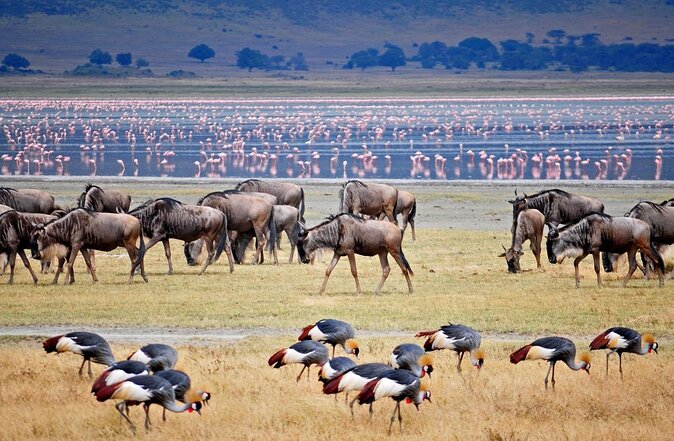
4 Day Great Migration Safari Serengeti & Ngorongoro Crater
Read our review →Browse the lists this tour appears in