
Reviewed · KILIMANJARO TREKS
7 days Kilimanjaro climb via Machame route (Whiskey route)
Kilimanjaro’s Machame Route gives you the mountain’s best scenery in a compact seven-day push. You move from wet rainforest to open moorland, rocky high country, glaciers, and the stark volcanic slopes below Uhuru Peak. I like the changing scenery, and I like the route’s climb-high, sleep-lower pattern on Day 3, which gives your body a useful acclimatization break.
I also like the practical setup: private four-season tents, a mess tent with tables and chairs, cooked meals, purified water, and a mountain crew that includes guides, cooks, and porters. Names that appear in past trip accounts include Lucas, Gasto, James, and David, so I would ask in advance who will lead your group.
The catch is simple: seven days is demanding. Machame is steep, summit night is long, and the route can turn muddy and slippery in the forest. You should have moderate fitness, a steady walking pace, and a clear understanding that reaching the summit is never automatic.
Key points to know before booking
- Machame is the scenic route: You pass through rainforest, moorland, alpine desert, volcanic scree, and the upper slopes of Kibo.
- The climb reaches 5,895 meters: Summit night begins around 11:30 p.m., with Uhuru Peak reached after a long overnight ascent.
- Day 3 helps with altitude: You climb to Lava Tower at 4,630 meters, then descend to Barranco Camp.
- The Barranco Wall is less frightening than it looks: It is a Class 2 scramble and one of the route’s most memorable sections.
- The camp setup is better than basic: Private waterproof tents, a dining tent, meals, and purified drinking water are included.
- Tips and personal gear cost extra: The $2,300 price covers major park and mountain services, but not flights, equipment, or crew gratuities.
Why Machame earns its Whiskey Route nickname
Machame is often called the Whiskey Route because it is tougher and more rugged than Kilimanjaro’s gentler-sounding alternatives. That nickname is not empty marketing. The trail rises and falls, includes steep sections, and asks you to handle rough ground for several days before summit night.
I would choose it for scenery first. The mountain does not reveal the same face each day. You start among wet forest trees, then walk across wide moorland, rocky ridges, volcanic slopes, and high alpine terrain. The views toward Kibo and the glaciers near the Western Breach give the climb a sense of progress that is easy to feel in your legs.
The route also makes good use of altitude training on Day 3. You climb to 4,630 meters at Lava Tower, eat lunch high above camp, then descend nearly 680 meters to Barranco. That day may feel rough, but the change in sleeping height gives your body a better chance to adjust than a simple steady climb would.
Still, seven days leaves little spare time. A longer Machame schedule can provide more rest and acclimatization, but this version keeps moving. If you are new to high-altitude hiking, do not mistake the tour’s moderate fitness requirement for a casual holiday walk.
Other routes up the mountain from Arusha:
- 8-Day Small-group Lemosho Kilimanjaro Summit Trekking
★ 5.0 · 186 reviews - 5 Days Best of Tanzania Luxury Safari Northern Circuit
★ 5.0 · 174 reviews - 7-Day Machame Kilimanjaro Summit Tour from Arusha
★ 5.0 · 125 reviews
Day 1: muddy forest trails from Machame Gate
Your pickup begins in Arusha, around 1,400 meters, after an early breakfast. The drive continues to Machame Village, where you can buy mineral water and receive a packed lunch.
The final approach to the gate depends on road conditions. If vehicles cannot continue, you may walk roughly three muddy kilometers to Machame Gate. That walk takes about an hour and adds an early taste of the day’s conditions. Once registration is complete, the trail enters the rainforest almost at once.
Expect about seven hours on the first day. The forest section can be wet, muddy, and slippery, especially when rain turns the path into a brown, uneven track. Waterproof boots and rain protection are not optional comforts here. They can decide how dry and cheerful you feel at camp.
A lunch stop comes roughly halfway. You finish at Machame Camp, where the crew prepares dinner and your tent. The first day is not the highest or most technical part of the climb, but it can be tiring because of the mud, long walking time, and steady uphill grade.
Day 2: moorland, Shira Plateau, and colder nights
Day 2 climbs out of the forest. You walk for about six hours and cover roughly nine kilometers through moorland, a more open zone with low plants, rocky ground, and broad views.
The first hour or so is still a climb, followed by about two hours at a gentler angle. After lunch and a rest, the trail follows a rocky ridge onto the Shira Plateau. Looking east, you can see the Western Breach and its glaciers. Kibo, the main volcanic cone, is now in front of you rather than hidden behind forest.
Shira Camp sits at about 3,840 meters. That height brings a clear change in temperature. The camp is exposed, and nights can drop well below freezing. The crew boils water for drinking and washing, then serves dinner in camp.
This is a good point to judge your clothing system. You need warm layers for camp, dry socks, gloves, and a sleeping bag suited to freezing conditions. The included tents are described as waterproof, four-season mountain tents, but a good shelter cannot replace warm personal clothing.
Day 3: Lava Tower and the key altitude lesson
Day 3 is the hardest walking day before the summit attempt. The route turns east through semi-desert terrain toward Lava Tower. The climb takes about five hours before lunch and reaches 4,630 meters.
At this height, some people feel breathlessness, headaches, or irritability. Those symptoms should be taken seriously and reported to your guide. Do not treat discomfort as a test of toughness. Your guide’s job is to watch your condition and help decide the safest pace and next step.
After lunch, you descend toward Barranco Camp, losing almost 680 meters from Lava Tower. This is the route’s smart feature: you climb high, then sleep lower. The day may seem inefficient while you are walking uphill, but the pattern gives your body valuable exposure to altitude without forcing you to sleep at the highest point you reached.
The total hiking time is about six hours. Barranco Camp sits below the dramatic wall that you tackle the next morning. By the time you arrive, you may be tired, cold, and ready for food, but you will also have completed one of the most useful days for adjusting to the mountain.
Same base, a different kind of day out:
- Serengeti Balloon Safari and authentic bush breakfast
★ 5.0 · 2,480 reviews - Balloon Safari & Bush Breakfast in Serengeti – Miracle Experience
★ 5.0 · 1,646 reviews - Tanzania Classic – 7 Days
★ 5.0 · 1,151 reviews - 4 Days Group Camping Safari
★ 5.0 · 1,101 reviews
Day 4: the Barranco Wall and Karanga Valley
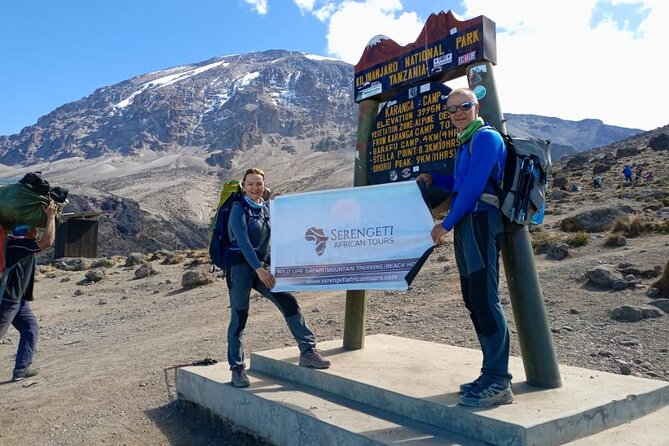
Day 4 covers only about five kilometers and takes four to five hours, but short distance does not mean no effort. The main feature is the Great Barranco Wall.
From below, the wall can look intimidating. The route is described as a Class 2 hike, and the practical challenge is using your hands and feet carefully on uneven rock rather than facing technical climbing with ropes. Go slowly, follow your guide’s instructions, and keep your pack secure.
At the top, you can see Heim Glacier and look out above the clouds. That view is one of the route’s big rewards, especially after the dark forest and exposed Shira Plateau.
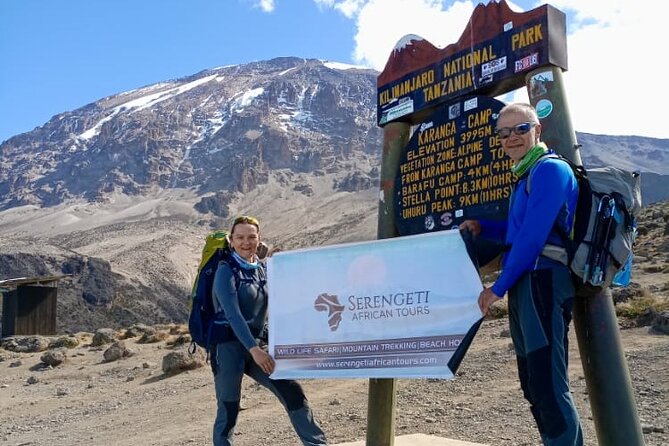
The trail then rises and falls through the Karanga Valley. This day works well as an acclimatization day because the walking time is shorter and the route does not take you to a new extreme altitude. You camp at Karanga, around 3,959 meters, and prepare for the high camps ahead.
Day 5: Barafu Camp and the last water stop
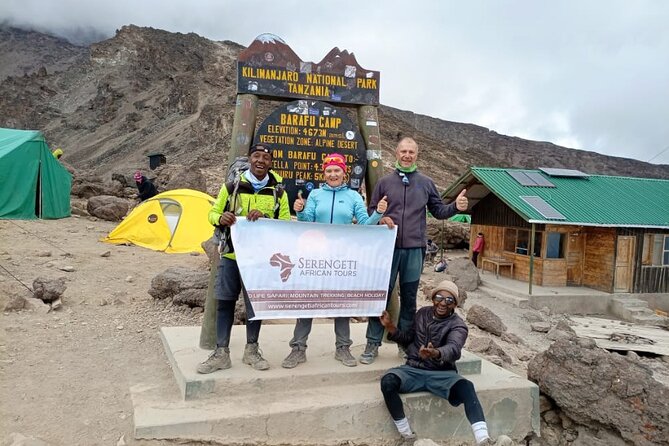
Day 5 is short on paper, about two to three hours and four kilometers, but it changes the mood of the climb. You leave Karanga and follow the trail toward Barafu Hut at about 4,550 meters.
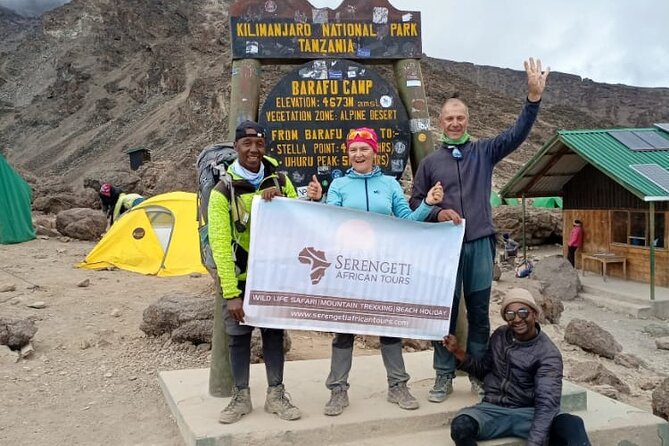
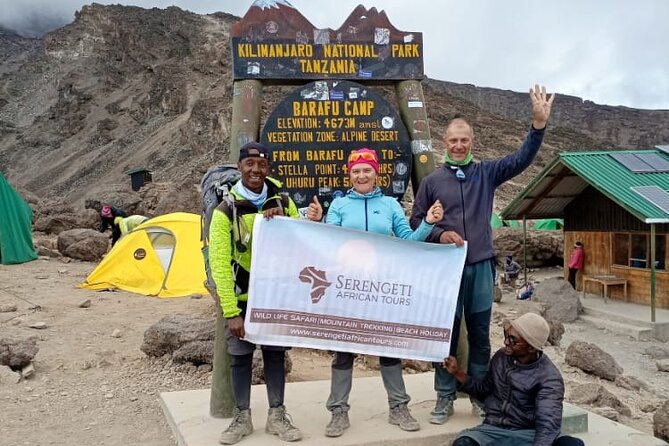
The path joins the Mweka Route, which you use for the final descent. At Barafu Hut, the porters collect the last accessible water. There is no accessible water at Barafu Camp, so the crew’s water planning matters here. Purified drinking water is included, but you should follow the instructions about how much to carry for the summit push.
Barafu means ice in Swahili. The camp sits on an exposed, rocky ridge and can feel severe compared with the lower camps. Wind and rocks affect comfort, and you should become familiar with your tent and surroundings before dark.
Dinner comes early. Then you rest for the summit attempt, which begins around 11:30 p.m. This is not a normal night of sleep. The combination of cold, altitude, nerves, and an interrupted schedule makes Day 5 one of the quiet psychological tests of the climb.
Day 6: the overnight push to Uhuru Peak
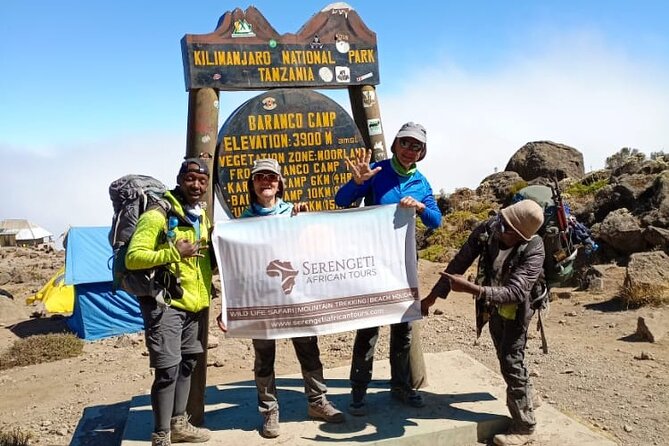
Summit day starts with tea and biscuits before you walk into the darkness. The climb heads northwest through heavy scree toward Stella Point on the crater rim.
The walk to Stella Point takes about six hours for many people and can feel like the most difficult part of the entire route. The slope is steady, the air is thin, and the loose volcanic rock makes each step feel small. A slow pace is useful here. Your guides and assistant guides are important not because they can remove the difficulty, but because they can keep the group moving safely and steadily.
At Stella Point, 5,685 meters, you pause for a short rest. If the weather cooperates, sunrise provides the great visual reward of the climb. From there, you continue through possible snow for roughly two hours toward Uhuru Peak.
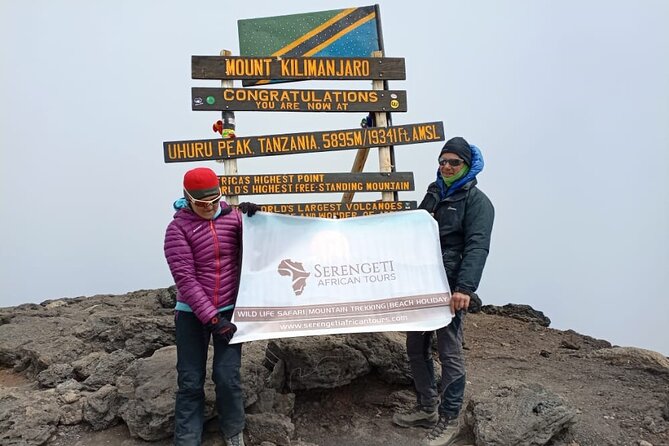
Uhuru Peak is at 5,895 meters, the highest point in Africa. Time at the summit depends on weather and your condition. Keep the stop short enough to stay warm and safe. The summit is a major achievement, but the descent still requires energy and care.
After the summit, you return to Barafu Camp and then continue down to the lower Mweka Camp. The exact schedule can be exhausting, and this is the day when honest communication with your guide matters most. A gold certificate is issued for reaching Uhuru Peak. Reaching Stella Point earns a green certificate.
Day 7: forest descent and a proper finish
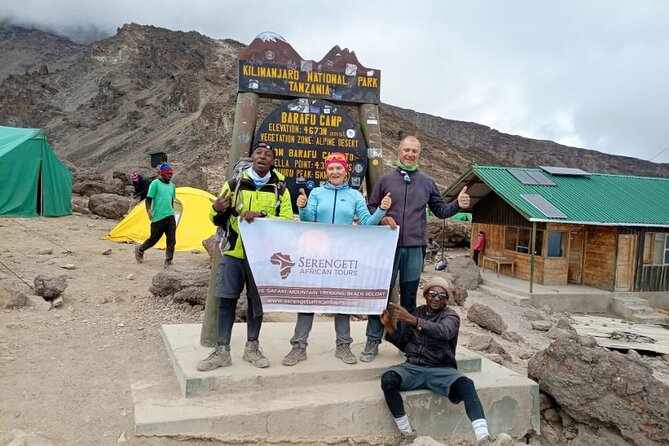
After breakfast, the mountain crew holds a celebration with dancing and singing. This is also the point when tips are presented to the guide, assistant guides, chef or chefs, and porters.
Tips are not included in the $2,300 price, so plan for them separately. The crew carries the camp and supplies that make the climb possible, and the final celebration gives you a natural moment to thank them directly.
You then descend for about three hours to Mweka Gate through forest, covering around 15 kilometers. At the gate, you sign for your certificate before continuing down to Mweka Village, a further hour and roughly three kilometers.
The final descent can be harder on knees and feet than expected. You may feel relieved and sore at the same time. The tour ends back at the meeting point after this descent.
What the $2,300 price covers
At $2,300 per person, the price includes the major costs of a guided Kilimanjaro climb:
- Park fees
- Rescue fees
- Professional mountain guides
- Private waterproof four-season tents
- A mess tent with tables and chairs
- Breakfast, lunch, and dinner while on the mountain
- Fresh, nutritious food in large portions
- Clean, purified drinking water
- Porters and their fair, ethical treatment
That is a strong bundle for a seven-day climb. Park charges, rescue coverage, food, crew, water, and camp equipment can add up quickly when arranged separately. The private tent setup also gives you a more controlled sleeping space than a shared shelter.
The price does not cover flights, personal climbing gear, or tips. Before paying, ask for a clear packing list and confirm what the company means by personal gear. You should also ask who your lead guide will be. Lucas is associated with trip organization, while Gasto, James, and David are names connected with guiding accounts, but your assigned crew may differ.
The group maximum is 16. That is small enough for a more personal group than a large departure, though the real feel will depend on how many people book your date. Group discounts are offered, which could make the cost more attractive for friends or families climbing together.
Food, tents, and the human side of the climb
Seven days on a mountain is easier when camp works well. The private tents provide shelter, while the separate mess tent gives you a place to sit, eat, and organize yourself away from your sleeping bag.
Meals are described as fresh, healthy, and generous. That matters because the walking days are long, especially Day 1, Day 3, and summit day. You should still tell the company about dietary needs before arrival, since the supplied information does not specify special-menu arrangements.
The mountain crew is one of the most frequently praised parts of this experience. Past accounts repeatedly single out guides, cooks, and porters for staying attentive during difficult moments. Gasto is described as caring, funny, trustworthy, and good at keeping spirits up. David is credited with strong support during a summit attempt, and James is praised for helping climbers reach the top.
I would treat those names as useful questions to ask, not as a promise that a particular person will lead your climb. A good guide can improve pacing, safety, morale, and your reading of altitude symptoms, so direct communication before booking is worth the effort.
Who should choose this Kilimanjaro climb?
I would recommend this route to you if you:
- Have moderate physical fitness
- Enjoy long days of uphill walking
- Have hiking, backpacking, or high-altitude experience
- Prefer mountain scenery to a softer, shorter route
- Are comfortable sleeping in tents for six nights
- Can handle an overnight summit attempt
- Want a group experience with a maximum of 16 people
I would think twice if you want a relaxed holiday, dislike cold camping, or have never handled a full day of steep walking. Machame is scenic, but it is not gentle. The muddy forest, high camps, freezing nights, and summit scree all demand patience.
The route is also not suitable for treating altitude casually. The package includes rescue fees, but that does not make high altitude risk-free. You need to follow your guide’s instructions and be willing to stop or turn back if your health requires it.
Pickup is offered from Arusha, and the activity ends back at the meeting point. Confirmation is provided when you book, and the experience can be canceled for a full refund up to 24 hours before the stated start time. Changes or cancellations inside that window are not accepted for a refund.
Should you book the seven-day Machame Route?
Book it if you want Kilimanjaro’s most varied scenery, can manage a demanding schedule, and value a full mountain crew with food, tents, water, park fees, and rescue fees bundled into one price.
I would not book it simply because Machame is popular or because a past group reached the summit successfully. Your result depends on fitness, altitude response, weather, pacing, and safe decisions by you and the guide team. Ask about the assigned guides, porter treatment, the gear list, group size for your date, and any food needs before paying.
For a fit hiker who wants a serious but organized route, this is a strong choice. Its best features are the Barranco Wall, the Lava Tower acclimatization day, the changing mountain zones, and the support of a seasoned crew. Its main weakness is the compressed seven-day schedule. You get a lot of Kilimanjaro in one week, but you pay for it with early mornings, cold camps, and a very long summit night.
FAQ
How long is the Kilimanjaro Machame Route experience?
The climb lasts approximately seven days, beginning and ending at the meeting point in Arusha, Tanzania.
What is the highest point reached on the climb?
Uhuru Peak is the highest point, at 5,895 meters. Stella Point on the crater rim is at 5,685 meters.
What time does the summit attempt begin?
You rise around 11:30 p.m. on Day 6, have tea and biscuits, and begin the overnight walk toward Stella Point and Uhuru Peak.
Are meals and drinking water included?
Yes. Breakfast, lunch, and dinner are included while on the mountain, along with clean, purified drinking water.
Are tents included?
Yes. The package includes private, waterproof, four-season mountain sleeping tents and a mess tent with tables and chairs.
What is not included in the price?
Flights, personal climbing gear, and tips are not included. The price does include park fees, rescue fees, guides, meals, tents, purified water, and porter support.
More Kilimanjaro treks from Arusha
- Mountain Kilimanjaro Day Hike
★ 5.0 · 102 reviews - Private Full Day Hiking Experience to Marangu Route
★ 5.0 · 61 reviews - 4 days Best experience Kilimanjaro Hike, Serengeti &Ngorongoro
★ 5.0 · 54 reviews - From Arusha/Moshi: Kilimanjaro Hike Marangu Route Day Trip
★ 4.5 · 54 reviews
Just added in Arusha
- 4 Days Private Midrange Lodge Safari to Serengeti & Ngorongoro★ 5.0 · 4 reviews
- Extraordinary Hot air Bolloon ride in Serengeti | BURIGI CHATO SAFARIS CO L.T.D★ 5.0 · 6 reviews
- 3 days leopard safaris★ 5.0 · 4 reviews
- 8 Days Serengeti Migration safari★ 5.0 · 11 reviews
- tarangire, ngorongoro & lake manyara park 3 days private tour★ 5.0 · 11 reviews
- tarangire & ngorongoro 2 days tour★ 5.0 · 14 reviews
- Mt. Kilimanjaro: Shira plateau to Cathedral point 3872m Day hike★ 5.0 · 7 reviews
- serengeti, ngorongoro & tarangire 4 days private tour★ 5.0 · 18 reviews
Kilimanjaro Treks, compared.



8-Day Small-group Lemosho Kilimanjaro Summit Trekking
Read our review →

5 Days Best of Tanzania Luxury Safari Northern Circuit
Read our review →

Climbing Kilimanjaro through 7 days Machame Route
Read our review →
7-Day Machame Kilimanjaro Summit Tour from Arusha
Read our review →Browse the lists this tour appears in