
Reviewed · KILIMANJARO TREKS
Small-group 7-day Lemosho Route Kilimanjaro Climb from Arusha
The Lemosho Route gives you a gradual approach to Kilimanjaro through rainforest, moorland, the Shira Plateau, Lava Tower, and Barranco Wall. I like the small maximum of six people and the careful acclimatization pattern, especially the high climb to Lava Tower followed by a lower night at Barranco Camp. I also like that the price covers the mountain crew, camping gear, meals, transfers, and bottled water.
The catch is the schedule. This is a demanding seven-day climb, not a soft mountain stroll, and summit day can last about 12 hours. You’ll sleep in tents, face cold and changing weather, and tackle steep or muddy sections. The Lemosho route is harder than Marangu and Rongai, so preparation matters.
Key points to know before booking
- The group is limited to six people, which allows closer contact with the English-speaking guide team.
- The route begins on Kilimanjaro’s western side, crossing rainforest before reaching the open Shira Plateau.
- Day three is built for acclimatization, with a climb to Lava Tower at about 4,650 meters followed by a descent to Barranco Camp.
- Barranco Wall is the most hands-on trail section, with steep scrambling and impressive views of the crew’s mountain skills.
- Summit day lasts about 12 hours, ending at Uhuru Peak and followed by a long descent.
- The $2,400 price includes a full support system, including guides, porters, a cook, tents, meals, water, equipment, and transfers.
Why the Lemosho Route is worth your seven days
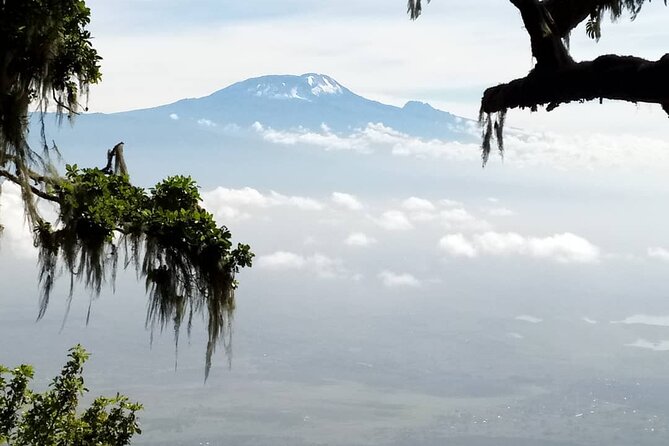
Lemosho is a strong choice if you want more than the quickest possible route up Kilimanjaro. The western approach begins quietly, with a drive from Moshi through mountain villages to the national park gate. From there, the trail passes through several distinct climate zones instead of delivering the mountain all at once.
The first two days use the rainforest belt. You’ll walk beneath thick vegetation, with ferns and other plants along a narrow trail. Lower sections can be muddy and slippery, especially in wet weather. Gaiters and trekking poles are not decorative extras here. They can keep wet soil out of your boots and give you a steadier step.
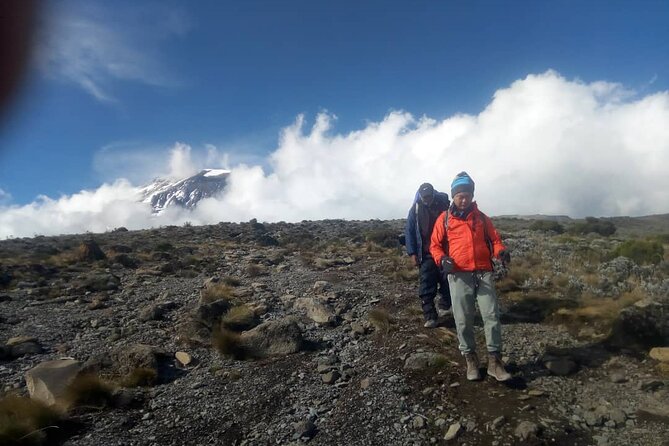
By the third day, the forest has given way to heath and moorland. The trail feels more exposed, the temperatures drop, and the mountain begins to look like the high-altitude place it is. On day three, the route joins the Machame path, so the quieter western start eventually connects with one of Kilimanjaro’s better-known corridors.
I like this route because it makes you earn the mountain gradually. You do not simply walk uphill for seven days. You move through forest, open moorland, high volcanic terrain, rocky ridges, and summit scree. That variety helps make the price and extra time feel worthwhile.
Other routes up the mountain from Arusha:
- 8-Day Small-group Lemosho Kilimanjaro Summit Trekking
★ 5.0 · 186 reviews - 5 Days Best of Tanzania Luxury Safari Northern Circuit
★ 5.0 · 174 reviews - 7-Day Machame Kilimanjaro Summit Tour from Arusha
★ 5.0 · 125 reviews
Day 1: Rainforest from 2,389 to 2,785 meters
Your day begins with an 8:30 a.m. start and a drive from Moshi to the Kilimanjaro National Park gate. The drive takes about 45 minutes and passes through mountainside villages before reaching the busy permit area.
Expect some waiting while permits are issued. That pause is part of the normal start, with crews organizing supplies and groups preparing to enter the park. It is a useful moment to check your pack, adjust your boots, and get used to the pace before the trail begins.
The walking portion takes about four hours. You gain only 396 meters, but the forest trail can still feel tiring because it is narrow, wet, and slippery. Your guide will point out local plants, wildlife, and other features of the rainforest as you walk.
The modest altitude gain makes this a gentle first day in physical terms. The mud is the real nuisance. Pack gaiters, trekking poles, and waterproof protection for anything you need to keep dry. Your overnight stay is in a mountain tent, with meals and camp support provided.
Day 2: Leaving the forest for Shira Plateau
Day two is longer, at about eight hours, and the climb becomes more serious. You start at 2,785 meters and reach about 3,895 meters, gaining 1,110 meters.
The main change is visual. The thick forest falls away, replaced by heath and moorland with ferns and ericas. The trail climbs steadily toward the rim of the Shira Plateau, and you begin to see wider views instead of the close walls of vegetation from day one.
This is also the first day when altitude may affect your pace. The route description calls for a steady ascent, but your actual speed should be set by the guide and by how your body responds. You want to arrive with enough energy for the following days, not prove something on the second morning.
At this point, the camping routine becomes important. Meals, water, and a warm drink are included, along with a cook and porters. The support crew handles the main camp equipment, including tents, sleeping mats, tables, and chairs. You still need to manage your personal clothing, sleeping gear, and day pack carefully.
Day 3: Lava Tower and the Barranco acclimatization climb
Day three is one of the smartest parts of the route. You begin and end at almost the same elevation, starting at 3,895 meters and sleeping at 3,986 meters. The total walking time is about seven hours, but the altitude profile does the important work.
The trail heads east across the Shira Plateau and rises toward Lava Tower, also called the Shark’s Tooth, at roughly 4,650 meters. You pass the junction toward Kibo Peak and later a junction for the Arrow Glacier. After reaching the high point, you descend to Barranco Camp.
This is the classic climb high, sleep lower pattern. You spend time at a greater altitude during the day, then return to a lower camp for the night. That gives your body a useful chance to adjust before the summit push.
You may find this day harder than the small net gain suggests. The high point is over 4,600 meters, and the route includes a long climb followed by descent. The reward is a more controlled approach to altitude than simply sleeping higher each night.
Barranco Camp also puts you in position for the next day’s distinctive section: Barranco Wall. This is where the route begins to feel more rugged and adventurous.
Same base, a different kind of day out:
- Serengeti Balloon Safari and authentic bush breakfast
★ 5.0 · 2,480 reviews - Balloon Safari & Bush Breakfast in Serengeti – Miracle Experience
★ 5.0 · 1,646 reviews - Tanzania Classic – 7 Days
★ 5.0 · 1,151 reviews - 4 Days Group Camping Safari
★ 5.0 · 1,101 reviews
Day 4: Barranco Wall and Karanga Camp
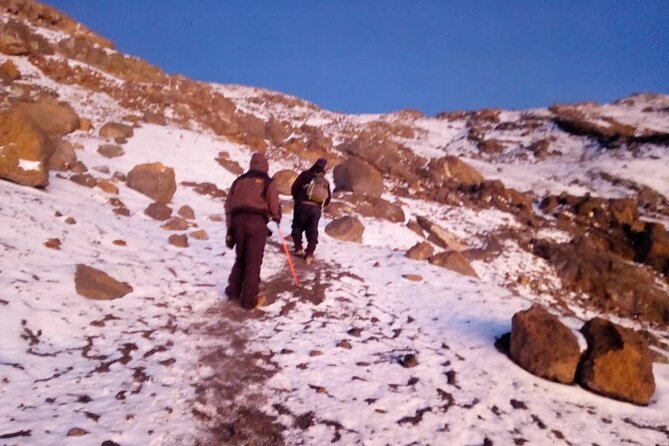
After breakfast, you tackle the steep ridge leading up the Barranco Wall. The day takes about five hours and ends at Karanga Camp, at roughly 4,034 meters.
The wall is not described as a technical climbing pitch, but it is steep and adventurous. You will use your hands at points and pay attention to foot placement. The section is a good test of balance and confidence, especially after several days at altitude.
This is also a day when a strong crew matters. Porters and guides move over the wall with speed and confidence, carrying the equipment needed to keep camp running. Their work is a central part of the experience, not a minor behind-the-scenes detail.
Once above the wall, the route continues through the Karanga Valley and reaches the junction connecting with the Mweka Trail. The walking day is shorter than day two or day three, giving you time to recover before the higher camp at Barafu.
I would not call this a rest day. The altitude is substantial, and the trail remains steep in places. It is better understood as a shorter mountain day that lets you conserve energy for the summit.
Day 5: Barafu Camp and the South Circuit views
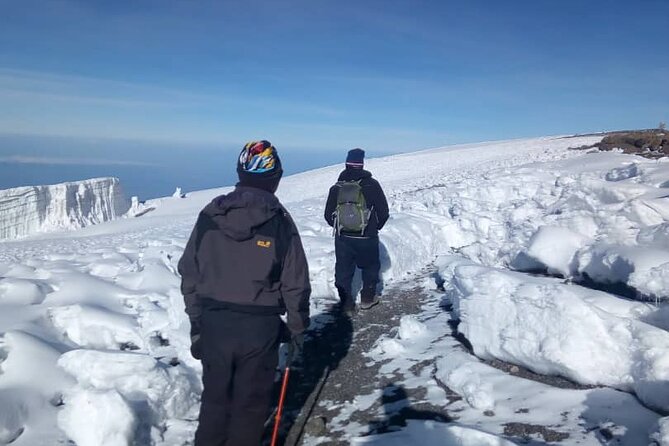
Day five takes about five hours and climbs from 4,034 to 4,662 meters. You continue toward Barafu Camp, where you complete the South Circuit and gain views of the summit from several angles.
Barafu means the serious part is close. You arrive at a high camp, eat an early dinner, and rest before the summit attempt. The practical challenge is getting useful sleep during the limited time available. Keep your clothing, water, headlamp, and other essentials organized so you do not waste energy searching through your bag.
The short walking time can be misleading. At this altitude, five hours is not an easy half-day. Cold, thin air and the previous four days of walking can make the approach to Barafu feel slow.
You should also expect a basic camping night. The package includes tents, mats, tables, chairs, food, and drink service, but this is still a high mountain camp. Comfort comes from good organization and a reliable crew, not from hotel-style facilities.
Day 6: Uhuru Peak and the long descent
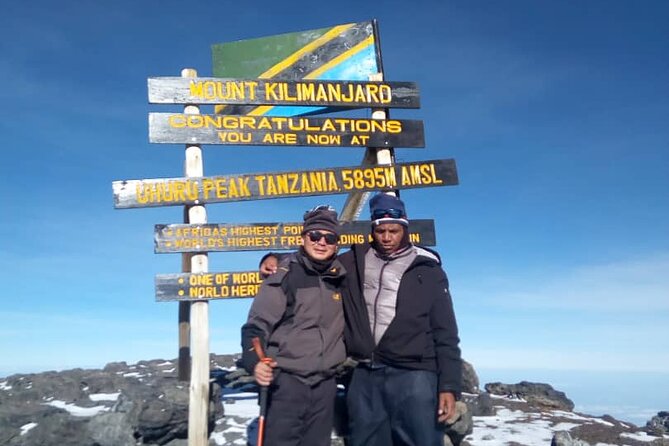
Summit day begins in the dark and lasts about 12 hours. The route climbs between the Rebmann and Ratzel glaciers, then follows switchbacks through heavy scree toward Stella Point on the crater rim.
This is the hardest day by a wide margin. You must handle cold, darkness, steep loose ground, and fatigue at high altitude. Progress can feel slow. The sensible aim is not speed but steady movement, careful breathing, and following the guide’s pace.
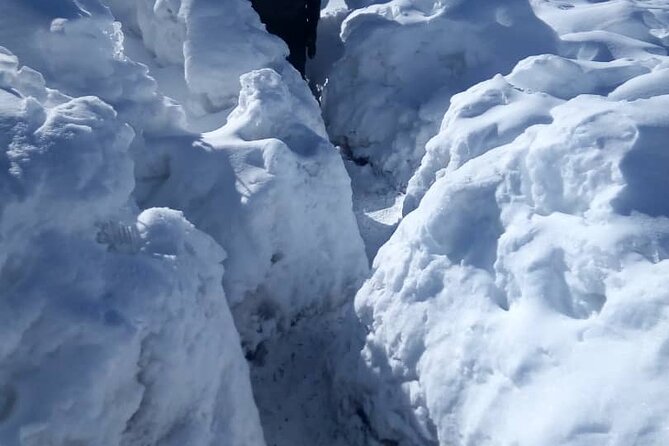
At Stella Point, you may see sunrise during a short rest. Faster hikers may reach Uhuru Peak, the summit of Kilimanjaro, around sunrise. From Stella Point, the final ascent takes about another hour and may include snow.
The summit moment is a major reward, but do not treat it as the end of the day. After photos and celebrations at Uhuru Peak, you still need to descend. The combination of summit effort and descent makes this a full endurance day.
Safety support is an important part of this experience. The crew has used oxygen and pulse oximeters on previous climbs, and these tools were described as present and used properly. That does not remove the risks of altitude, but it gives you a clearer picture of how your condition is being monitored.
Day 7: Descent through wet forest to Moshi
The final day drops from about 3,106 meters to 1,633 meters, with roughly four hours of walking. After breakfast, you have a farewell ceremony with the crew before continuing to Mweka Park Gate.
The trail becomes warmer, wetter, muddier, and steeper as you lose altitude. Gaiters and trekking poles are useful again. Your legs may be tired from the summit day, so downhill sections can be harder than expected.
At the park gate, you receive your summit certificates. A vehicle then meets you at Mweka village for the approximately 30-minute drive back to your hotel in Moshi.
The promised hot shower and proper dinner are not small details after a climb like this. The day ends with a clear transition from mountain routine to town comfort, plus time to celebrate with the crew who carried, cooked, guided, and supported you.
What the $2,400 price covers
At $2,400 per person, this is not a budget day trip, but Kilimanjaro requires a large support operation. The price includes:
- All park and listed fees and taxes
- An English-speaking professional guide
- Porters and a cook
- Hotel and mountain-tent accommodation
- Tents, sleeping mats, tables, chairs, and other camping equipment
- Breakfast, lunch, and dinner according to the schedule
- Clean drinking water, bottled water, coffee, and tea
- Mentioned transfers, including the return to Moshi
The value depends on what you compare it with. You are not paying only for a guide and a trail permit. You are paying for seven days of food, camp logistics, transport, and a mountain crew large enough to keep the operation moving.
The package does not include flights, visa fees, alcohol, soft drinks, tips, or personal purchases. Build those costs into your total before booking. Tips are especially important to plan for because the porters, cook, and guides are a major part of the service.
The crew, safety, and group size
A maximum of six people is a useful middle ground. You get a small enough group for the guide to keep track of individual needs, but you are not climbing alone if someone needs encouragement or a slower pace.
Guides associated with successful departures include Kenedy and Julius. The guiding team has been praised for choosing suitable camps, balancing challenging days with shorter walking days, and staying in contact after the trip. That suggests a personal style of support, though the exact guide assigned to your departure should be confirmed before booking.
Safety equipment includes oxygen and pulse oximeters, which have been used appropriately on past climbs. You should still understand that equipment is not a guarantee of reaching the summit. The route’s altitude and summit schedule demand honest communication with the guide if you feel unwell.
The crew also handles the practical work that makes a seven-day climb possible. The cook prepares meals, porters move camp supplies, and guides manage the route and pace. Treating the crew well, listening to instructions, and budgeting for tips are part of being a responsible participant.
Who should choose this climb
I would recommend this route to you if you want a more varied approach to Kilimanjaro and can handle a demanding camping trip. It suits people who value a small group, strong logistical support, and a gradual route through several climate zones.
It is a good fit if you are prepared for:
- Up to eight hours of walking before summit day
- A 12-hour summit day
- Muddy rainforest trails
- Steep sections at Barranco Wall
- Cold, high camps and basic tent accommodation
- Changing weather and snow near the summit
- The need to carry and manage your own personal gear
I would think twice if you want a relaxed holiday with predictable comfort. The route is harder than Marangu and Rongai, and the seven-day schedule leaves little room for a bad day. You should prepare seriously and arrive ready to walk at altitude.
The tour is limited to a small group, but the supplied information does not state a fitness test or specific age rule. It says most people can participate. That does not mean the climb is easy. Your own medical preparation and honest assessment of your fitness remain important.
Booking details and cancellation
Pickup is offered, and the start time is 8:30 a.m. Confirmation is provided at booking, and the experience is near public transportation. Mobile tickets are available.
You can cancel at least 24 hours before the local start time for a full refund. Changes or cancellations made inside that 24-hour window are not accepted for a refund. If poor weather forces cancellation, you are offered another date or a full refund.
Should you book the Lemosho climb?
I would book this experience if you want a serious Kilimanjaro climb with a varied route, a group of no more than six, and most major mountain costs included in one price. The strongest reasons are the careful Lava Tower acclimatization day, the support of a full crew, and the route’s shift from rainforest to summit terrain.
I would not choose it simply because it is the cheapest way to reach the top. The route is challenging, summit day is long, and camping at altitude is part of the deal. If you prepare properly, pack for mud and cold, and accept that the mountain sets the pace, this offers a well-supported path to Uhuru Peak.
FAQ
How long is the Lemosho Kilimanjaro climb?
The climb lasts approximately seven days, including the approach, summit attempt, and descent to Mweka Park Gate before returning to Moshi.
How large is the group?
The experience has a maximum of six participants.
What is included in the $2,400 price?
The price includes listed fees and taxes, an English-speaking guide, porters, a cook, hotel and mountain-tent accommodation, camping equipment, meals, drinking water, bottled water, coffee, tea, and mentioned transfers.
Is the Lemosho Route difficult?
Yes. The route is described as more challenging than the Marangu and Rongai routes. It includes muddy rainforest trails, steep sections, high camps, Barranco Wall, and a summit day of about 12 hours.
How long is summit day?
Summit day takes approximately 12 hours. The route climbs to Stella Point, continues to Uhuru Peak, and then descends after summit celebrations and photos.
What is the cancellation policy?
You can cancel at least 24 hours before the experience start time for a full refund. Cancellations or changes made less than 24 hours before the start are not accepted for a refund. Poor-weather cancellations offer another date or a full refund.
Just added in Arusha
- 4 Days Private Midrange Lodge Safari to Serengeti & Ngorongoro★ 5.0 · 4 reviews
- Extraordinary Hot air Bolloon ride in Serengeti | BURIGI CHATO SAFARIS CO L.T.D★ 5.0 · 6 reviews
- 3 days leopard safaris★ 5.0 · 4 reviews
- 8 Days Serengeti Migration safari★ 5.0 · 11 reviews
- tarangire, ngorongoro & lake manyara park 3 days private tour★ 5.0 · 11 reviews
- tarangire & ngorongoro 2 days tour★ 5.0 · 14 reviews
- Mt. Kilimanjaro: Shira plateau to Cathedral point 3872m Day hike★ 5.0 · 7 reviews
- serengeti, ngorongoro & tarangire 4 days private tour★ 5.0 · 18 reviews
Kilimanjaro Treks, compared.



8-Day Small-group Lemosho Kilimanjaro Summit Trekking
Read our review →

5 Days Best of Tanzania Luxury Safari Northern Circuit
Read our review →

Climbing Kilimanjaro through 7 days Machame Route
Read our review →
7-Day Machame Kilimanjaro Summit Tour from Arusha
Read our review →Browse the lists this tour appears in