
Reviewed · KILIMANJARO TREKS
The best 6-Days Kilimanjaro hiking (Machame route)whiskey route
Kilimanjaro’s Machame Route gives you the mountain in changing chapters: flower-filled forest, giant heather, volcanic rock, high desert, steep scrambling, and a long descent through woodland. It is called the Whiskey Route for good reason. This is one of the harder ways up Kilimanjaro, not a gentle sightseeing walk.
I like two things here. First, the route is designed around climb high and sleep lower, which gives you a better chance to adjust to altitude. Second, the private format means your group is not tied to strangers’ pace, and the price includes major costs such as park fees, rescue fees, meals, transfers, and two hotel nights.
The main caution is important: the published six-day plan repeats the Day 4 description on Day 5 and does not clearly spell out the summit schedule. Ask Three Peaks Tanzania Safari to confirm exactly when the summit attempt occurs, where you sleep before it, and how the final descent is arranged before paying.
Key points before you book
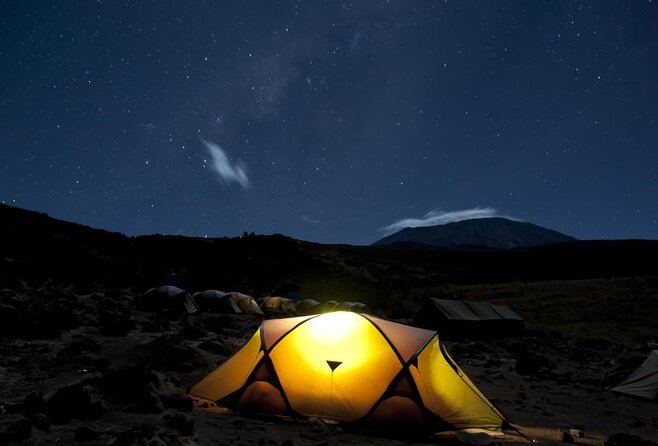
- The route reaches 4,600 meters at Barafu Hut, so altitude is a serious part of the trip.
- Machame offers varied scenery, from begonias and ferns to Shira’s volcanic plateau and views toward Mawenzi.
- The itinerary uses altitude-friendly gains, including a day with only about 110 meters of net ascent after climbing much higher.
- The price includes the expensive essentials, including park admission, rescue fees, guides, meals, transfers, and two hotel nights.
- This is a private climb, so the pace and daily routine are limited to your own group.
- The summit day needs clarification, since the supplied schedule lists the same Barranco to Barafu day twice.
Why the Machame Route is worth the effort
Machame is a good choice if you want more than a straightforward uphill march. The route changes character often, and each zone feels distinct. You begin in lower forest, move into tall heather, cross the open Shira Plateau, pass through a dry volcanic area, and finish among high camps and rugged slopes.
That variety comes with a price. The trail is demanding, and some days involve six to eight hours of walking. Day 4 includes steep sections on the Barranco Wall, with easy scrambling in places, followed by another climb to Barafu Hut at 4,600 meters.
The route’s altitude planning is its strongest practical feature. On Day 3, you climb toward Kibo, then descend into Barranco Valley. The net gain is listed as only about 110 meters, but you have climbed much higher before sleeping lower. That pattern can help your body adjust, although no route removes the risks of altitude sickness.
You should also understand what this price does and does not buy. At $1,968 per person, the package is not simply a guiding fee. It includes park and rescue fees, professional guides, arrival and departure transfers, two hotel nights, and breakfast, lunch, and dinner for all six days. International flights and tips are extra.
Other routes up the mountain from Arusha:
- 8-Day Small-group Lemosho Kilimanjaro Summit Trekking
★ 5.0 · 186 reviews - 5 Days Best of Tanzania Luxury Safari Northern Circuit
★ 5.0 · 174 reviews - 7-Day Machame Kilimanjaro Summit Tour from Arusha
★ 5.0 · 125 reviews
Day 1: Machame Gate to the 3,000-meter forest camp
Your pickup is scheduled for 7:00 am, with transport from your hotel to the Machame Route entry point at about 1,800 meters. From the gate, the trail climbs through natural forest.
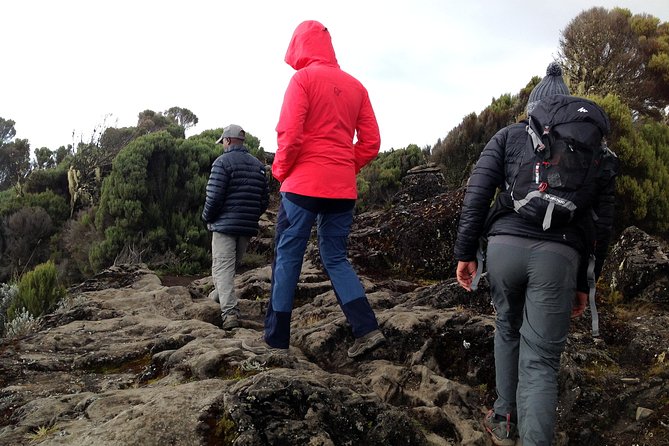
This opening section is one of the more pleasant parts of the climb. You pass begonias, ferns, and distinctive busy lizzie flowers before reaching taller heather. The vegetation gives you a clear sense that Kilimanjaro is not just a bare summit cone. Its lower slopes support a series of very different plant zones.
The hike to Machame Hut is listed at five to six hours, with roughly six hours allowed for the day. Although Machame Hut is named in the schedule, the trip is a camping climb, so confirm the exact overnight camp arrangements with the operator.
Day 1 is a useful test of your preparation. You are already climbing for much of the day, but the lower elevation and forest setting make it less severe than the days ahead. Keep your pace slow from the start. There is no prize for reaching camp early and exhausted.
Day 2: Heather country and the open Shira Plateau
The second day leaves the larger heather zone and reaches open ground near Shira Cave at about 3,840 meters. The walking time is listed as four to five hours, although the daily allowance is again shown as six hours.
Shira is one of the visual highlights of the route. From camp, you may have broad views toward Kibo, Kilimanjaro’s main volcanic cone, as well as the rock formations of the Shira Plateau. Mount Meru may appear across the clouds, adding another major Tanzanian peak to the view.
The afternoon includes an optional 30-minute walk into the old volcanic crater area. The supplied description also refers to antelope and the occasional lion in the wider area. That does not mean you should expect a wildlife encounter, but it explains why this part of the mountain can feel less like a standard trekking path.
The altitude gain from Day 1 is substantial. Even if the walking hours are shorter, you are sleeping considerably higher. Take the afternoon gently, drink according to your guide’s advice, and do not treat the clear views as a reason to push harder.
Day 3: Kibo views, volcanic rock, and Barranco Valley
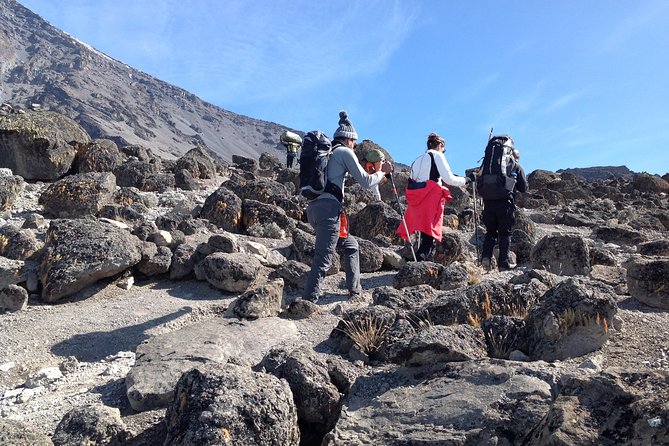
From Shira, you head toward Kibo, the summit cone. The western glaciers are visible from this section, set beyond rugged volcanic rock and boulders.
The trail then circles around Kibo’s base and descends into Barranco Valley beneath the western breach. The camp is listed at about 3,950 meters. This is a long day of six to seven hours, but the net ascent is only about 110 meters because you climb higher and then drop down again.
That apparent lack of progress is actually the point. You gain altitude during the day, then sleep lower than your highest point. This is one of the most valuable features of the route, especially for anyone concerned about adjusting to thin air.
Barranco Valley also gives you one of the trip’s best contrasts. The surrounding rock is severe and dry, but the valley camp provides a more enclosed setting than the exposed plateau. You will want to save energy here, since the next day combines a steep wall, a valley crossing, and a climb to the high camp.
Same base, a different kind of day out:
- Serengeti Balloon Safari and authentic bush breakfast
★ 5.0 · 2,480 reviews - Balloon Safari & Bush Breakfast in Serengeti – Miracle Experience
★ 5.0 · 1,646 reviews - Tanzania Classic – 7 Days
★ 5.0 · 1,151 reviews - 4 Days Group Camping Safari
★ 5.0 · 1,101 reviews
Day 4: Barranco Wall, Karanga Valley, and Barafu Hut
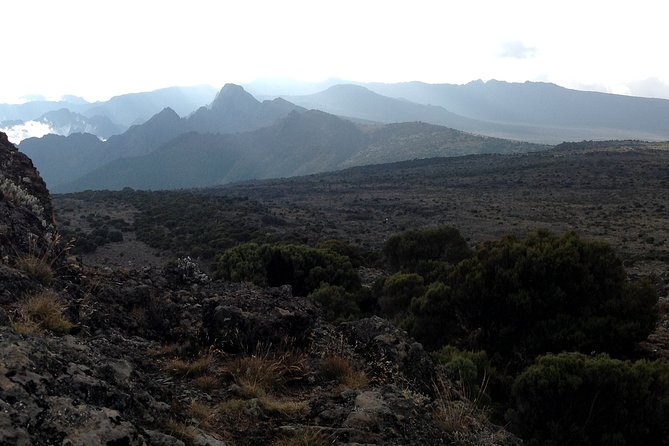
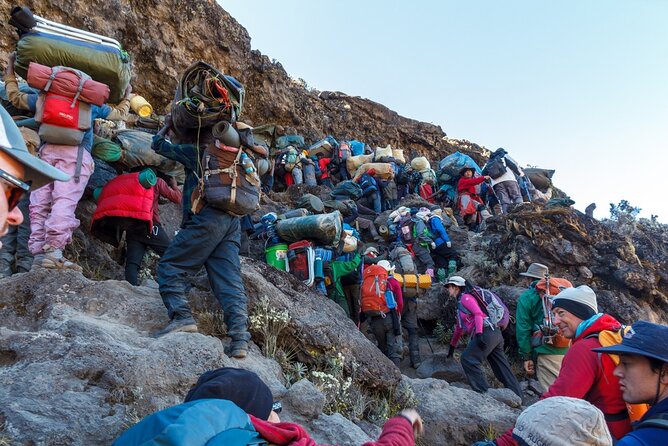
Day 4 is the route’s physical turning point. You climb the steep Barranco Wall, with some straightforward scrambling, then descend again toward Karanga Valley for lunch.
The word scrambling can sound more technical than it is, but this is still a section where balance, steady footwork, and comfort on uneven rock matter. You should expect to use your hands in places. A guide is with you, but the guide cannot remove the physical challenge.
After lunch, the trail continues to Barafu Hut at 4,600 meters. The day involves seven to eight hours of walking and about 650 meters of ascent. From camp, you get views toward Mawenzi Peak, another major Kilimanjaro summit.
Barafu is a preparation camp as much as a destination. The schedule says you should rest properly for the difficult summit hike planned for the following morning. That makes sleep, food, warm clothing, and careful pacing especially important.
The published schedule lists Day 5 with the same Barranco Wall, Karanga Valley, and Barafu description as Day 4. This is the clearest point to ask questions. The likely intention is that Day 5 contains the summit attempt and descent, but the supplied information does not provide those details. Do not assume the timing without written confirmation.
Day 5: Confirm the summit plan before departure
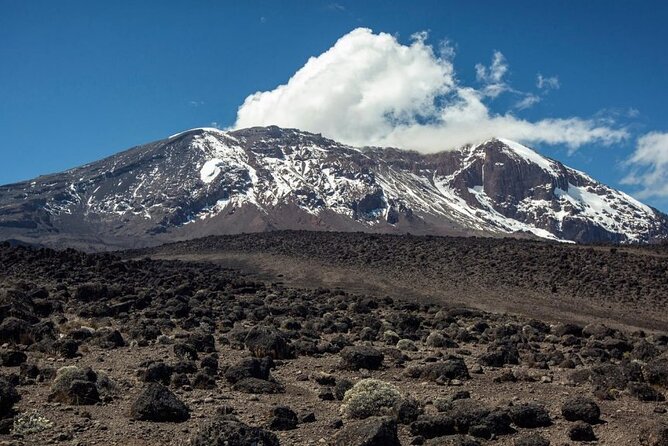
The summit is the reason most people choose this climb, yet the Day 5 description needs correction or clarification. It repeats Day 4 rather than describing the route from Barafu to the summit and onward to the descent camp.
That gap matters because the summit day controls nearly everything: the start time, total walking hours, meal timing, rest periods, clothing, and the location of your next overnight stop. Ask these questions directly:
- What time does the summit attempt begin?
- Is the summit day included in the six days as advertised?
- Is the overnight stop after the summit at Mweka bivouac?
- How many hours should you expect to walk on the summit day?
- Are meals provided during the summit push, and in what form?
The final day refers to a descent from Mweka bivouac, so that camp appears to be part of the intended plan. Still, the operator should confirm the full sequence.
This is not a minor editorial issue. A six-day Kilimanjaro climb is a major physical commitment, and the summit day is the hardest part. The operator’s staff has received strong praise for organizing climbs and helping people reach the top, with Justine and Rafael associated with the company in the supplied feedback. Ask who will lead your group and who will be your main point of contact.
Day 6: Mweka forest and the return to the hotel
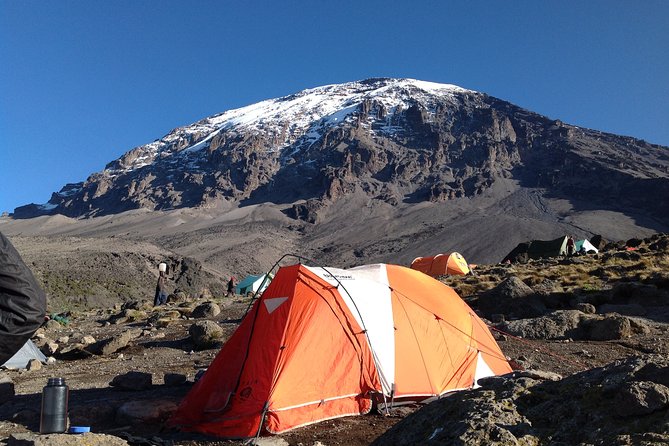
The final listed day begins at Mweka bivouac and descends through forest to Mweka Gate. The descent is expected to take four to five hours, depending on individual fitness.
After reaching the gate, you collect certificates and meet the vehicle for the return to your hotel. The schedule says you return to the hotel for the night, which fits with the two hotel nights included in the package.
Do not underestimate this descent. Downhill walking can be hard on knees and thighs after several days at altitude, especially if the summit attempt has taken a lot out of you. Trekking poles, if allowed and available to you, may be useful, but the supplied details do not confirm equipment rental. Ask what the operator provides before you arrive.
The forest finish is a pleasant change from the exposed upper mountain. It also gives you a clear sense of how far you have traveled, from cultivated lower slopes and thick vegetation to volcanic high ground and back again.
What the $1,968 price includes
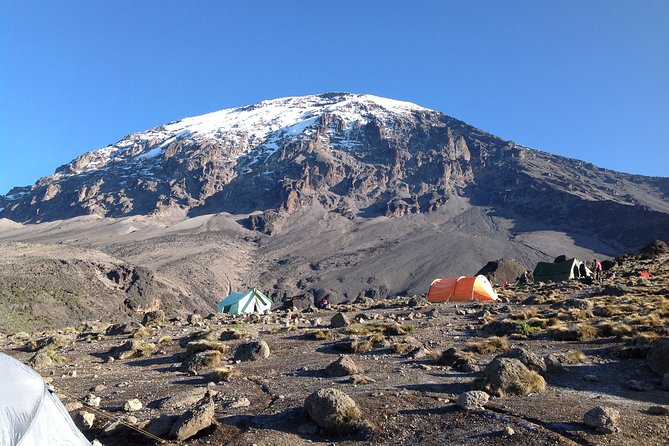
The cost is reasonable to assess only after separating the major included expenses. You are paying $1,968 per person for a private six-day climb with:
- Park fees
- Rescue fees
- Professional mountain guides
- Arrival and departure transfers
- Two hotel nights
- Six breakfasts
- Six lunches
- Six dinners
Kilimanjaro park fees and rescue fees are not small extras, so their inclusion makes the headline price more useful than a cheaper quote that adds them later. Meals also matter. A six-day climb requires regular food, and arranging every breakfast, lunch, and dinner yourself would be impractical.
Tips are not included. International flights are also outside the package. The details do not state whether camping equipment, porter services, sleeping bags, bottled water, or personal gear are included, so you should ask for a complete equipment list and staffing plan before booking.
The private format can also improve value for the right group. If you are traveling with friends or family, you are not paying for a large shared group that may move at an uncomfortable pace. On the other hand, solo climbers should ask how the private pricing works for one person, since the listed price is per person and the experience is described as private.
The guide team and the human side of the climb
A Kilimanjaro guide does more than point out the trail. The guide sets the pace, helps manage the day, and becomes your main source of practical information when you are tired or uncertain.
The strongest praise connected with this operator focuses on organization, safety, friendly staff, and help with reaching the summit. One account credits Justine with arranging both safari travel and the Kilimanjaro climb. Other company feedback connects Rafael with safari guiding and describes strong English communication, though that does not confirm he will be on your mountain climb.
Ask for the name and role of your actual lead guide. Also ask how many support staff will accompany your group, since the supplied information only promises professional mountain guides and does not specify the wider crew.
The tone of the feedback is encouraging, but you should still treat Kilimanjaro as a serious mountain trip. One comment calls the Machame road safe and not too difficult. That may reflect a fit and well-prepared climber’s experience, but the route includes long days, high altitude, scrambling, and a demanding summit schedule. Plan for the harder version.
Who should choose this six-day climb?
I would recommend this experience to an active person who wants a private Kilimanjaro climb and prefers a route with changing scenery and some altitude planning built into the schedule.
It suits you if:
- You can handle six to eight hours of mountain walking.
- You want a professional guide with your own group.
- You value included park, rescue, meal, transfer, and hotel costs.
- You are comfortable with a challenging route rather than the easiest possible ascent.
- You want the Machame forest, Shira Plateau, Barranco Wall, and Barafu approach.
I would be cautious if you want a relaxed holiday, dislike steep or uneven ground, or need a fully detailed summit schedule before committing. The missing Day 5 information is fixable, but it must be fixed before departure.
The phrase most travelers use loosely is that this is a climb for everyone. It is not. The booking notes say most people can participate, but you should judge yourself by the long walking days and high altitude, not by that general statement.
Practical details that matter
Pickup is offered, and the listed start time is 7:00 am. Confirmation is provided when you book, and the activity is private for your group.
Free cancellation is available if you cancel at least 24 hours before the local start time. Cancellations within 24 hours are not refunded, and changes inside that window are not accepted. If poor weather causes the operator to cancel, you are offered another date or a full refund.
The best pre-booking step is to request the corrected day-by-day plan in writing. Confirm the summit day, camp names, gear, support crew, and what happens if a member of your group cannot continue. Those questions are especially important because the published Day 4 and Day 5 descriptions are identical.
Should you book the Machame Route climb?
Book it if you want a private, strongly included Kilimanjaro package on a scenic but demanding route, and if Three Peaks Tanzania Safari confirms the summit schedule clearly. The combination of park fees, rescue fees, meals, transfers, hotel nights, and professional guides gives the $1,968 price solid potential value.
Hold off if the operator cannot explain Day 5, the summit timing, or the equipment and staffing arrangements. The route itself is appealing, and the company’s feedback points to good organization and supportive mountain crews, but Kilimanjaro is too demanding for vague planning.
Ask the right questions first. Once the schedule is corrected and you are comfortable with the physical demands, Machame offers a memorable way to reach Africa’s highest summit.
FAQ
Where does the Kilimanjaro climb begin?
The experience is based in Arusha, Tanzania. Pickup is offered, and the listed start time is 7:00 am.
How long does the experience last?
The climb lasts approximately six days. The final schedule should be confirmed because the supplied Day 4 and Day 5 descriptions are repeated.
Which Kilimanjaro route is used?
The climb uses the Machame Route, also known as the Whiskey Route.
Is this a private tour?
Yes. Only your group participates in the activity.
Are park and rescue fees included?
Yes. Park fees and rescue fees are included in the package price.
Are meals included?
Yes. Breakfast, lunch, and dinner are listed for all six days.
Are hotel nights included?
Yes. Two nights of hotel accommodation are included.
Are international flights included?
No. International flights are not included.
What is the cancellation policy?
You can receive a full refund if you cancel at least 24 hours before the local start time. Cancellations or changes made less than 24 hours before the start are not refunded or accepted. If poor weather cancels the experience, you are offered another date or a full refund.
More Hiking & Trekking in Arusha
- Mountain Kilimanjaro Day Hike
★ 5.0 · 102 reviews - Private Full Day Hiking Experience to Marangu Route
★ 5.0 · 61 reviews - 4 Days Mount Meru Trekking
★ 5.0 · 55 reviews - 4 days Best experience Kilimanjaro Hike, Serengeti &Ngorongoro
★ 5.0 · 54 reviews
Just added in Arusha
- 4 Days Private Midrange Lodge Safari to Serengeti & Ngorongoro★ 5.0 · 4 reviews
- Extraordinary Hot air Bolloon ride in Serengeti | BURIGI CHATO SAFARIS CO L.T.D★ 5.0 · 6 reviews
- 3 days leopard safaris★ 5.0 · 4 reviews
- 8 Days Serengeti Migration safari★ 5.0 · 11 reviews
- tarangire, ngorongoro & lake manyara park 3 days private tour★ 5.0 · 11 reviews
- Mt. Kilimanjaro: Shira plateau to Cathedral point 3872m Day hike★ 5.0 · 7 reviews
- serengeti, ngorongoro & tarangire 4 days private tour★ 5.0 · 18 reviews
- tarangire & ngorongoro 2 days tour★ 5.0 · 14 reviews
Kilimanjaro Treks, compared.



8-Day Small-group Lemosho Kilimanjaro Summit Trekking
Read our review →

5 Days Best of Tanzania Luxury Safari Northern Circuit
Read our review →

Climbing Kilimanjaro through 7 days Machame Route
Read our review →
7-Day Machame Kilimanjaro Summit Tour from Arusha
Read our review →Browse the lists this tour appears in