
Reviewed · WILDEBEEST MIGRATION SAFARIS
7 Days Wildebeest Migration – Ndutu Calving Season
The reason to choose this safari is simple: Ndutu during calving season puts you close to one of nature’s busiest nurseries. Around February, wildebeest calves arrive in a short burst, and lions, cheetahs, and hyenas gather for the opportunities that follow. It is raw, crowded with life, and excellent for photography.
I like the sharp change of scenery, from Manyara’s groundwater forest to the open plains of Serengeti. I also like the private format, since your group alone takes part and the guide can shape the day around wildlife and photography. The main drawback is the pace: seven days cover a lot of ground, with several long drives and early starts.
Key points to know before booking
- Calving season is the main attraction: Most wildebeest calves arrive around February, within a period that usually lasts about three weeks.
- Ndutu gets two full viewing periods: You spend an arrival afternoon and a full following day around the soda lakes, swamps, woodlands, and short grass plains.
- The route mixes three very different parks: Manyara adds forest and elephants, Ngorongoro adds a crater packed with wildlife, and Serengeti supplies the huge open horizons.
- This is a private safari: Only your own group participates, with pickup and return at Kilimanjaro International Airport.
- The price includes major trip costs: At $4,004 per person, the package includes meals, park fees and taxes, bottled water, and Flying Doctor emergency evacuation.
- Plan for serious wildlife photography: Young wildebeest, predators, elephants, giraffes, buffalo, acacias, and wide grasslands give you plenty to watch and photograph.
Why Ndutu calving season is worth planning around
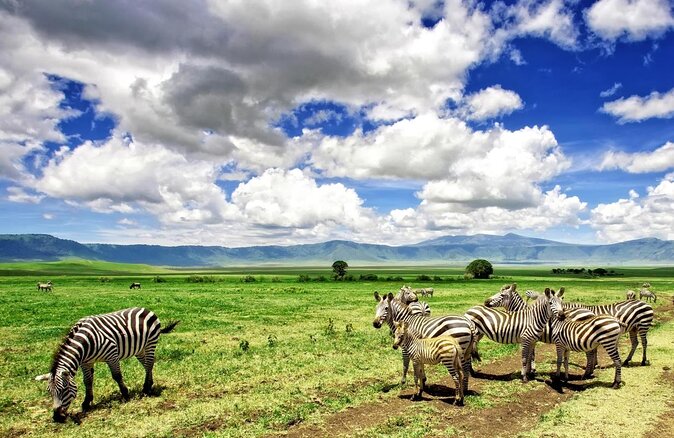
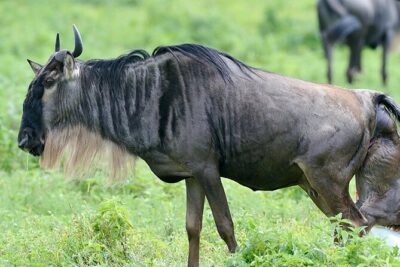
The southern Serengeti and Ndutu area are the heart of this safari. At the right time of year, great herds of wildebeest and zebra gather on the short grass plains. About 500,000 wildebeest calves may be born across the season, though the exact timing and animal numbers can vary.
Calving changes the whole feel of a game drive. You are not simply looking for one lion in a broad park. You are watching a large herd move, pause, bunch together, and protect its young while predators test the edges. A newborn calf can run within minutes, and within three days it can keep up with the herd. That makes the first days of life especially fast-moving.
You should also keep expectations sensible. Wildlife is never scheduled, and a kill is not guaranteed. The value of this period is the concentration of animals and the chance to see behavior that is harder to witness at other times. Even when no chase unfolds, the sight of young wildebeest among thousands of adults is a strong reason to come.
The Ndutu area includes more than open grass. You will pass swamps, woodlands, soda lakes, and acacia trees. Elephants, birds, giraffes, buffalo, and resident game add variety between sightings of the migrating herds.
Other trips timed to the herds from Kilimanjaro:
- Great Migration Safari In Tanzania
★ 5.0 · 71 reviews - 8 Days Great Wildebeest Migration – Mara River Crossing
★ 5.0 · 28 reviews - 6 Days Mara River Crossing – The Great Migration
★ 5.0 · 5 reviews
Day 1: A gentle start in Arusha
Your safari begins at Kilimanjaro International Airport. After customs, a Gilmag Safaris representative meets you, gives you a briefing, and transfers you to Mount Meru Hotel in Arusha, about 60 kilometres from the airport.
This first night is useful rather than flashy. Arusha is the main starting point for many northern Tanzania safaris, and the overnight gives you a place to rest before the early road days begin. You also have a chance to ask practical questions about the route, vehicle, meals, and timing.
The itinerary gives this first day about 12 hours, largely because it includes the international arrival. If your flight lands late, the airport transfer and hotel check-in will be the important parts of the day. The tour begins and ends at the airport, which keeps the arrival and departure arrangements straightforward.
Day 2: Forest, elephants, and Lake Manyara
After breakfast, you leave Arusha with a picnic lunch and drive about 120 kilometres to Lake Manyara National Park. The park sits below the Rift Valley escarpment and gives you a welcome change from the open plains later in the trip.
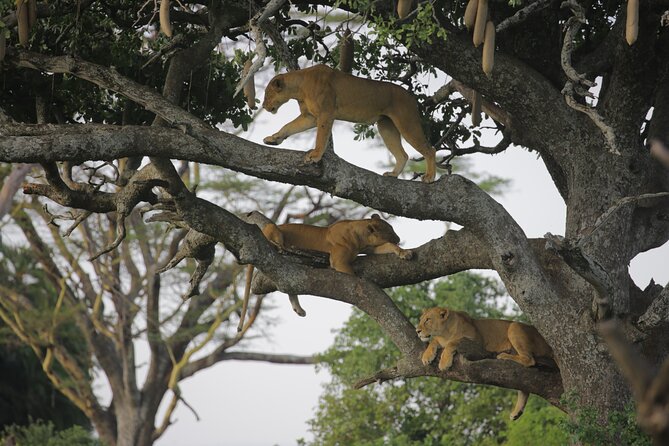
Manyara is best known for its groundwater forest and tree-climbing lions. The forest is the stronger guarantee. Big cats can be difficult to find, so do not book this day solely for a lion in a tree. Elephants are a major attraction, and the mix of forest, lake country, and open areas makes the park a good introduction to northern Tanzania.
A full day here can feel long after the drive from Arusha, but it also gives the guide time to search rather than rush from one sighting to the next. You leave the park in the evening for Karatu and Ngorongoro Coffee Lodge.
This is one of the first places where the tour’s value becomes clear. Park entry, meals, transport, and accommodation are bundled together, so you are not handling separate charges at each stop. Still, you should be prepared for a long day, with an early breakfast, road time, a full game drive, and an evening transfer.
Day 3: A full day inside Ngorongoro Crater
Ngorongoro Crater is the most concentrated wildlife stop on the route. You descend more than 600 metres into the crater for a full day of game viewing, then climb back to the rim for the night at Ngorongoro Serena Safari Lodge.
The crater has permanent water and grazing, which helps support wildlife throughout the year. You might see wildebeest, zebra, buffalo, eland, warthog, hippo, and large African elephants. Lake Magadi, a shallow alkaline lake in the crater’s southwest corner, is one of the day’s main geographic features.
I like the logic of placing Ngorongoro before Ndutu. The crater gives you a dense wildlife day, while Ndutu then shifts the focus to migration and calving behavior. You get both a broad species list and a specific seasonal event.
The tradeoff is the road and terrain. A full crater tour followed by the climb to the rim makes this another demanding day. The overnight at the rim is practical because it avoids sending you back to Arusha and places you close to the Ndutu area for the next morning.
A few more things to do in Kilimanjaro worth a look
- 7 Days Kilimanjaro via Machame route affordable price
★ 5.0 · 110 reviews - 7-Day Machame Route Kilimajaro
★ 5.0 · 28 reviews - 7 Days Highlight of Tanzania Mid-Range Standard
★ 5.0 · 22 reviews - 7 Day Grand Tanzania Safari
★ 5.0 · 13 reviews
Day 4: Entering the Ndutu area
After breakfast, you head toward Ndutu, which lies within the Ngorongoro Conservation Area and forms part of the wider Serengeti ecosystem. You arrive in time for lunch at Sense of Wilderness Migration Camp, then take an afternoon game drive.
The timing is good. Rather than spending the whole day on the road and losing your first chance to see the area, you get a meal and an afternoon search among the herds. Around December through March, large numbers of wildebeest are often found here, with February usually the key calving period.
Ndutu Lake is alkaline, like many lakes in the Rift region. The surrounding habitats are more important than the lake alone: short grass plains, swamps, woodland, and open country create different places for animals to feed and hide.
Sense of Wilderness Migration Camp is your base for two nights. A camp stay places you close to the game-viewing zone, though you should confirm the exact camp setup and room style before paying if accommodation details matter to you. The package describes it as a migration camp, while the later Serengeti night is at a pure tented camp.
Day 5: The safari’s main wildlife day
Day 5 is the strongest reason to book this particular itinerary. After breakfast, you have a full day around Ndutu, with no major transfer to interrupt the search.
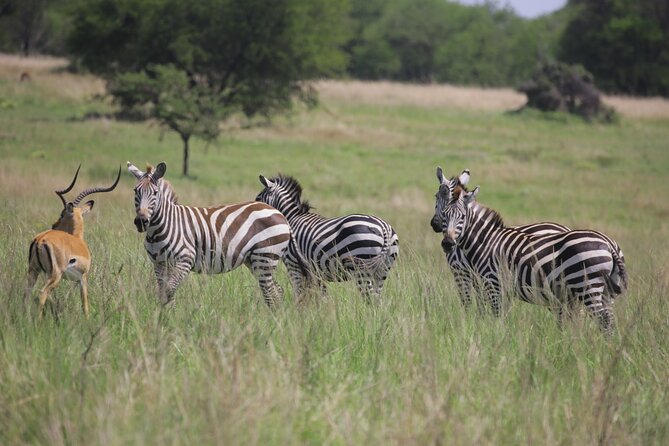
This gives you time to watch herd movement instead of settling for a quick roadside sighting. You may see newborn calves, zebra, elephants, birds, and resident predators. Lions, cheetahs, and hyenas are drawn to the same abundance that attracts you, so the guide’s ability to read animal behavior matters greatly.
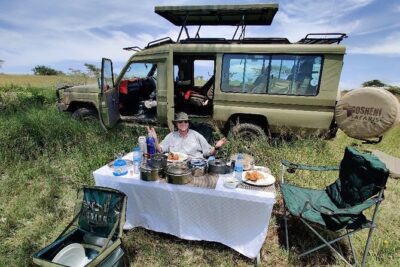
The private format helps here. Your group alone participates, and that can make it easier to spend time at a sighting or adjust the day’s focus. If photography is important, tell the operator before departure. The supplied details point to open safari vehicles and strong photography opportunities, but the exact vehicle layout, camera support, and seating arrangement should be confirmed in advance.
The calving window is short, usually about three weeks around February. If your dates are flexible, place the Ndutu days as close to the expected peak as possible. The tour description also identifies December through March as an important period for wildebeest in the area, but February is the clearest choice for newborn calves.
Day 6: From Ndutu to the open Serengeti
After breakfast, you leave camp with a picnic lunch and continue toward Serengeti National Park, enjoying game viewing along the route. The park covers 14,763 square kilometres and reaches toward Kenya’s Maasai Mara.
Serengeti changes the scale of the trip. The plains seem to run on without an edge, with acacia trees, grass, and stone kopjes breaking up the view. Those kopjes are rocky outcrops that provide shelter and habitat, and they can also make useful lookout points for wildlife.
Your accommodation is Tanzania Pure Tented Camp in Central Serengeti. This night gives you a taste of the park beyond the southern calving zone, though only one night is allocated to central Serengeti. That matters: this is an overview route, not a slow, region-by-region Serengeti expedition.
The road from Ndutu is part of the experience, but it can be tiring. You will want to keep your picnic lunch accessible, protect camera equipment from dust, and accept that game viewing on a transfer day can be less predictable than a full day in one area.
Day 7: Game viewing on the way back
The final day starts with breakfast and a packed lunch. You travel back toward Arusha through the Ngorongoro Conservation Area, watching for animals along the way, and arrive in the evening for your transfer to Kilimanjaro International Airport.
This is not a relaxed airport transfer. The itinerary allows about 12 hours, and road delays or a slow wildlife sighting can affect the schedule. You should avoid booking a tight onward flight unless the operator confirms the timing and gives you a safe margin.
The return route lets you use the last day for more game viewing rather than simply driving straight to the airport. It also means the entire seven-day plan has a clear circle: airport, Arusha, Manyara, Ngorongoro, Ndutu, Serengeti, then back to the airport.
What the $4,004 price really covers
At $4,004 per person, this is not a budget park visit. The price makes more sense when you count the number of moving parts: airport pickup and return, private safari arrangements, several parks and conservation areas, six nights of accommodation, meals, park fees and taxes, bottled mineral water, and Flying Doctor emergency evacuation.
The included food is seven breakfasts, seven lunches, and six dinners. Lunches on the longer driving days are packed or picnic meals, which fits the schedule. Tips for guides are not included, so you should budget for that separately.
The strongest value comes from the route and the seasonal timing. If you only want a general northern Tanzania safari, you could compare shorter options. If you specifically want Ndutu calving season, the two nights in the area and the full game-viewing day are important inclusions.
The published experience has a 5 out of 5 rating from 18 reviews and a 100 percent recommendation rate. Praise centers on quick planning help from Mary, organized arrangements, flexible payment discussions, clean and spacious safari vehicles, and guides such as Jimmy, Gilbert, Nickson, and Nicholas. Guide assignment can vary, so treat those names as examples of the company’s team, not a promise that one specific person will lead your trip.
Who should book this safari
I would choose this trip if you want a private safari with a clear seasonal purpose. It suits first-time visitors who want Manyara, Ngorongoro, Ndutu, and Serengeti in one week without arranging every transfer themselves.
It also fits photographers who value animal numbers, newborn wildebeest, predators, acacia trees, elephants, giraffes, and broad plains. The private arrangement gives you more control than a shared group vehicle, though you should still confirm camera and vehicle details before booking.
This is less suitable if you dislike long road days, early breakfasts, picnic lunches, or changing camps. It is also not the best choice if you want several slow days in one park. The route covers a lot, and the reward is variety rather than a leisurely base.
Most people can participate, and the operator describes the activity as suitable for most participants. It is still wise to share any mobility, dietary, or medical concerns during booking. Bottled water is supplied, and Flying Doctor emergency evacuation is included, but ordinary travel insurance remains important.
The cancellation terms are strict close to departure. Cancel at least six full days before the start for a full refund, two to six days ahead for a 50 percent refund, and less than two full days ahead for no refund. Poor weather may lead to a different date or a full refund.
Final call: book it for the season, not just the parks
Book this safari if your priority is wildebeest calving in Ndutu, backed by a compact route through three famous northern Tanzania areas. The private format, full Ndutu day, included meals, water, taxes, park costs, and emergency evacuation give the price a reasonable foundation.
Think twice if your dates cannot reach the February calving window or if long drives will spoil the experience for you. Before booking, confirm your exact dates, guide, vehicle, camp arrangements, and airport flight buffer. If those details suit you, this is a focused way to see Tanzania when the plains are filled with young life and the predators are close behind.
FAQ
Where does the safari start?
It starts at Kilimanjaro International Airport on Kilimanjaro Airport Road in Tanzania.
Where does the safari end?
The activity ends back at the starting meeting point, with drop-off at Kilimanjaro International Airport after the final drive from Arusha.
How long does the safari last?
The safari lasts approximately seven days.
Which parks and conservation areas are included?
The route includes Lake Manyara National Park, the Ngorongoro Conservation Area and Crater, the Ndutu area, and Serengeti National Park.
When is the best time for the Ndutu calving experience?
The main calving period is normally around February and lasts about three weeks. Large numbers of wildebeest are also found around Ndutu from December through March.
Is this a private tour?
Yes. Only your own group participates in the activity.
Are meals included?
Yes. The package includes seven breakfasts, seven lunches, and six dinners. Picnic or packed lunches are used on some driving days.
Is bottled water included?
Yes. An unlimited supply of bottled mineral water is included.
What is the cancellation policy?
You can receive a full refund if you cancel at least six full days before the start time. A cancellation two to six full days ahead receives a 50 percent refund. Cancellations less than two full days ahead are not refunded.
Just added in Kilimanjaro
- 5 days Serengeti Wildebeest Migration Safari★ 5.0 · 3 reviews
- Mount Kilimanjaro 7 Days – Machame Route★ 5.0 · 5 reviews
- 6 Days Machame Route Kilimanjaro Trekking★ 5.0 · 13 reviews
- Mount Kilimanjaro 6 days – Machame route★ 4.0 · 5 reviews
- Lemosho Route★ 5.0 · 21 reviews
- Tanzania Safari and Kilimanjaro Climb Multi-Day Experience★ 5.0 · 3 reviews
- Amazing 4 Days Safari 3 Nights: Tarangire, Ngorongoro, Serengeti★ 5.0 · 6 reviews
- 9 Days – Best of Tanzania Safari★ 5.0 · 4 reviews
Wildebeest Migration Safaris, compared.
8 Days Great Wildebeest Calving Migration Safari from Arusha
Read our review →
10-Day Serengeti Wildebeest Migration Safari from Arusha
Read our review →
8 Day Spectacular Migration Serengeti mid -Range Tanzania Safari
Read our review →
9-Day Serengeti Migration Footsteps Tanzania Safari
Read our review →
Private 6-Day Great Migration Ndutu Serengeti Safari Tour
Read our review →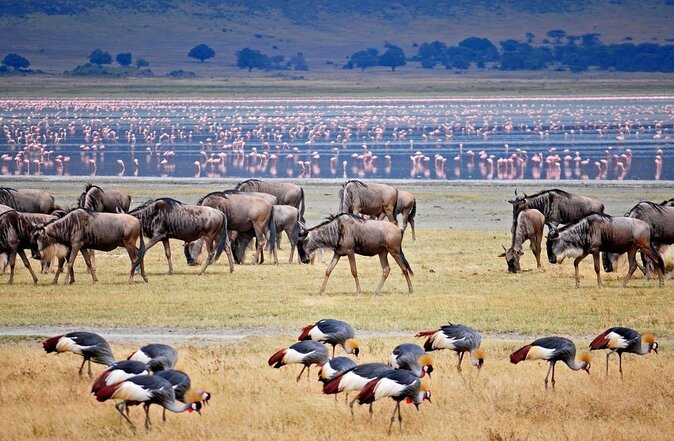
4 Day Great Migration Safari Serengeti & Ngorongoro Crater
Read our review →Browse the lists this tour appears in